
Search Anderson County Divorce Records
Anderson County Divorce Records are kept where the case was heard, then mirrored into the state system for certificate-level requests. That means a search can start with the circuit court clerk in Clinton, move to a state vital records office in Nashville, or turn to the Tennessee State Library and Archives for older material. If you are tracing a recent decree, a settlement agreement, or a historical minute entry, the right path depends on the age of the record and the kind of proof you need. This page points you to the county office, the archive route, and the state tools that make an Anderson County Divorce Records search faster and more exact.
Anderson County Quick Facts
Anderson County Divorce Records Office
The Anderson County Circuit Court Clerk in Clinton is the main office for Anderson County Divorce Records. That office keeps the case file, provides copies of decrees, and helps people find a record by name, case number, or filing window. The county research notes say the clerk handles divorce case files, settlement agreements, and related court papers. In practice, that means the clerk is the first place to check when you want the full court file instead of a short certificate. The county seat is Clinton, so most in-person searches begin near the courthouse downtown.
Anderson County also uses its county clerk office for marriage records and general county record help. That matters because a marriage record often helps frame a divorce search, especially if you are matching names or trying to confirm the county where the marriage started. The official county clerk site at andersoncountytn.gov is useful for that side of the search. When the question is the divorce file itself, though, the circuit court clerk remains the better starting point for Anderson County Divorce Records.
Use the official Anderson County clerk page at andersoncountytn.gov/county-clerk as the local office reference tied to this search path.

That local office view fits the county search path better because it points back to an official Anderson County source for record help.
Note: If you only need proof that a divorce happened, the state certificate may be enough. If you need the file itself, go to the county court clerk.
Search Anderson County Divorce Records
You can search Anderson County Divorce Records by asking the circuit court clerk for a lookup, checking the county court search route, or using archive material when the case is old. The research notes say the county clerk can search by party name, case number, or date range. That is the cleanest way to work if you know part of the file details. If you do not know the case number, the party names and an approximate filing year are still enough to start a useful request in Anderson County.
A good request is short and clear. Name the person or people, the county, and the kind of record you want. Say whether you need a decree, a settlement agreement, or just a docket check. Keep the ask narrow. That helps the clerk see what you need and avoids a slow back-and-forth. If you plan to ask in person, bring a photo ID and a little patience for older files. The county notes say older Anderson County Divorce Records can still be found, but a date window helps the search move faster.
Before you search, gather the basics.
- Full name of one spouse
- Approximate filing year
- County name
- Case number, if known
- What record you need
The state record office also helps frame the request. Tennessee Vital Records explains how to get a divorce certificate in person, by mail, or through the official online vendor at VitalChek. That path is not the same as the county file search. It is a separate route for the short state record. In Anderson County, that split matters because the courthouse has the court file and the state office has the certificate record.
See the CDC Tennessee vital records page at cdc.gov/nchs/w2w/tennessee.htm.
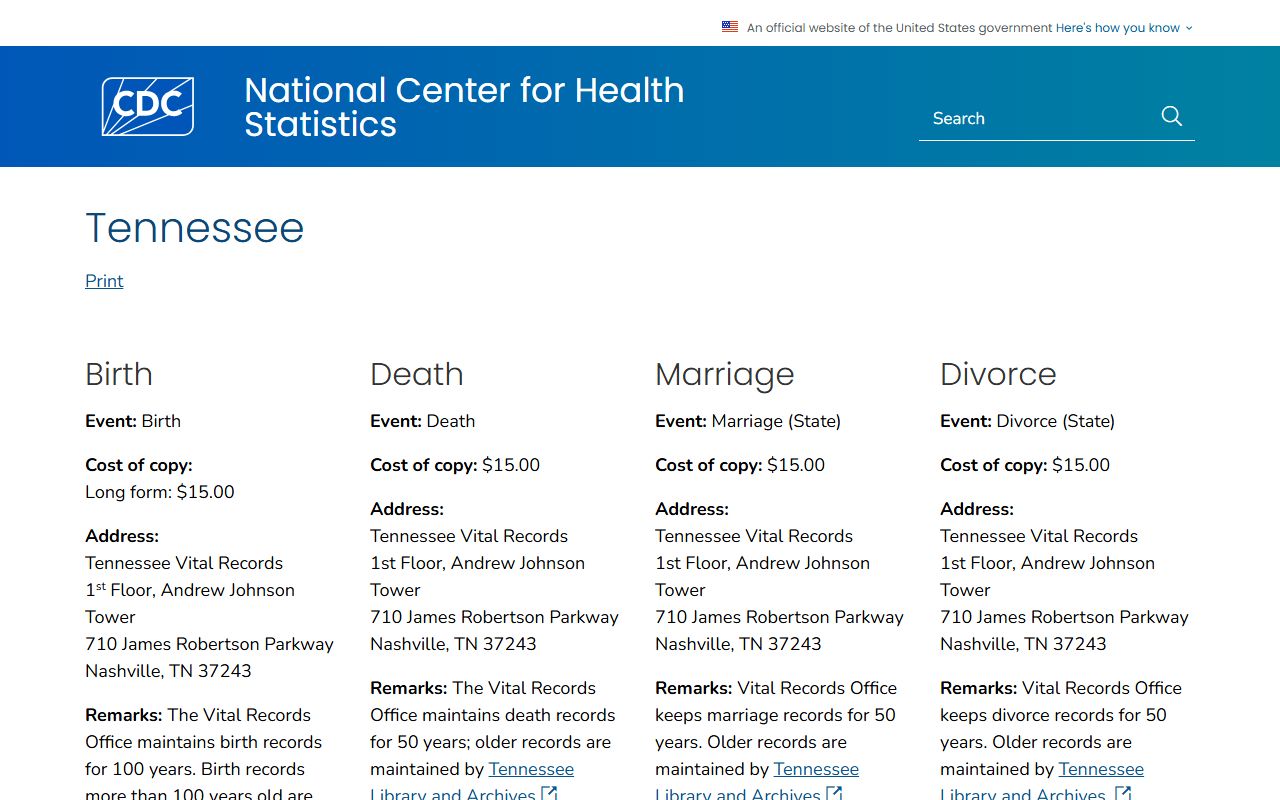
That guide is useful when you need the state certificate side of an Anderson County Divorce Records search.
Anderson County Divorce Records Fees
Fees in Anderson County depend on the office and the kind of copy you want. Court copy charges can change, and certified copies cost more than plain ones. The county research says fees apply for copies and certification. If you only need to verify a name or file date, the clerk may be able to point you to a docket check before you spend money on copies. If you need a stamped decree, expect the clerk to charge by page or by certified copy, depending on the record type and the request method.
The state side is simpler. Tennessee Vital Records says a certified divorce certificate costs $15.00 per copy. That fee covers the state certificate, not the full county file. If you order through the official online vendor, there may also be a processing charge. That is worth knowing before you choose the state route for Anderson County Divorce Records. A person who only needs proof of a divorce event may save time with the state copy. A person who needs the full decree will still need the county clerk.
For the state fee and order path, use the Tennessee Vital Records help center at vitalrecords.tn.gov.
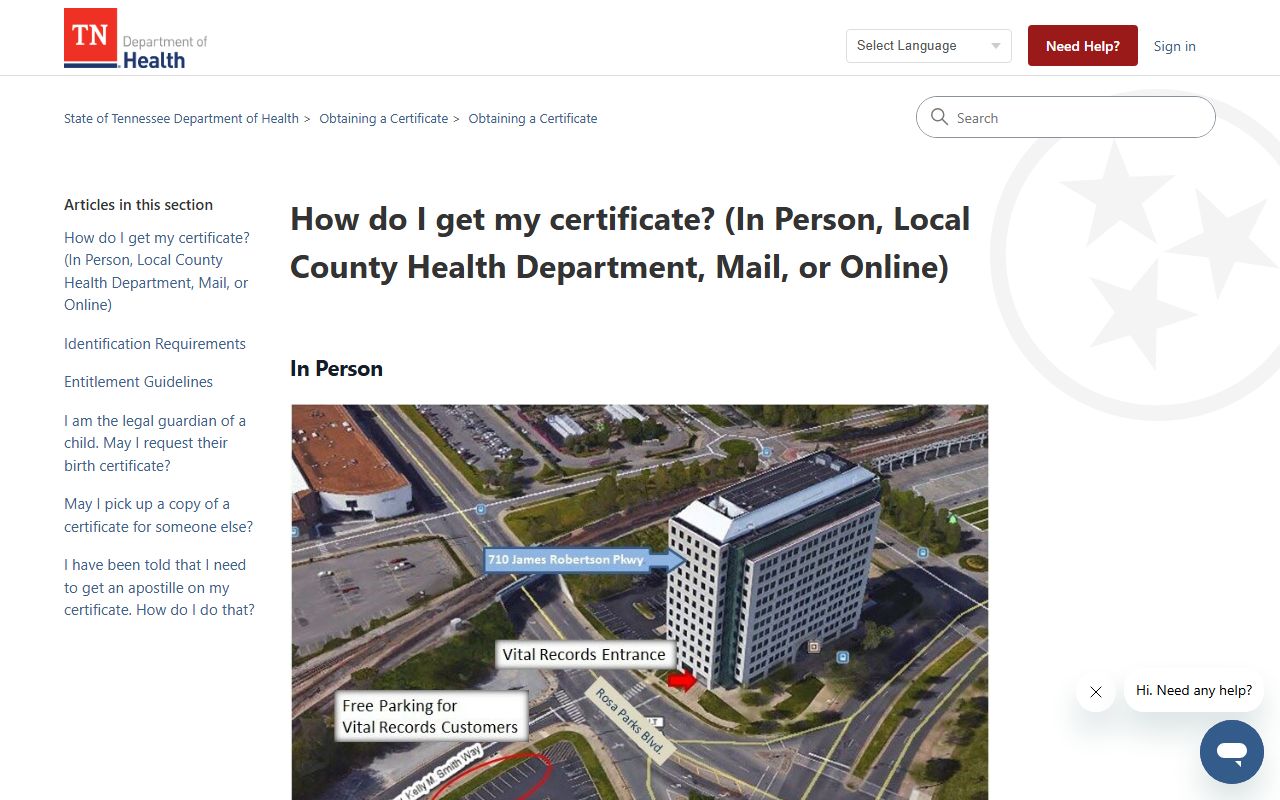
That image supports the fee discussion because it shows the state certificate path that sits beside the county court file.
Note: County copy fees and state certificate fees are different. Make sure you know which record you need before you pay.
Historical Anderson County Records
Historical Anderson County Divorce Records can move away from the courthouse and into archive custody. The Tennessee State Library and Archives has Anderson County Divorce Court Minutes from 1947 to 1951 on microfilm, and that is one of the clearest historical clues in the county research set. When a divorce is old enough to fall into archival care, the search changes. You are no longer only asking the clerk for a current file. You are also asking whether a minute book, index, or microfilm set has survived and where it is held now.
The archive route is especially helpful when you are doing family history work. It can also help if the courthouse file is thin or if the names in the county court record are hard to read. Researchers often check the Tennessee State Library and Archives first, then use the county clerk office to confirm whether a later copy or docket exists. The county research notes also mention Family History Library copies of some Anderson County records, which gives you another path when the record is old and the courthouse search is not enough.
For a state archive starting point, use the Tennessee State Library and Archives guide at sos.tn.gov/library-archives/guides/vital-records-at-the-library-and-archives.
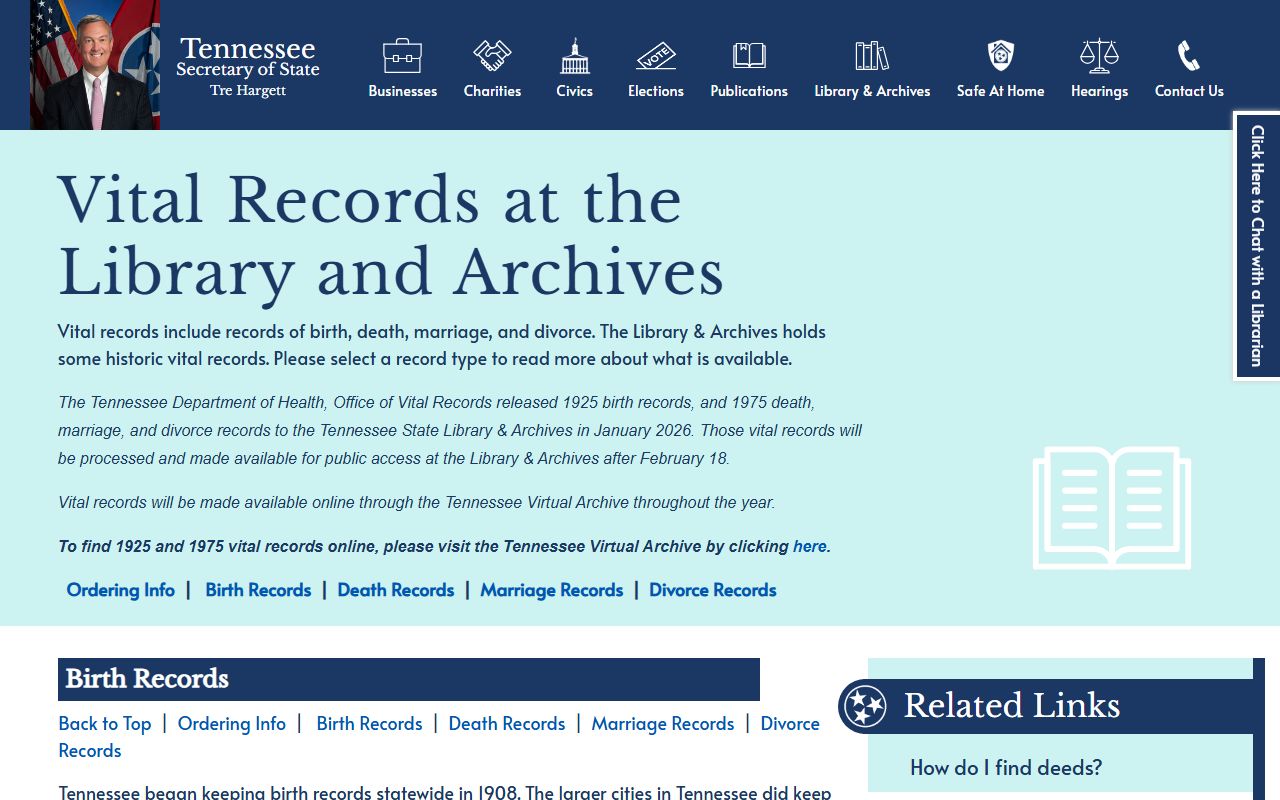
That page is a strong match for older Anderson County Divorce Records because it explains when historical files move out of the state vital records office.
Another archive path is the Secretary of State FAQ at sos.tn.gov/tsla/faqs/how-do-i-find-divorce-records.
It gives a short guide to the archive trail and helps you decide whether the county or the state archive should come first.
Anderson County Divorce Records Copies
If you need copies of Anderson County Divorce Records, request the exact document you want. A decree copy is the most useful court copy for many legal tasks. A settlement agreement can help when you want to see how the spouses handled property or support. If the file is older, the clerk may need extra time to pull it. If the file is recent, the clerk can often point you to the right page faster. The county research says records can be requested in person or by written request, which gives you a direct path either way.
For county records, the safest request is simple. Include the names, the county, the estimate date, and a phone number or email for follow-up. If the clerk needs a tighter date range, send it. If you only want a search and not copies, say that too. The Anderson County Circuit Court Clerk handles the file side, while the county clerk office helps with marriage record context. Both matter, but the divorce file stays with the court clerk. That is the office to contact when you need Anderson County Divorce Records copies.
See the county clerk research page at andersoncountytn.gov/county-clerk.
That image fits the copies section because marriage and name context often sits next to the divorce file search.
Note: A county clerk search is useful, but the circuit court clerk is still the office that holds the divorce case file.
Related Anderson County Records
Anderson County Divorce Records are easier to understand when you see the other records that sit around them. Marriage records help confirm the start of the marriage. Land and property records can show what changed after the divorce. Court minutes can point to the date the case moved through the system. When you need a full paper trail, the county clerk office and the circuit court clerk office work as a pair. One handles the marriage side. The other handles the divorce case file. That division is normal in Tennessee and it helps you avoid the wrong office.
If you are not sure where to start, browse the county index and compare Anderson County with other Tennessee county pages. The county-level structure on this site follows the same logic across the state, but each county still has its own court habits, archive trail, and office names. Anderson County is a good example because its archive minutes show that older divorce material can survive outside the live courthouse file. That makes the county page useful for both legal searches and family history work.
For a broader county browse view, use the Tennessee counties index at /counties.html.
Anderson County records are also influenced by Tennessee's monthly reporting rule for divorce records under T.C.A. section 68-3-402.