
Find Campbell County Divorce Records
Campbell County Divorce Records usually begin at the courthouse in Jacksboro. The Circuit Court Clerk keeps the divorce case files, and that office is the best source for decrees, docket notes, and certified copies. Campbell County also has a county clerk office that handles marriage licenses and other county work, so it helps to keep the two offices separate in your mind. For a simple proof of divorce, you may only need the state certificate path. For the full case packet, the county court file is still the better place to start.
Campbell County Quick Facts
Campbell County Divorce Records
The Campbell County Circuit Court handles divorce cases and keeps the case files that go with them. That makes the circuit court clerk the main office for Campbell County Divorce Records. The county clerk office is still useful, but mostly for marriage licenses and other county business. When you are after a final decree, a response, or a full file, the courthouse in Jacksboro is the place to ask first. That local split matters because it keeps you from asking the wrong office for the wrong record.
The Campbell County court page at campbellcountytn.gov/circuit-court is the best starting point for county divorce searches. The county clerk page at campbellcountytn.gov/county-clerk helps if you also need marriage records or office routing. The Tennessee State Library and Archives Campbell County page gives the local history side and confirms that historical county records survive on microfilm. Those three sources cover the core Campbell County Divorce Records path.
Campbell County Divorce Records are also shaped by Tennessee's public access rules. Under T.C.A. 10-7-503, court records are generally open unless a specific law or court order says otherwise. That means most Campbell County divorce files can be requested by the public, though some pages may be redacted. If you are not sure which paper you need, ask the clerk whether the decree, the complete file, or a state certificate will solve the problem best.
The Campbell County circuit court page at campbellcountytn.gov/circuit-court is the best official lead-in for Campbell County Divorce Records.

The image above comes from the manifest-backed circuit court screenshot and shows the office that handles Campbell County divorce files.
Note: A county clerk can help with marriage records, but the Campbell County divorce file itself still belongs with the circuit court clerk.
Search Campbell County Divorce Records
When you search Campbell County Divorce Records, start with the names of both spouses and the year the case was filed or finalized. That keeps the clerk from sorting through more files than necessary. If you know the case number, bring it. If you do not, a name search may still work, especially when the file is recent. Jacksboro is the county seat, so an in-person search at the courthouse is often the fastest route for older files or for requests that need a same-day response.
The county search is not the only path. If you only need a certificate-level proof of divorce, Tennessee Vital Records can help. The state help center at vitalrecords.tn.gov explains in-person, mail, and online ordering. The official online vendor is VitalChek. That route is useful when the certificate is enough and you do not need the Campbell County court packet.
For a court file search, a short checklist helps.
- Full names of the spouses
- Approximate filing or decree year
- Case number, if known
- Photo ID for an in-person request
The Tennessee Court System website at tncourts.gov can also help when you need forms or filing guidance. That is important in Campbell County because the court file may include a complaint, an answer, an agreed order, and a final decree. If your search is really about proof of a final divorce, the state certificate can be enough. If you need the legal terms, the circuit court file is still the better record.
The Tennessee State Library and Archives county history page at sos.tn.gov is the main archive lead for older Campbell County Divorce Records.
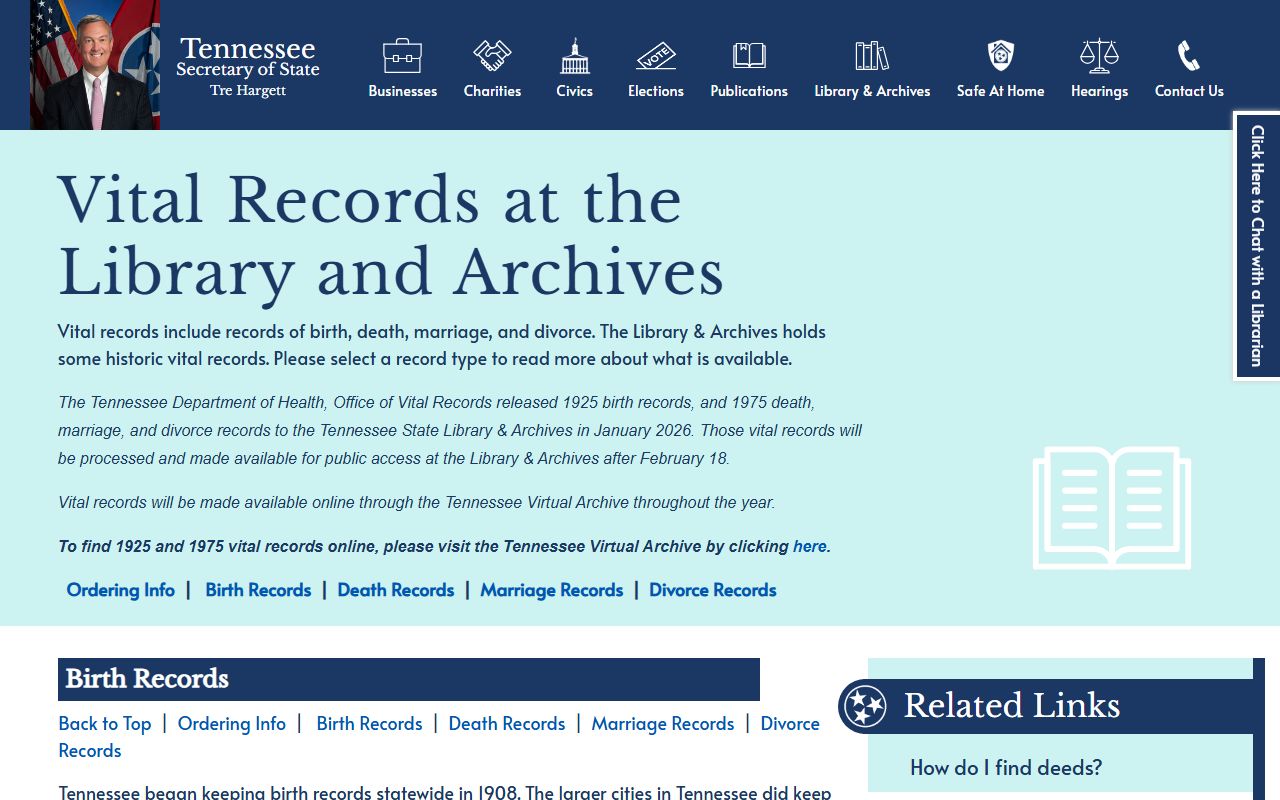
That archive reference is useful when the courthouse file is old or when a historical search needs a wider county timeline.
Campbell County Divorce Records Fees
Campbell County Divorce Records can involve more than one fee. A plain copy, a certified copy, and a state certificate each follow a different path. The county clerk or circuit court clerk can tell you the current copy price for Campbell County court records. If you only need a state divorce certificate, Tennessee Vital Records charges $15 per certified copy. That is the most predictable fee in the whole process and the one most searchers want to confirm before ordering.
Fee rules also show up in the divorce filing process itself. Under T.C.A. 36-4-104, Tennessee requires the filing spouse to meet the residency rule if the grounds for divorce arose outside the state. Under T.C.A. 36-4-101, a no-fault divorce based on irreconcilable differences still needs both spouses to agree. These rules do not set the copy fee, but they shape the divorce record that ends up in Campbell County's case file.
The Tennessee Vital Records help page at vitalrecords.tn.gov explains the state certificate path for Campbell County Divorce Records.
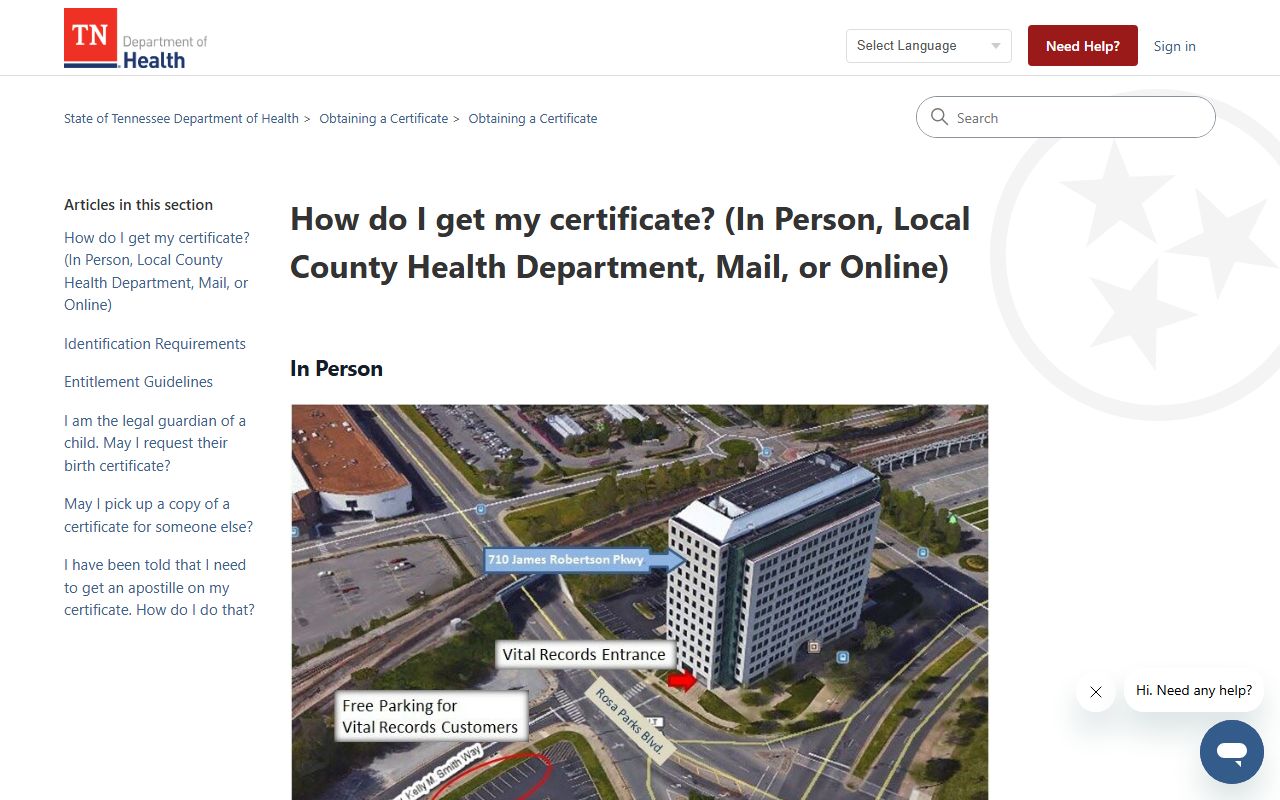
The state ordering guide helps you sort out in-person, mail, and online options before you pay for the wrong type of copy.
Note: Fees can change, so the circuit court clerk or Vital Records office should confirm the current amount before you order.
What Campbell County Divorce Records Show
Campbell County Divorce Records can include the complaint, the answer, a signed decree, and any orders that the judge added later. If the case touched property, support, or custody, those papers can show up too. That is why the full court file matters. A short certificate only confirms that the divorce happened. The court file shows how it happened, what the judge ordered, and which issues were resolved in the county case.
Tennessee property division rules also shape the final record. Under T.C.A. 36-4-121, the court divides marital property in an equitable way. That decision may appear in the decree or in a related order. In Campbell County, a complete divorce file can also show whether a name was restored, whether a parenting plan was filed, and whether any later enforcement order was entered after the final decree. Those details matter in real life, not just in legal theory.
When you read a file, look for the main pieces first.
- Initial complaint for divorce
- Answer or agreed response
- Final decree and judgment
- Property, custody, or support terms
- Post-judgment orders if the case continued
Campbell County Divorce Records are public in the ordinary sense, but sealed pages, redactions, and protected child information can still limit what you see. If a page is missing from the copy set, ask the clerk whether it was sealed or redacted rather than assuming the file is incomplete.
Historical Campbell County Divorce Records
Historical Campbell County Divorce Records are a stronger fit for the Tennessee State Library and Archives than for a courthouse counter. Campbell County was established in 1806, and the archive collection includes county court records on microfilm. That makes Nashville a useful stop when the local file is old, fragile, or better suited to a research trip than a copy request. Historical searches also help when family stories give you only a rough decade instead of a clear decree date.
The TSLA county history page at tsl.tn.gov is the best local history source for Campbell County. It confirms that older county records exist beyond the active courthouse file. The broader Tennessee guide at the State Library and Archives vital records page explains the statewide shift from vital records to archives after the retention period. That shift is the reason a Campbell County divorce from decades ago may be easier to confirm through archive research than through a same-day clerk search.
The Tennessee Secretary of State FAQ at sos.tn.gov is a second archive guide for Campbell County Divorce Records.
That image links to the Tennessee Secretary of State divorce FAQ, which points researchers toward the archive guide for older records.
The Library of Congress Tennessee vital records guide at loc.gov adds another source for Campbell County Divorce Records history work.
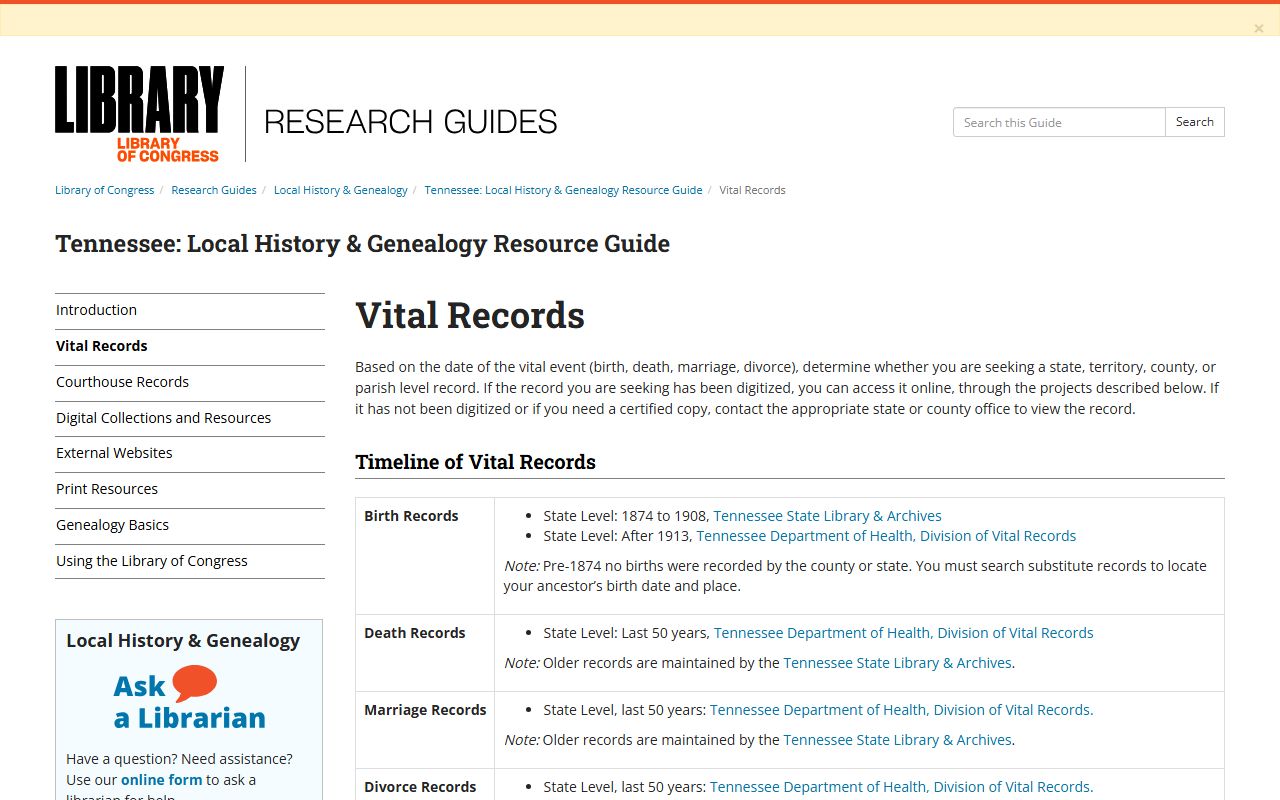
It is a general guide, but it fits Campbell County well when the goal is to place a divorce in the right historical frame.
Note: Historical searches work best when you start with a decade, then narrow by spouse name.
Get Copies of Campbell County Divorce Records
To get copies of Campbell County Divorce Records, ask the Circuit Court Clerk in Jacksboro first. That office can tell you whether a plain copy or a certified copy is available. If you need a certified decree, say so up front. If you only need proof that a divorce happened, the state certificate path may save time and money. In-person requests are often the best option for same-day questions, while mail and online routes can work well when you are not near the courthouse.
The state route is useful when the county file is not required. Tennessee Vital Records accepts in-person, mail, and online requests, and the VitalChek portal is the official card-processing vendor. That matters if you need a certificate for remarriage, a name change, or a personal records file. If you need the actual court decree or supporting orders, the Campbell County circuit court clerk still controls the record set. The county clerk only helps with the records that office keeps.
The Campbell County circuit court page at campbellcountytn.gov/circuit-court is the right lead-in when you need the full Campbell County Divorce Records file.
The circuit court image points straight at the local office that maintains the divorce case files in Campbell County.
The Campbell County county clerk page at campbellcountytn.gov/county-clerk is the right lead-in for related county records and marriage files.

That county clerk image is useful as a reminder that the marriage office and the divorce file office are not the same thing.
Note: A certificate can prove the event, but a decree is usually the better choice when a legal matter depends on the file.