
Access Cannon County Divorce Records
Cannon County Divorce Records are public records, but the file you need may sit in more than one place. The circuit court clerk in Woodbury keeps the court file, while the county clerk handles marriage licenses and other county business. That means a divorce search should start with the court clerk if you want the decree or the full case packet. If you only need proof that a divorce was granted, the Tennessee state certificate route may be enough. Knowing the difference saves time and keeps the request focused.
Cannon County Quick Facts
Cannon County Divorce Records
The Cannon County Circuit Court handles divorce proceedings and keeps the case files. That makes the circuit court clerk the main office for Cannon County Divorce Records. The county clerk office is still useful for marriage licenses and general county tasks, but the divorce file itself stays with the court. When you ask for a decree, a docket sheet, or the full file, the court clerk is the office that can actually retrieve it. That simple split is the key to a cleaner search.
The local court pages are the first official sources to check. The circuit court page at tncourts.gov/courts/circuit-court/cannon-county gives the court reference, while the county clerk page at cannoncountytn.gov/county-clerk helps with related county office work. The Tennessee State Library and Archives page at tsl.tn.gov is the historical source for old Cannon County records. Together, those pages cover the live court, the related county office, and the older record trail.
Cannon County Divorce Records are public under Tennessee law, but the public route is still shaped by record type. The state public records law at T.C.A. 10-7-503 supports public access, while T.C.A. 68-3-402 explains why divorce records are also forwarded into the state vital records system. That is why a request can go through the county court file, the state certificate path, or both. The right office depends on what you need to prove.
For an official county office view, use the Cannon County clerk page at cannoncountytn.gov/county-clerk.

That image works better here because it keeps the page anchored to an official Cannon County source while still showing the local office tied to record requests.
Note: A public index can help you start, but the circuit court clerk is still the source for certified Cannon County divorce copies.
Search Cannon County Divorce Records
To search Cannon County Divorce Records, start with the spouses' full names and the year the case was filed or ended. If you have a case number, bring it. That can speed things up fast. If you do not, the clerk can still search by name, especially when the date range is narrow. In Woodbury, an in-person search is usually the most direct option for older cases or when you need a quick answer about what the file contains.
The Tennessee courts website is also useful when you need forms or filing guidance. The state court system at tncourts.gov posts approved forms and general court information. That matters because Cannon County divorce files may include the complaint, the answer, the final decree, and later orders. If you only need proof that the divorce happened, the Tennessee Vital Records path may be enough. If you need the full legal paper trail, ask the circuit court clerk for the court file.
A short checklist makes the request cleaner.
- Full names of both spouses
- Year of filing or decree
- Case number, if known
- Photo ID for in-person requests
The county clerk office does not hold the divorce file, but it can still help you sort related county business. That distinction is useful in Cannon County Divorce Records work because some searchers start at the wrong office and lose time. Start with the circuit court clerk when the goal is the divorce decree or the full case set.
The Cannon County clerk page at cannoncountytn.gov/county-clerk is the official county lead for related records and office routing.
The clerk image reminds searchers that the county clerk handles related county records, while the circuit court clerk handles the divorce file itself.
Cannon County Divorce Records Fees
Fees for Cannon County Divorce Records depend on the record type. A plain copy from the court is one fee. A certified decree is another. A state certificate has its own price. The circuit court clerk can confirm the county copy charge. If you only need the state certificate, Tennessee Vital Records charges $15 per certified copy. That is the clearest statewide fee and the easiest one to plan for before you request anything.
State ordering matters because Tennessee uses more than one way to handle divorce records. The Tennessee Vital Records help center at vitalrecords.tn.gov explains in-person, mail, and online order methods. If you want to pay by card online, VitalChek is the official vendor. That path is often the fastest when you do not need the full Cannon County court packet.
Filing a new case creates a paper trail of its own. Under T.C.A. 36-4-104, Tennessee has residency rules tied to where the grounds for divorce arose. Under T.C.A. 36-4-101, no-fault divorce still depends on an agreed basis. Those rules shape the records that end up in the Cannon County court file, and that file is what most people really want when they say they need Cannon County Divorce Records.
Note: Call the clerk before you pay so you know whether a plain copy, a certified copy, or a state certificate is the right one.
What Cannon County Divorce Records Show
Cannon County Divorce Records can show far more than the date a marriage ended. The file may hold the complaint, the response, a marital dissolution agreement, the decree, and later orders. If the case involved children, there may also be custody or support papers. If property was in dispute, the decree may include how the judge handled it. The court file is the record that shows the whole path. A certificate only says the divorce happened.
Tennessee property rules also appear in the file. Under T.C.A. 36-4-121, marital property is divided in an equitable way. That means the final decree or an attached order may explain how the court divided assets or handled debt. In Cannon County, that detail matters if you need the decree for a deed, a financial account, or another legal task after the divorce is over. It is the sort of record detail that a short certificate never shows.
Here is the simplest way to think about the contents.
- Initial divorce complaint
- Answer, agreement, or response
- Final decree and judgment
- Property, support, or custody orders
- Later enforcement or correction papers
Even when the file is public, some parts may be sealed or redacted. If you get a copy that looks thin, ask the clerk whether a privacy rule limited what can be shown. That is common enough to check before assuming Cannon County Divorce Records are missing pages.
Historical Cannon County Divorce Records
Historical Cannon County Divorce Records can move from the courthouse to the state archives over time. Cannon County was established in 1836, and the Tennessee State Library and Archives holds county records on microfilm. That makes Nashville an important stop for older divorces, especially when the local file is aged or when a researcher needs a longer county timeline than the courthouse can supply at the counter.
The TSLA county page at tsl.tn.gov is the most useful local history reference for Cannon County. The broader archive guide at the Tennessee State Library and Archives vital records page explains the state retention split. Tennessee keeps divorce records at the Office of Vital Records for 50 years, then shifts older material into archive custody. That is why an old Cannon County divorce often takes a different path than a recent one.
The Tennessee State Library and Archives county history page at sos.tn.gov is the archive lead for older Cannon County Divorce Records.
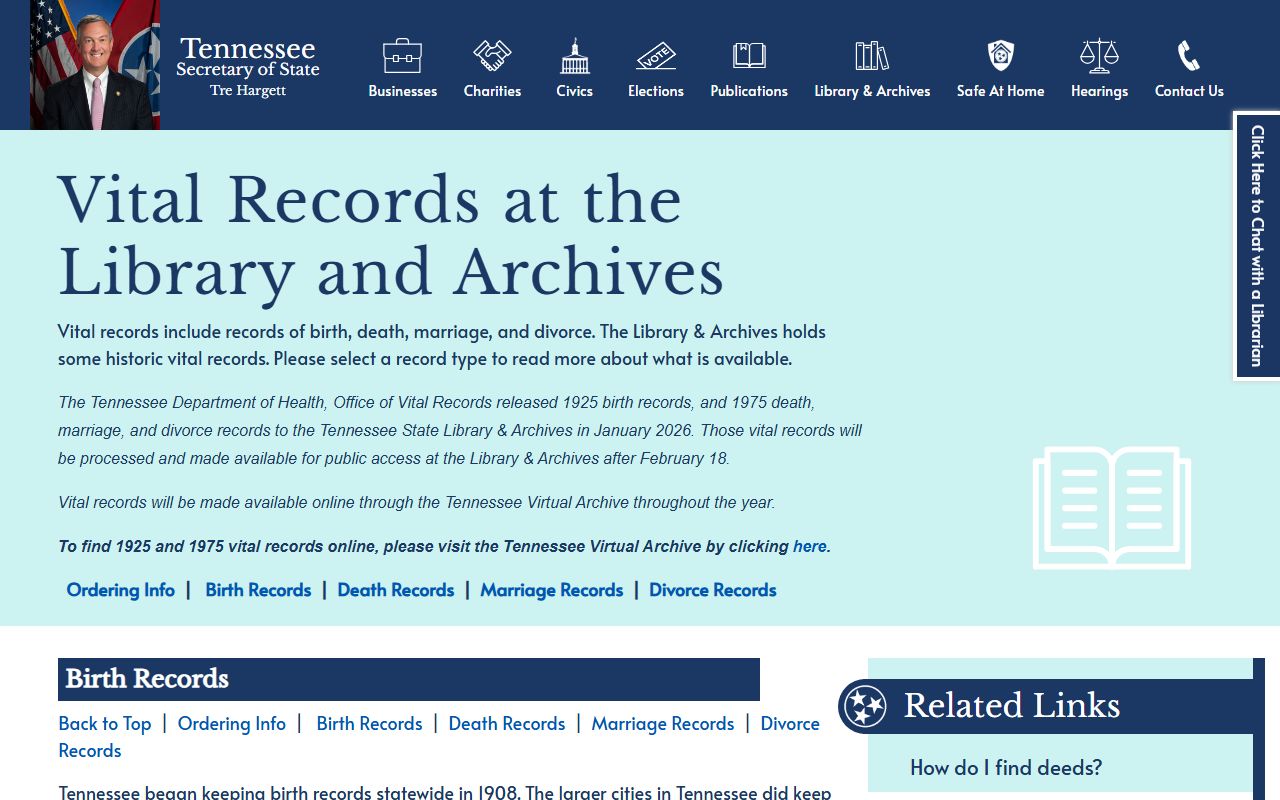
That state library guide is the best way to understand where older divorce records go once they age past the retention window.
The Tennessee Secretary of State FAQ at sos.tn.gov is another useful guide for older Cannon County Divorce Records.
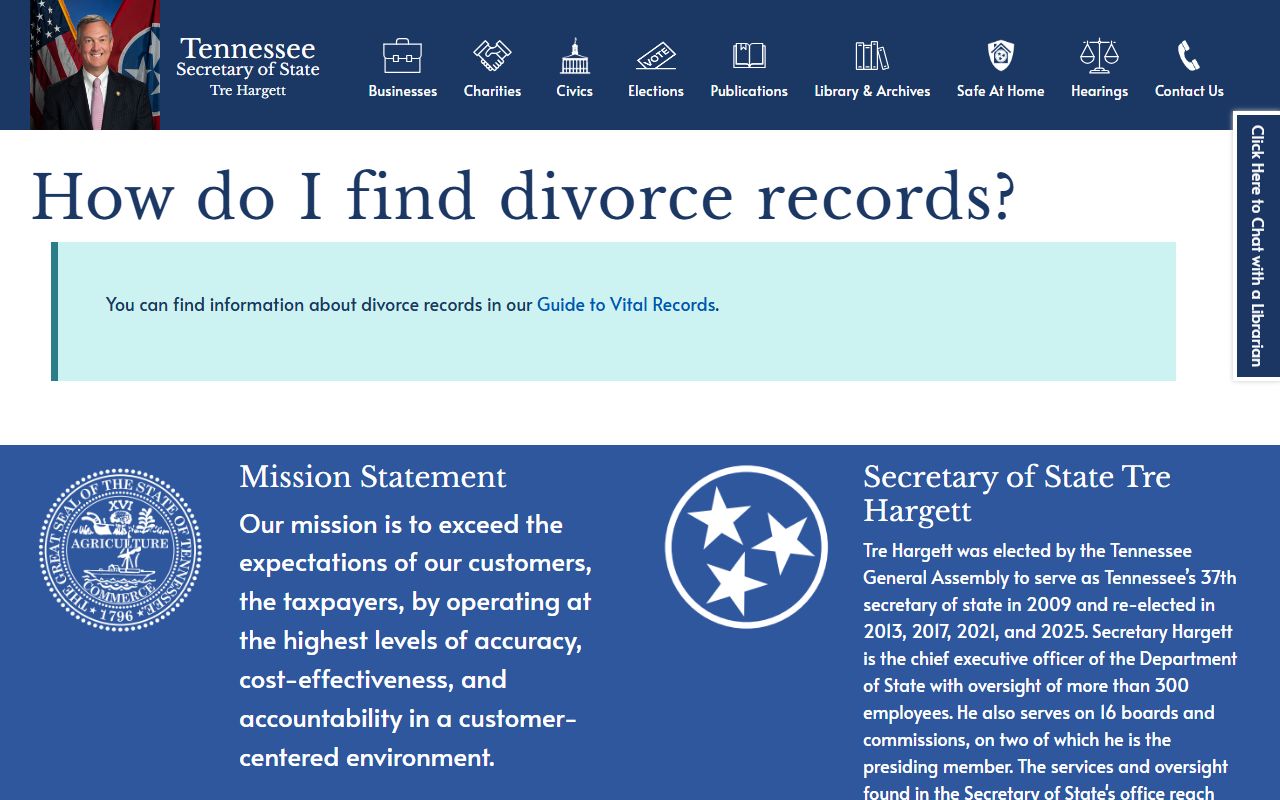
The Secretary of State FAQ is brief, but it points you back to the archive guide that explains where older records are held.
Note: Historical searches work best when you search by decade first and then narrow by spouse name.
Get Copies of Cannon County Divorce Records
To get copies of Cannon County Divorce Records, go to the Circuit Court Clerk in Woodbury. Tell the clerk whether you need a plain copy, a certified copy, or the full decree. If the file is old, the clerk may need more time to pull it or may direct you to state archive holdings. Bring photo ID if you are visiting in person. That keeps the request clean and avoids a second trip.
If a state divorce certificate is enough, use the Tennessee Vital Records route instead. The state help page explains how to order in person, by mail, or online, and VitalChek is the official vendor for card payments. That path is often easier when you only need proof that a divorce happened. It is not the same as the county decree, but it is often enough for a name change, remarriage, or personal proof file.
The official Tennessee VitalChek page at vitalchek.com is the right lead-in when you want a state certificate for Cannon County Divorce Records.

That ordering image points to the official Tennessee online vendor for state certificate requests.
The county clerk can still help with related records, but the divorce decree belongs with the circuit court clerk. Keep that line clear when you ask for Cannon County Divorce Records. It will save time and cut down on fee confusion.
Note: A county decree is the stronger copy when the document will be used in court, at a title company, or in another legal setting.