
Search Carroll County Divorce Records
Carroll County Divorce Records take a little more care to track down because the county has a rough record history and no dependable county-wide website to lean on. That does not mean the records are gone. It means the search path matters more. The circuit court clerk in Huntingdon is the first office for a decree or full case file. The Tennessee State Library and Archives is the best older-record backup. When you know which office to start with, the search gets much easier and a lot less guesswork is needed.
Carroll County Quick Facts
Carroll County Divorce Records
The Carroll County Circuit Court handles divorce cases and keeps the court file. That makes the circuit court clerk the main office for Carroll County Divorce Records. The county clerk office in Huntingdon handles marriage licenses and other administrative work, but divorce copies still belong with the court clerk. For a recent case, the courthouse is the best starting point. For an older one, the state archive trail becomes more important because Carroll County has a history that can complicate record access.
The official court and history sources are the right places to start. The circuit court page at tncourts.gov/courts/circuit-court/carroll-county gives the county court reference. The Tennessee State Library and Archives page at tsl.tn.gov explains the local history and points to microfilm holdings. A genealogy reference at Archives.com adds a useful note about how the county's courthouse fire in 1931 may affect older record survival. That mix of sources helps explain why some Carroll County Divorce Records are easier to find than others.
Public access still applies. Under T.C.A. 10-7-503, court records are generally open to the public unless a law or court order says otherwise. For divorce records, that means the file may be available, but some parts can still be redacted. If a copy looks thin, ask the clerk whether a privacy rule or archive gap limited what could be shown. That is a normal question in Carroll County Divorce Records work.
The Archives.com Carroll County page at archives.com is a useful visual lead-in for older Carroll County Divorce Records.
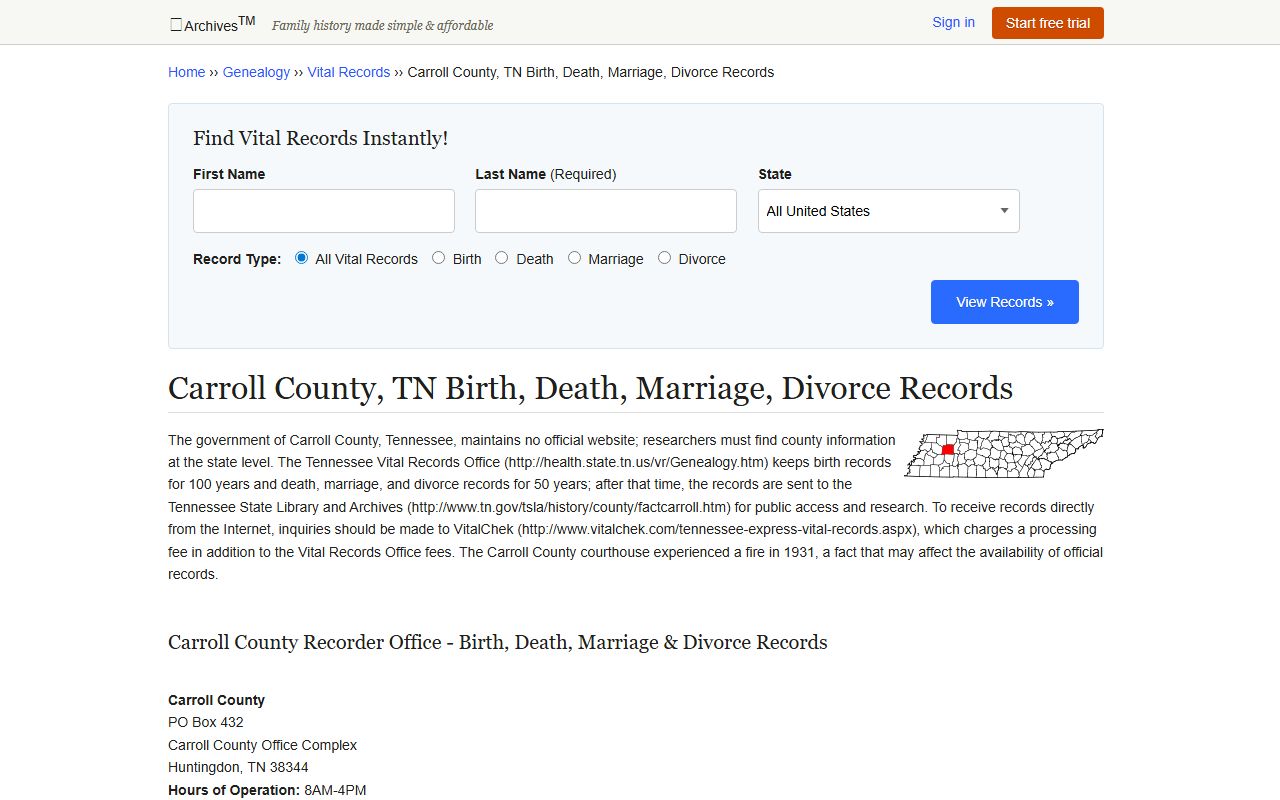
The manifest-backed image above comes from a Carroll County historical record source and helps show why older divorce records often require an archive-minded search.
Note: In Carroll County, the courthouse fire makes date range checks especially important.
Search Carroll County Divorce Records
To search Carroll County Divorce Records, start with the spouse names and the rough year. If you know whether the divorce was filed recently or decades ago, that helps even more. The circuit court clerk can search current files, while the Tennessee State Library and Archives becomes more useful as the record ages. That is the main difference in Carroll County. A record that feels simple in a newer county may need two stops here because the old courthouse history can thin out the trail.
The Tennessee Vital Records help center at vitalrecords.tn.gov explains how to order a state divorce certificate in person, by mail, or online. That is useful when you only need proof of the divorce event and not the whole Carroll County file. The official online card-processing vendor is VitalChek. When you need the decree and the rest of the packet, though, the county court file is still the better source.
A short checklist keeps the request focused.
- Full names of both spouses
- Approximate filing or decree year
- Case number, if known
- Photo ID for in-person requests
Because Carroll County has no dependable county-wide site to rely on, the best search pattern is simple. Start with the circuit court clerk, then move to the archive trail if the file is old. That is usually faster than guessing at a page online and hoping it is current. It also keeps the request tied to the office that actually keeps the divorce record.
The Tennessee State Library and Archives page at sos.tn.gov is the main archive lead for older Carroll County Divorce Records.
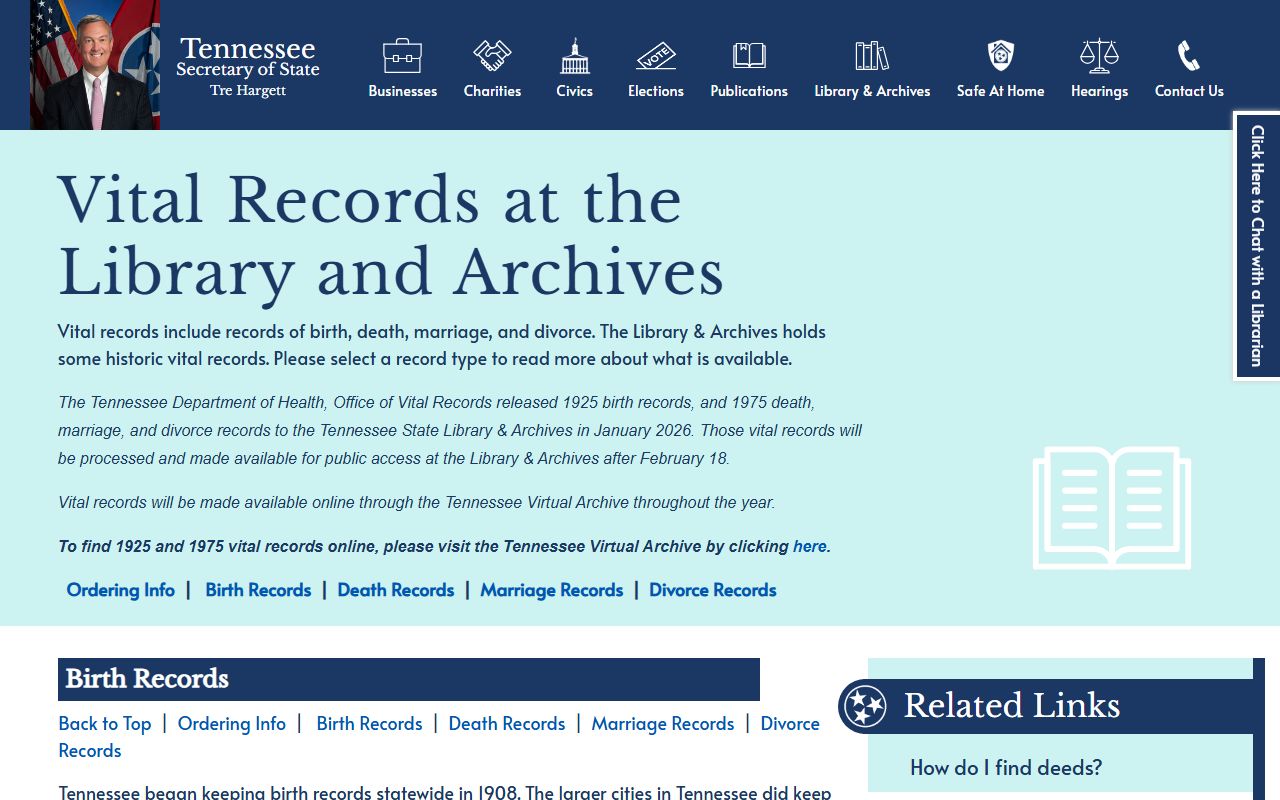
The Tennessee State Library and Archives guide is the best state-level map for old county divorce files that may have moved out of active use.
Carroll County Divorce Records Fees
Fees for Carroll County Divorce Records depend on the format you want. A plain copy, a certified copy, and a state certificate each follow a different fee path. The circuit court clerk can confirm the current county copy cost for a divorce decree or file copy. If a state certificate is enough, Tennessee Vital Records charges $15 per certified copy. That is the cleanest number in the whole process and the one most people can plan for without much trouble.
Tennessee law also shapes the file that gets created. Under T.C.A. 36-4-104, residency and filing rules determine where a divorce should be filed. Under T.C.A. 36-4-101, no-fault divorce still needs an agreed basis. Those rules shape the Carroll County case file long before someone asks for a copy. They also help explain why the court file can be more useful than a short certificate.
The Tennessee Vital Records help page at vitalrecords.tn.gov explains the state certificate path for Carroll County Divorce Records.
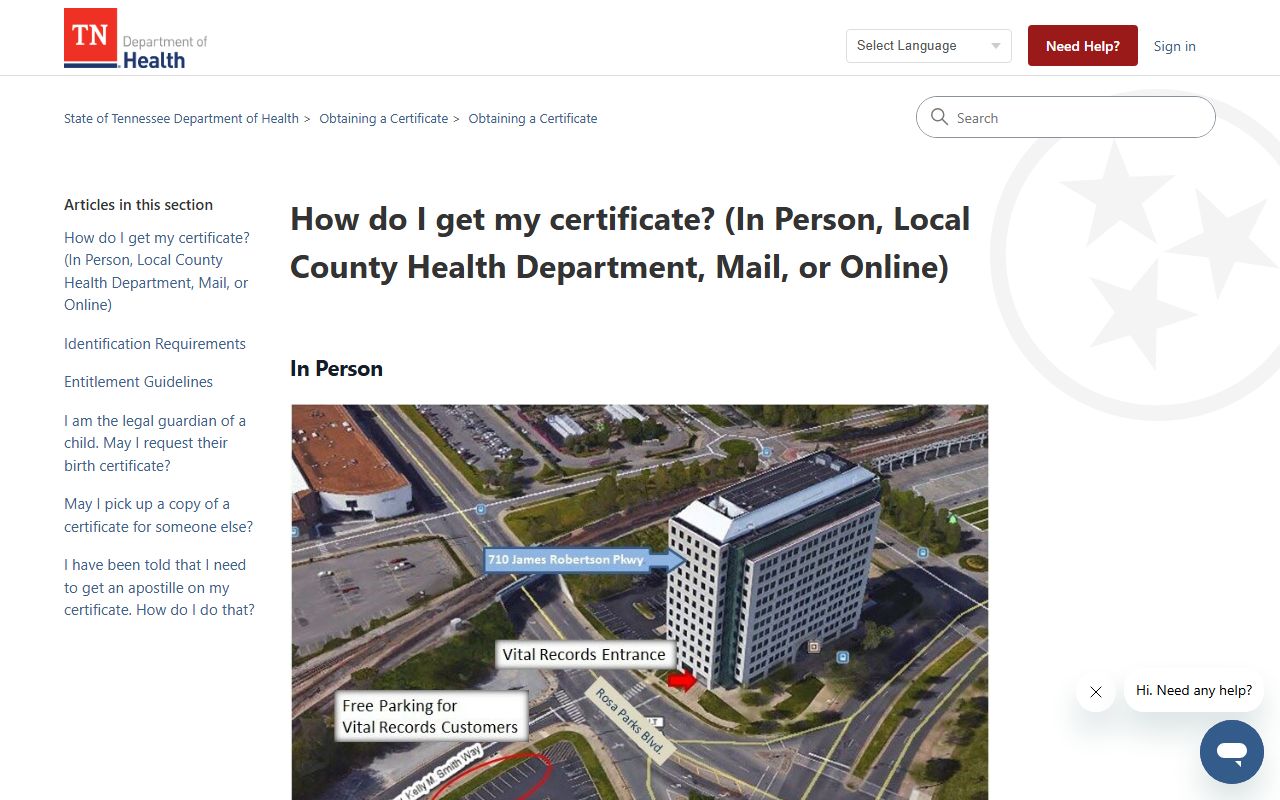
The Tennessee ordering guide helps searchers compare the state certificate path with the county court file path before they pay for a request.
Note: The cheapest option is not always the right one if you need the full decree or the full case packet.
What Carroll County Divorce Records Show
A Carroll County divorce file can include the complaint, the answer, the decree, and later orders about property or support. If the case had children, the file may also include custody or parenting documents. That is why the court packet matters. It tells the story of the case. A state certificate only confirms that the divorce happened and gives basic facts. If you need the legal terms, the county court file is the better record to ask for.
The court file can also show how the judge handled marital property under T.C.A. 36-4-121. That statute is the reason divorce decrees often include terms about land, accounts, debt, and other assets. In Carroll County, those details can matter later if a property deed, title, or financial account still needs to reflect the divorce. The divorce record is not just history. It can still affect what happens next.
The main items in a full file usually look like this.
- Complaint for divorce
- Answer or agreed response
- Final decree and judgment
- Property or support orders
- Later enforcement or correction papers
Because some older Carroll County records may be incomplete, it is smart to ask the clerk whether the file is full or partial before you leave the courthouse. That can save a second trip and help you decide whether the state archive route is still needed.
Historical Carroll County Divorce Records
Historical Carroll County Divorce Records are tied closely to the county's record loss risk. The county courthouse fire in 1931 may have affected some older files, and the Tennessee State Library and Archives has the microfilm backup that searchers often need. Carroll County was established in 1821, so there is a long span of history behind the records. That is useful for family history and also for legal searches that need a divorce date from an earlier generation.
The local history page at tsl.tn.gov is the key source for old Carroll County records. The broader archive guide at the Tennessee State Library and Archives vital records page explains when older divorce records move from the state vital records office into archive custody. That shift matters in Carroll County because it gives you a second path when the courthouse file is not enough.
The Tennessee Secretary of State FAQ at sos.tn.gov is another route into older Carroll County Divorce Records.
The Secretary of State FAQ leads back to the archive guide, which is the right place to start once a record is old enough to leave the active office path.
Carroll County history also makes the county register of deeds useful for related property records after a divorce.
The Carroll County Register of Deeds is located at PO Box 432, Carroll County Office Complex, Huntingdon, TN 38344. The office hours are 8:00 AM to 4:00 PM, the phone number is 731-986-1952, and the fax number is 731-986-1955. That office does not hold the divorce decree, but it can matter when property changes after a divorce and you need the land record trail.
Note: For old Carroll County records, use the archive and courthouse together, not one or the other.
Get Copies of Carroll County Divorce Records
To get copies of Carroll County Divorce Records, contact the Circuit Court Clerk in Huntingdon first. Ask for a plain copy, a certified decree, or the full case file. If the file is old, the clerk may direct you to the Tennessee State Library and Archives or may need extra time to search. Bring photo ID if you plan to ask in person. That keeps the request fast and clear.
If all you need is a state divorce certificate, use Tennessee Vital Records instead. That office offers in-person, mail, and online ordering, and it charges $15 per certified copy. The state path is often the right one when the certificate itself is enough. The county court file is better when you need the actual decree or any attached orders. Pick the document that fits the task and the office that keeps it.
The Library of Congress Tennessee vital records guide at loc.gov is another help path for Carroll County Divorce Records research.
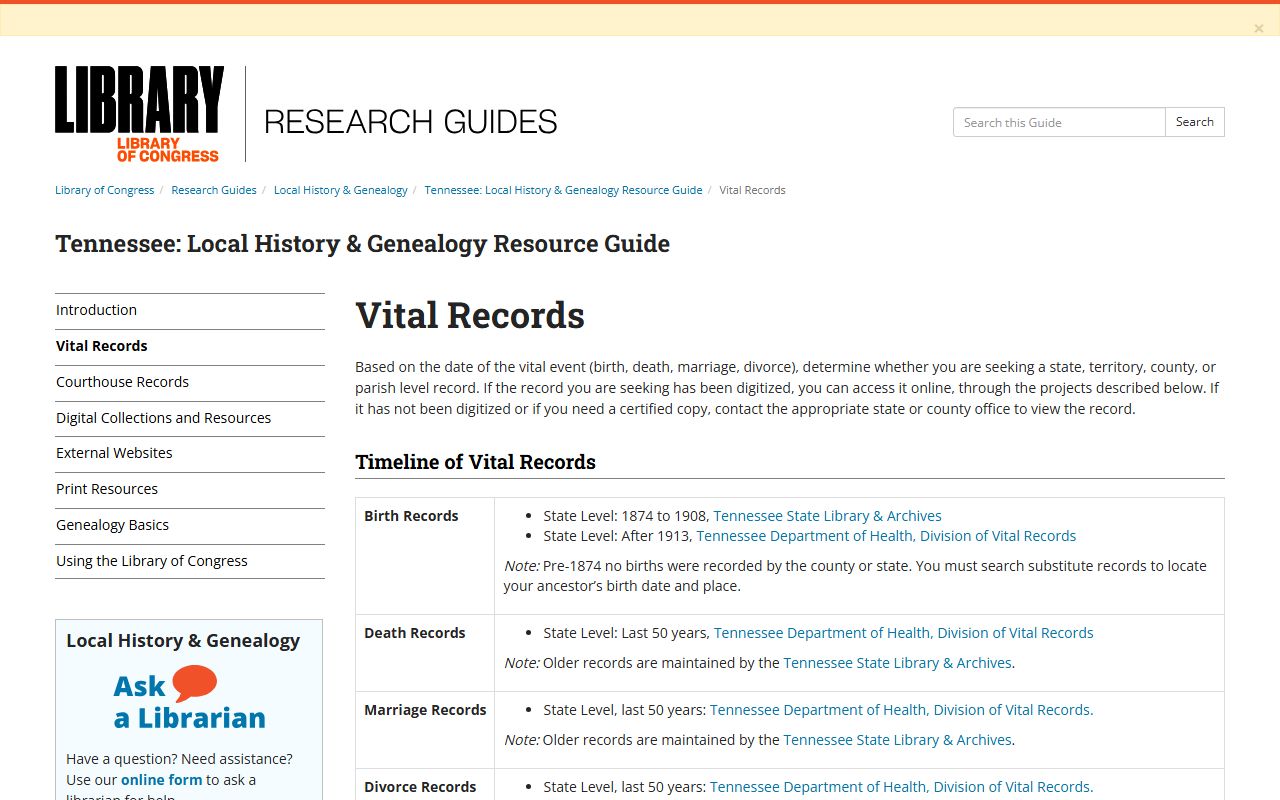
The Library of Congress guide is a useful extra map for older Tennessee divorce research when county records are thin.
Note: A court decree is usually the better copy if the record will be used for property, title, or a legal filing later.