
Search Cheatham County Divorce Records
Cheatham County Divorce Records usually begin in Ashland City, where the Circuit Court Clerk keeps the case file and can supply copies of decrees and other court papers. If the record is older, the Tennessee State Library and Archives may hold microfilmed material that reaches back to the early twentieth century. For newer proof, the Tennessee Office of Vital Records becomes the better fit. That split matters because Cheatham County searchers often need to know whether they want a court file, a state certificate, or a historical index before they make a request.
Cheatham County Quick Facts
Where to Find Cheatham County Divorce Records
The Cheatham County Circuit Court handles divorce proceedings and keeps the local case file. That file is the best source when you want the actual complaint, answer, decree, or later order that changed property or support terms. The court sits in Ashland City, which makes the county seat the natural starting point for most Cheatham County Divorce Records searches. The Circuit Court Clerk can also direct you to the right filing desk if you are not sure whether your request belongs in person, by mail, or through a records inquiry.
Cheatham County also has a separate county clerk office that handles marriage licenses and related administrative work. That office is useful when you are trying to prove the marriage that came before the divorce, but the clerk research path still points back to the circuit court for the actual divorce file. The county research page at the Cheatham County Circuit Court is the main local source, while the county clerk page helps with related record questions that often come up during a divorce search.
A good historical Cheatham County Divorce Records image comes from Archives.com, which matches the local microfilm trail described in the research notes.
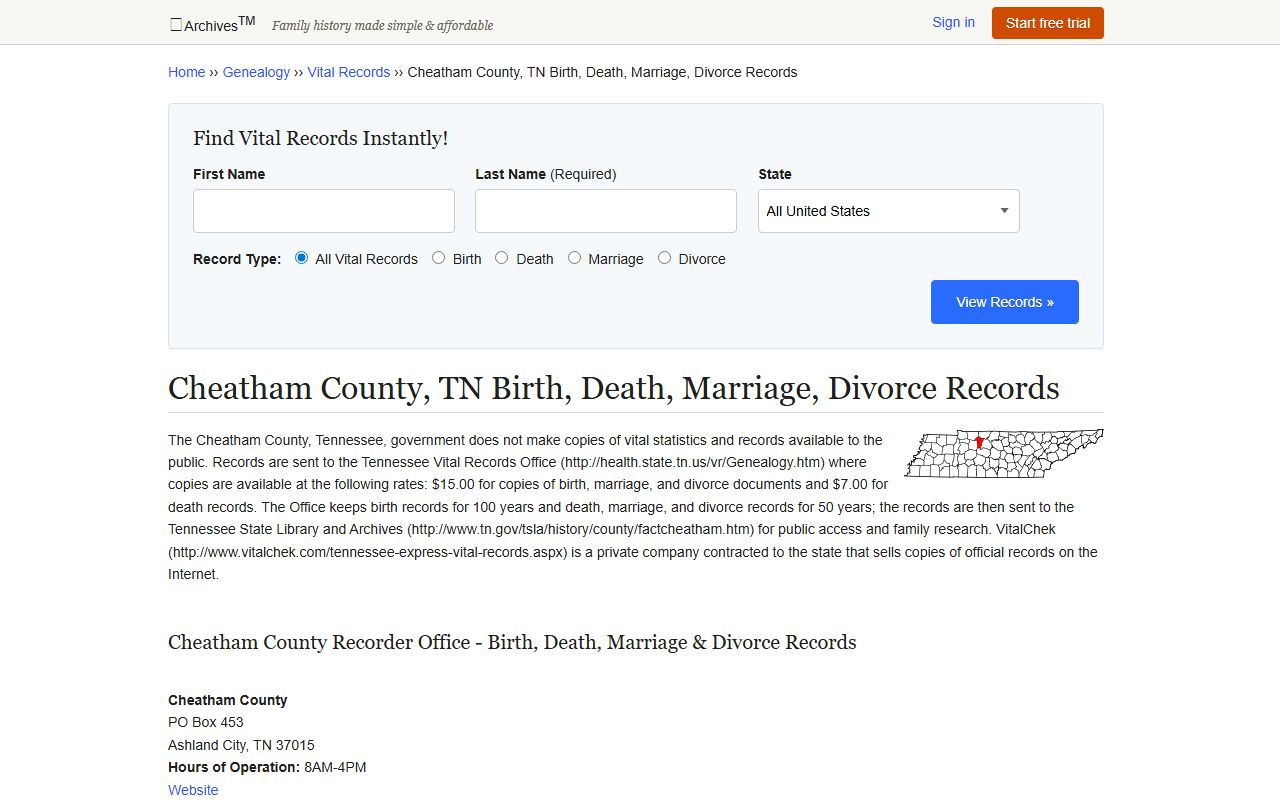
That record image fits the county history well because Cheatham County has divorce records on microfilm from 1919 through 1950 in the Tennessee State Library and Archives.
Note: A state divorce certificate confirms that a divorce happened, but it does not replace the county court file in Cheatham County.
How to Search Cheatham County Divorce Records
The search process works best when you start with a name, an approximate year, and the county seat. In Cheatham County, the clerk staff can often narrow a request much faster if you know one spouse's full name and the rough date of the case. If you are searching for old Cheatham County Divorce Records, add a second clue such as a known home town, a prior marriage year, or a later deed transfer. That extra detail matters because older case indexes were built for paper use and can be thin on context.
Cheatham County searchers should also remember the statewide reporting rule in T.C.A. 68-3-402. The clerk must forward divorce records to the state vital records office, which is why newer requests may be resolved through the state system instead of the courthouse. For current certificate-level requests, the state help center at Tennessee Vital Records explains the in-person, mail, and online routes.
Use these details before you ask for Cheatham County Divorce Records:
- Full legal name of at least one spouse
- Approximate year the divorce was filed or finalized
- Whether you need a decree, a certificate, or both
- Any case number, prior address, or town name you already know
The Tennessee Court System and county clerk staff can help narrow the path, but the record type still matters. A certificate request may be answered by the state, while a full case search still belongs with the Cheatham County Circuit Court Clerk. The difference saves time and keeps you from ordering the wrong document.
Note: Cheatham County Divorce Records often move faster when you can say whether you want proof of the event or the full court order.
Cheatham County Circuit Court Records
The Cheatham County Circuit Court keeps the files that matter most in a divorce case. That includes the complaint, any answer, motions, agreements, the final decree, and later orders that can affect custody or property. If a case was contested, the file may be larger. If it was agreed, the court record may be shorter but still important. Either way, the circuit court file is the best source when the goal is to see how a Cheatham County divorce was actually resolved.
For that reason, the county court page should be your first official stop. It gives you the local office path and the county seat location in Ashland City. The Tennessee divorce statute T.C.A. 36-4-101 helps explain why the court record can include no-fault grounds or fault grounds. Another part of Tennessee law, T.C.A. 36-4-101(b), sets the waiting period rules that also become part of the case timeline.
When a county file is complete, it can show where the divorce was filed, when the answer was entered, and when the decree became final. If children were involved, the file may also hold parenting plan material or support orders. That is why Cheatham County Divorce Records are more useful than a simple certificate when you need the real history of the case.
The state reporting trail is visible in the Tennessee code itself, which is why the court file and the state certificate line up so well.
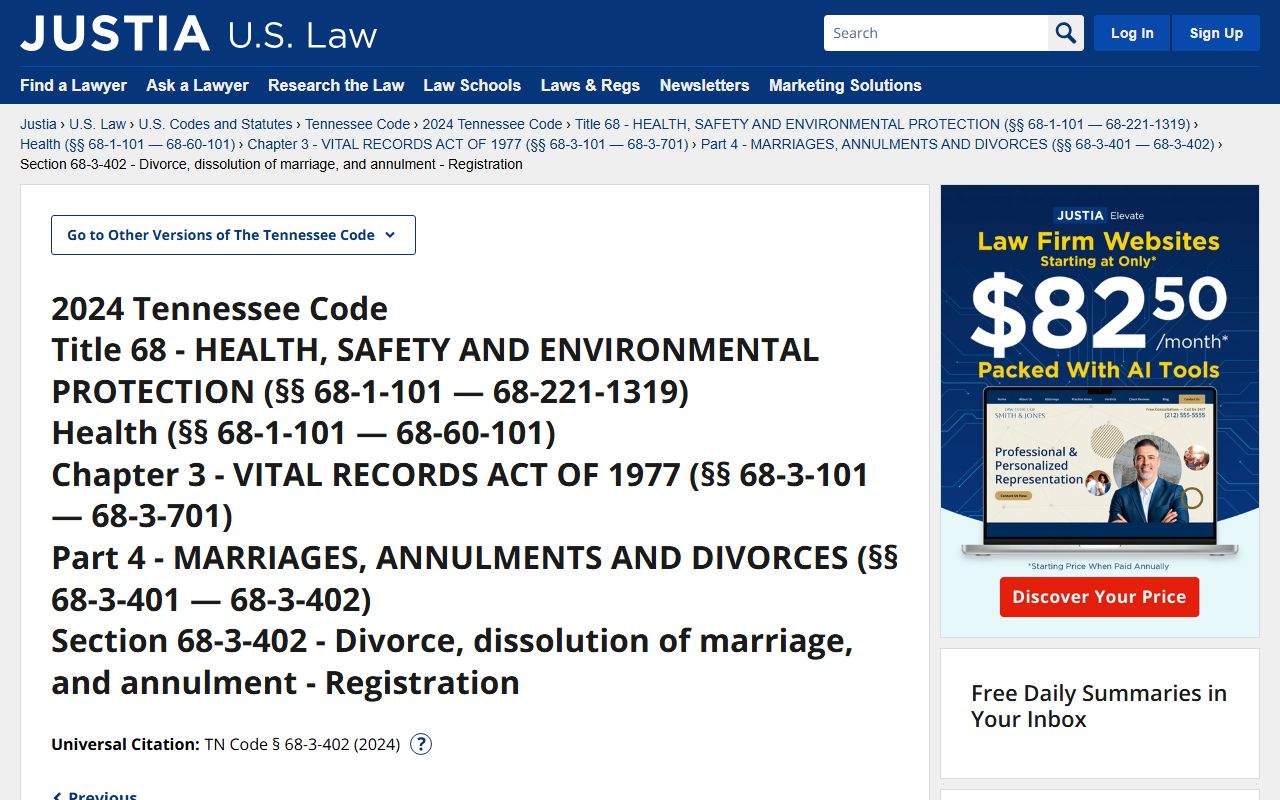
The image matches the monthly clerk reporting rule that sends divorce record information from the county to the state vital records office.
Historical Cheatham County Divorce Records
Historical Cheatham County Divorce Records are especially useful for family history work. The Tennessee State Library and Archives notes that Cheatham County has divorce records from 1919 through 1950 available on microfilm. That range matters because it gives researchers a concrete place to look when a case is too old for normal courthouse handling. The county was established in 1856, so early family groups can also show up in older land, marriage, and court materials that sit beside the divorce record trail.
The state archive path becomes more useful as the record gets older. The Cheatham County fact page gives the county history context. The Tennessee State Library and Archives guide and the Secretary of State FAQ both point researchers toward the same archive system when older records move out of the courthouse.
Older Cheatham County Divorce Records often reward patient searching. A file may not be indexed the way a modern case is indexed. A name spelled one way in the decree and another way in a later deed record can also make the search harder. Start with the county seat, then work outward to the archive guide if the court cannot find the file right away.
Note: If a Cheatham County divorce is old enough to be on microfilm, the archive route can be faster than a courthouse walk-in search.
Getting Copies in Cheatham County
Once you find the right case, the next step is getting a copy that fits your purpose. The Cheatham County Circuit Court Clerk can provide certified copies of divorce decrees from the court file. A plain copy may be enough for background use, but certified copies are better when the record will be used for a legal change, a title update, or another formal purpose. If you need a historical record, the State Library and Archives may be the only place that holds the surviving copy or microfilm image.
The Tennessee Office of Vital Records gives another copy path for newer Tennessee Divorce Records. Its help center at Tennessee Vital Records explains that requests can be made in person, by mail, or through the official online vendor. VitalChek is useful when a state certificate is enough, and the CDC page also confirms the state office location and the $15 certificate fee for state-level copies.
For Cheatham County Divorce Records, that means you may end up with two different records: a county decree and a state certificate. They serve different jobs. The decree is the stronger paper trail. The certificate is the simpler proof that a divorce was entered. The federal guidance at the Eastern District of Tennessee makes the same point when it warns that verification letters are not legal substitutes for a certified decree.
Public Access and State Rules
Cheatham County Divorce Records are generally open to the public unless a judge seals part of the file or a line is redacted for privacy. The Tennessee Public Records Act, T.C.A. 10-7-503, supports access to public records held by government offices. Even so, divorce files can still contain private data that gets covered before the copy is released. Social security numbers, minor child details, and certain financial lines are common examples.
The state entitlement guidelines at Tennessee Vital Records matter most when you order a certificate. They explain who may request a divorce record from the state and what proof may be needed for a spouse, child, parent, attorney, or legal representative. If you are searching for Cheatham County Divorce Records as a family member or researcher, the county file may still be open, but the state certificate request can be more limited.
Tennessee divorce records also connect to property rules under T.C.A. 36-4-121. That section deals with fair division of marital property. It is part of why the decree matters so much. If the divorce changed who owned a home or other asset, the court order may later matter in the register of deeds office as well. In Cheatham County, the full record path often reaches beyond one office.
More background on older record handling can also be found through the Library of Congress Tennessee genealogy guide and Archives.com. Both reinforce the same search pattern: recent Cheatham County Divorce Records start at the courthouse, while older records may live in the archive trail.
Note: Public access does not mean every page in a divorce file is released without redaction.
Related Cheatham County Divorce Records Sources
Cheatham County searches often move between the courthouse, the county clerk, and state support pages. If you need the local office again, start with the Cheatham County Circuit Court. If you need the marriage side of the family file, the county clerk office is the related office most people use. For statewide follow-up, the Tennessee Vital Records help center and VitalChek cover certificate ordering, while the state history page gives the best path for older Cheatham County Divorce Records.
The archive side is just as important. The state archive guide and the Secretary of State FAQ point researchers toward the same archive system. When you combine those sources, you can usually tell whether the record belongs in a courthouse file, a state certificate order, or a microfilm search in Nashville.