
Locate Clay County Divorce Records
Clay County Divorce Records are tied to Celina, where the circuit court clerk keeps the local case file and can help with certified copies when the record is still available at the courthouse. Clay County was established in 1870, so the county record trail is not as old as some Tennessee counties, but it still includes useful court and archive material for family history and legal searches. If you need only proof that a divorce was entered, the state certificate path may be enough. If you need the full order or docket history, the county court file is the better place to begin.
Clay County Quick Facts
Where to Find Clay County Divorce Records
The Clay County Circuit Court handles divorce proceedings and keeps the main divorce file. That file may include the complaint, answer, decree, and later orders that changed the case. Celina is the county seat, so Clay County Divorce Records searches normally start there. The circuit court clerk can tell you whether a record is ready, archived, or available only through a records request.
The county clerk office is the related office that handles marriage licenses and other county business. That office can help when you want to trace the marriage side of the family story, but the divorce file itself belongs with the circuit court. The local official page at the Clay County Circuit Court is the first county link to use. For related records, the county clerk office is the other office people often check during the same search.
Clay County has no local manifest image, so the state archive guide is the best visual match for the county's record path. The guide at the Tennessee State Library and Archives is especially useful when an older divorce file is not sitting at the courthouse counter.
The archive guide image below is a good stand-in for Clay County Divorce Records research because older files often move to the state repository.
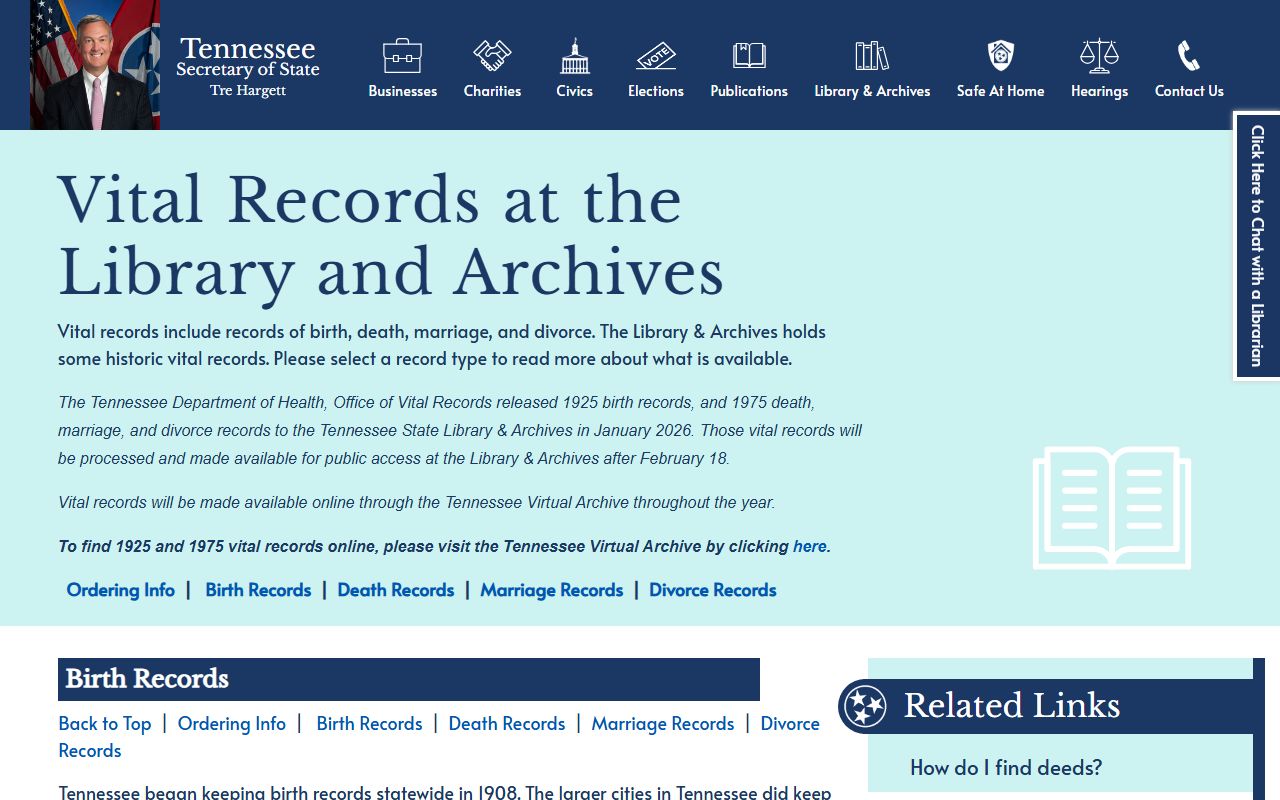
That image fits the county because older Clay County records are often easier to trace through state preservation tools than through a live office desk search.
How to Search Clay County Divorce Records
Clay County Divorce Records searches go faster when you give the clerk the basic facts first. A name and a rough year are often enough to begin. If you know both spouses, that is even better. If you do not know the exact date, a decade or a home town can still help. Clay County court indexes may be simple, so the request gets easier when you know whether you want a decree, a docket entry, or a certificate from the state.
The state reporting rule in T.C.A. 68-3-402 explains why newer Clay County Divorce Records can also be verified through Tennessee Vital Records. The state help page at Tennessee Vital Records lays out the in-person, mail, and online request options. That path is often best when you only need proof of the event.
Bring this information before you request Clay County Divorce Records:
- Full name of the spouse or spouses
- Approximate year the divorce was filed or finalized
- Whether you need the decree or the certificate
- Any case number, old address, or family clue that narrows the file
That small list usually gives the clerk enough to start the search. If the divorce is not in active use, the court may need time to pull it from storage or direct you to an archive source.
Clay County Circuit Court Records
The Clay County Circuit Court file is the stronger record when you need the legal details behind a divorce. It can show the filing date, the decree, the terms approved by the judge, and any later orders about custody, support, or property. That is why Clay County Divorce Records are more useful than a short certificate when the goal is to understand how the case ended.
Tennessee divorce law helps explain what you may find in the file. Under T.C.A. 36-4-104, residency rules matter before filing. Under T.C.A. 36-4-101, the court can enter a divorce on irreconcilable differences or fault grounds. Property division is addressed under T.C.A. 36-4-121, which is one reason the decree may matter later for a deed, title, or financial file.
Clay County records can also reveal how long the case took to finish. If the court entered a waiting period, a final decree date, or a later amendment, those details will usually sit in the file. The county court copy is the best way to capture that complete story.
The Tennessee code image is useful here because it reflects the reporting chain from court to state.
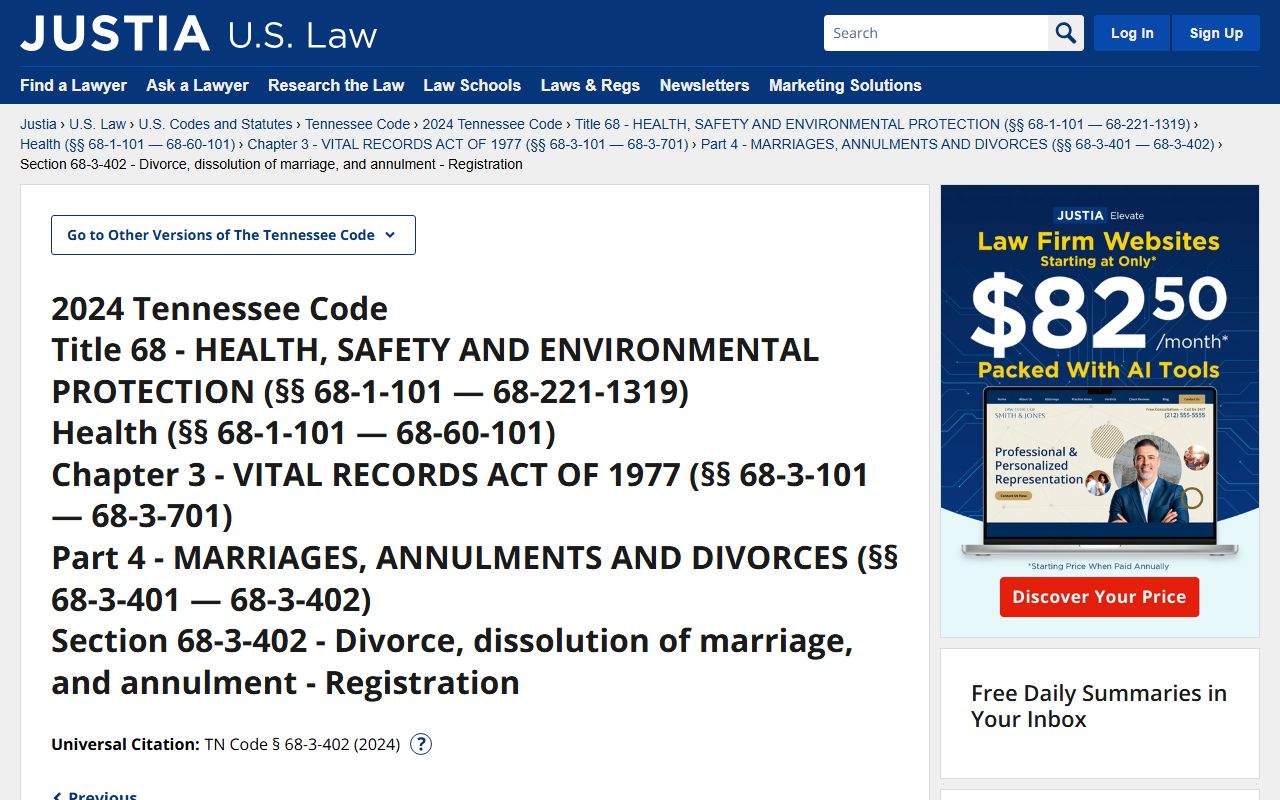
That image matches the county file because the county record is what feeds the state certificate system after the clerk reports the divorce.
Historical Clay County Divorce Records
Historical Clay County Divorce Records can still matter even though the county is smaller and younger than some Tennessee counties. Clay County was established in 1870, and the Tennessee State Library and Archives notes that county court records are available on microfilm. That means older divorce material may be preserved even when the file is not sitting in the active courthouse file drawer. For genealogy work, that is often enough to move a search forward.
The county history page at TSLA Clay County history gives the county background. The general archive guide explains where older divorce records go, and the Secretary of State divorce FAQ points researchers back to that archive path when the courthouse is not the final stop.
Clay County Divorce Records searches often benefit from a wider family timeline. Marriage licenses, deeds, and probate notes can give you the clue you need to identify the right year. That is especially useful when the court index is brief or when a surname changed after the divorce.
The archive guide image below fits Clay County because old records may live in long-term state storage.
That guide matches the county search path because the same state archive system is used for older Clay County materials.
Getting Copies in Clay County
If you need a copy of Clay County Divorce Records, the circuit court clerk is the first office to contact. A certified decree is best for legal use. A plain copy may work for family history notes or background research, but certified copies are the safer choice when a court or agency needs proof. If the file is archived, the clerk may direct you to the State Library and Archives or explain how to order a copy from the court record source.
For a state-level certificate request, Tennessee Vital Records provides the separate ordering path. The help center at Tennessee Vital Records and VitalChek cover the online and mail route. That is useful when the state certificate is enough and you do not need the full county order.
The federal page at the Eastern District of Tennessee reminds requesters that a verification letter is not the same as a certified decree. Clay County Divorce Records work best when you know which document your office needs before you place the request.
Public Access and State Rules
Clay County Divorce Records are generally public unless a judge seals part of the file or the clerk redacts private information before release. Tennessee's public records law, T.C.A. 10-7-503, gives the public the right to inspect government records. Divorce files can still be limited in places that show social security numbers, child information, or financial account data.
The state entitlement rules at Tennessee Vital Records matter most for certificate requests. They tell you who may request the record and what proof is needed if the request comes from a spouse, child, parent, attorney, or guardian. That makes a difference if you are trying to order Clay County Divorce Records for someone else.
Clay County divorce orders can also affect property under T.C.A. 36-4-121. If the decree changed ownership or support, the order may matter outside the divorce case itself. The county file is often the most complete source for that follow-up work.
For broader context, the Library of Congress Tennessee guide and Archives.com both reinforce the county and archive split that applies in Clay County.