
Find DeKalb County Divorce Records
If you need DeKalb County Divorce Records, start with the court that handled the case in Smithville. The county clerk helps with marriage licenses and routine office needs, but the Circuit Court Clerk is the place that keeps the divorce file itself. That split matters when you want a decree, a filing date, or the older court papers that sit behind the final order. State archives and the Tennessee Office of Vital Records fill the gaps when a search turns toward a certificate or an older record set.
DeKalb County Quick Facts
DeKalb County Divorce Records Sources
The county route comes first for DeKalb County Divorce Records. The DeKalb County Circuit Court handles divorce proceedings and the clerk can issue certified copies from the file. The county clerk office is still worth knowing, because it handles marriage licenses and other routine county business in Smithville. When a searcher needs the complete case file, though, the circuit court clerk is the office that matters most.
That office split makes DeKalb County Divorce Records easier to sort. A certificate from the state proves a divorce happened. A court file proves how the case moved. Tennessee keeps that record path in T.C.A. section 68-3-402, which requires court clerks to forward divorce records to the Office of Vital Records. That is why a county search and a state search can both matter on the same request.
The county history page from the Tennessee State Library and Archives also helps frame the local record set. DeKalb County was established in 1837, and older court material has been preserved on microfilm. For a searcher, that means the name on the file, the filing year, and the court location all matter before the request goes out.
Before ordering, it helps to check the Tennessee State Library and Archives guide, which explains how Tennessee records move between offices.
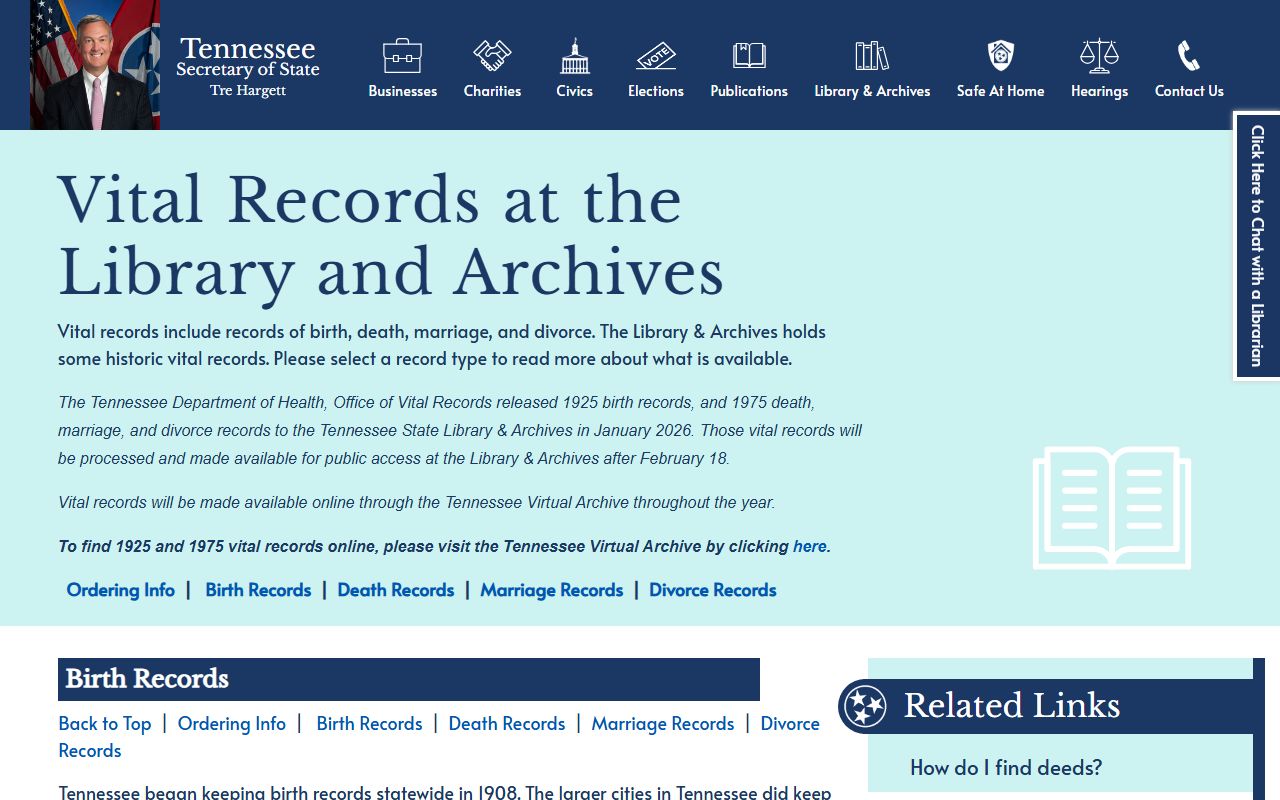
That guide points you toward the right place for older DeKalb County Divorce Records and state-level certificate requests.
Search DeKalb County Divorce Records
Searches in DeKalb County work best when you start with a name, a year, and the county seat. Smithville is the place to begin because that is where the county court work is centered. If you know the case number, that makes the search faster. If you do not, the clerk can still help, but an approximate filing year is a real time saver. That is especially true for older DeKalb County Divorce Records, where the paper trail may live in a different storage set than a recent file.
Tennessee divorce filings also depend on residency rules. Under state law, the court clerk has to report the divorce record to vital records. And under Tennessee divorce filing rules, the court looks at where the grounds arose and where the filing spouse lived before the case started. That means a DeKalb County search often has a local angle, but the full answer may still require a statewide certificate check.
Keep the document type in mind. A decree is a full court order. A certificate is shorter and only proves the divorce event. People often ask for DeKalb County Divorce Records when they really need one of those two forms, not every paper in the case. The right office can usually narrow that down quickly once you explain why you need the record.
Note: A search request gets better fast when you give the clerk a spouse name, a rough year, and the court city.
DeKalb County Divorce Records and Court Files
The full DeKalb County Divorce Records file is more than the final decree. It may also include the complaint, the response, service papers, and any orders the judge entered before the case ended. Those papers show how the case moved. They can also explain why a record request needs a certified copy, not just a basic lookup result. If you are trying to prove name changes, a property transfer, or a final judgment, the court file is usually the better source.
Public access rules matter here. Tennessee generally treats court records as open under the Public Records Act, but some parts of a divorce file may be redacted. Child data, bank numbers, and other private details can be removed from public copies. That does not erase the case. It just narrows what the public can see. For DeKalb County Divorce Records, the clerk can still point you to the version that is available for public review.
DeKalb County also fits the statewide filing pattern in Tennessee vital records law. Court clerks send the divorce record to the state, and the Office of Vital Records keeps the certificate side. If your search began at the county courthouse but ends with a state order, that is normal. It means you are moving from the file copy to the proof-of-event copy.
When the record is needed for a legal step, the court copy is usually the safer bet. It shows the full terms, not just the summary.
Before you order a county copy, read the Tennessee divorce record filing rule so you know why the state keeps a second version of the record.
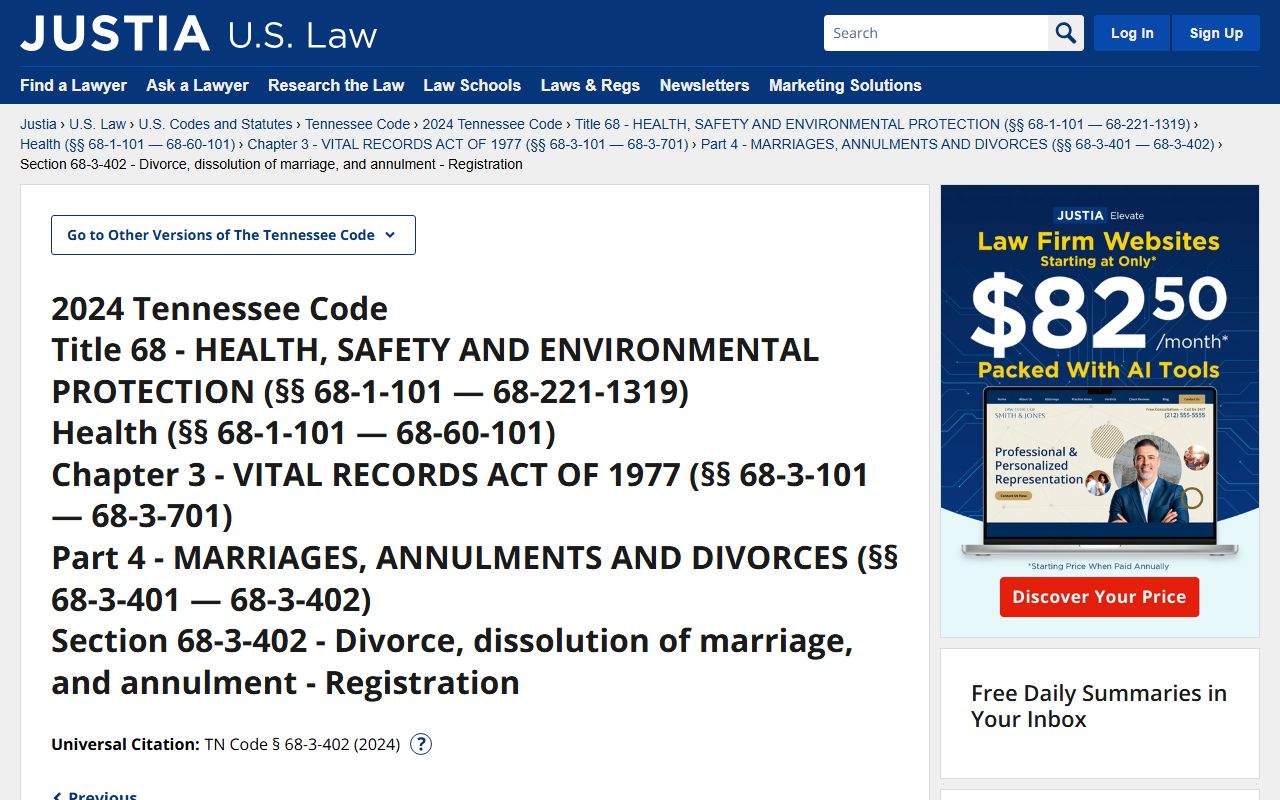
This state record image matches the law that sends divorce records from the court clerk into Tennessee's vital records system.
Historical DeKalb County Divorce Records
Historical DeKalb County Divorce Records are the kind that usually take more than one stop. The county was established in 1837, so older files may sit in county court storage, microfilm, or the state archive system rather than in a current clerk drawer. The Tennessee State Library and Archives has a county history page and broader archive holdings that help researchers narrow down the right period. That is useful when a family search or property question reaches back past the current court office.
The state archive route matters more when the case is old. Tennessee sends many older records to the State Library and Archives after the retention window closes at the Office of Vital Records. That is why a search for historical DeKalb County Divorce Records can start with Smithville but still end with Nashville archive material. If you are trying to locate a long-ago decree, the archive note may be more useful than the current clerk line.
The archive guide from the state explains that historical divorce records move into preservation and public access collections over time. That means the county search and the archive search support each other. One finds the case path. The other finds the preserved copy. For older DeKalb County Divorce Records, both matter.
Use the archive guide when the date is old enough that the state office no longer has the active record set. For a quick state summary, see the Secretary of State divorce records FAQ.
That state FAQ is a quick way to move from a county question to the archive guide that covers older record storage.
Note: Older records can live in microfilm collections, so a year range is often more useful than a broad search by name alone.
Ordering DeKalb County Divorce Records
Once you know what you need, ordering DeKalb County Divorce Records becomes simple. If you need a certificate, start with the Tennessee Office of Vital Records. The state help center explains that people can order in person, by mail, or online. If you need the full court packet, contact the DeKalb County Circuit Court Clerk instead. The county clerk office is not the divorce file source, so it is better to call the court first when the record will be used for a legal or family history purpose.
State ordering rules also help with entitlement. Tennessee asks for proper identification and limits some certificate requests to qualified people. That means a spouse, child, parent, or authorized representative may be able to order the record, but the proof requirement still matters. If you are not sure which version of DeKalb County Divorce Records you need, ask whether a certificate will satisfy the purpose before you pay for a full court copy.
For a step-by-step ordering path, use the Tennessee Office of Vital Records help center.
The county and the state work together here. The county file is the long version. The state certificate is the short version. They answer different questions, and DeKalb County Divorce Records requests go faster when you know which one you need before you start.
When you are ready to place a state request, the official help page gives the cleanest steps.
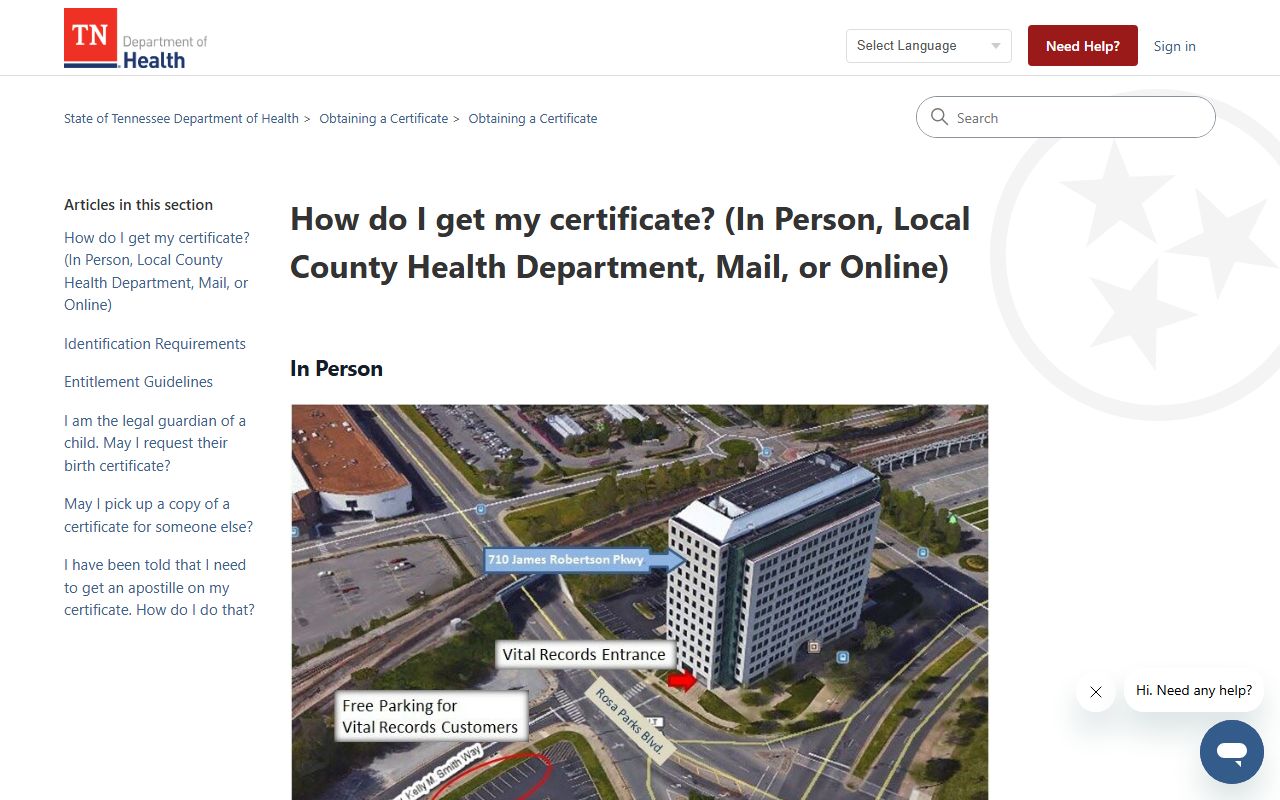
That page is the best match for certificate orders when the county clerk file is not what you need.
Public Access to DeKalb County Divorce Records
Public access to DeKalb County Divorce Records is broad, but it is not unlimited. The Tennessee Public Records Act gives the public a strong right to inspect government records, and divorce cases usually fall within that rule. Still, parts of the file may be sealed or masked when the court needs to protect a child, personal account data, or other private details. That means the record can remain public even when some pages are not fully visible.
If you are researching DeKalb County Divorce Records for genealogy or background on a property matter, the public copy may be enough. If you need a certified version for a name change, bank, or title issue, ask for the clerk-certified decree. The court copy is the safer choice for most formal uses. It carries the seal and the clerk stamp that many agencies want to see.
That difference is why the county court file, the state certificate, and the archive copy all matter in different situations. A good DeKalb County Divorce Records search starts with the right office and ends with the right document type.
Note: Public access is broad, but a sealed page or a redacted page can still sit inside an otherwise open divorce file.
Browse County Resources
Use the county index to compare DeKalb County Divorce Records with other Tennessee counties, or move back to the state page for the main search path.