
Search Dickson County Divorce Records
Dickson County Divorce Records are usually tied to the Circuit Court Clerk in Charlotte. That is the office to start with if you want the decree, the filing date, or the full case file. The county clerk handles marriage licenses and other routine work, but the divorce file itself sits with the court. Older records are another story. Tennessee keeps Dickson County historical divorce material on microfilm, which makes the county a good example of why a search can begin at the courthouse and end at the archive.
Dickson County Quick Facts
Dickson County Divorce Records Sources
The local search starts in Charlotte. The Dickson County Circuit Court handles the divorce case file and the clerk can provide certified copies. The county clerk office is still important because it handles marriage licenses and routine county business, but it is not the office that keeps the divorce decree. That difference matters when you want the actual order instead of a general lookup result.
Dickson County Divorce Records also follow the statewide Tennessee pattern. Court clerks send divorce records to vital records, and the state keeps a certificate record after that. Tennessee law in T.C.A. section 68-3-402 explains that reporting step. So a person who starts with Charlotte may still need the state office if the request is for proof of divorce rather than the whole court file.
Historical context matters in Dickson County too. The Tennessee State Library and Archives says the county has divorce records from 1849 through 1932 on microfilm. That is a useful span for family history work and older title questions. The county seat changed the paper trail, but not the need to know what year the divorce was filed. For Dickson County Divorce Records, the year can be as important as the surname.
For the older record path, the state archive guide gives a clear roadmap.
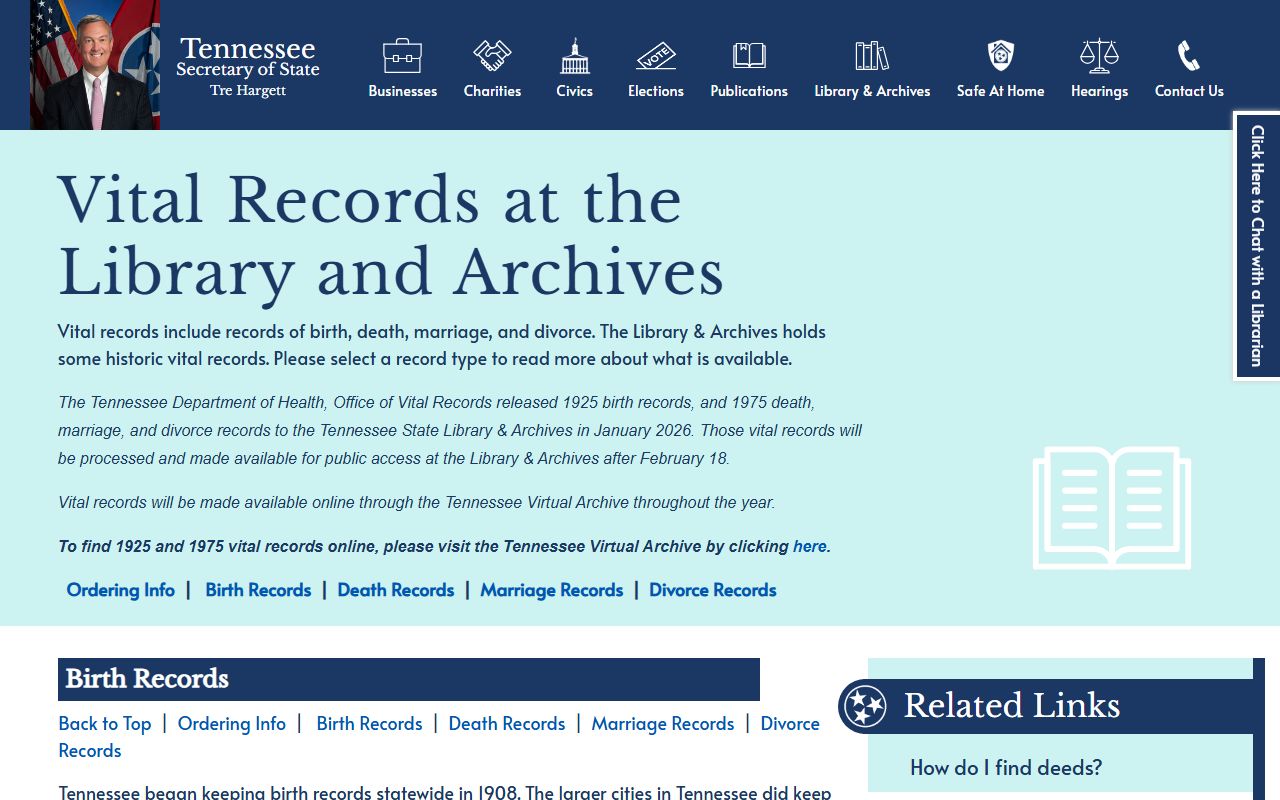
That guide helps show when a Dickson County request should shift from the courthouse to the archive shelf.
Search Dickson County Divorce Records
A Dickson County search works best when you begin with a spouse name and a filing year. Charlotte is the center of the county court system, so the case file is best chased there first. If you already know the case number, that helps a lot. If you do not, a rough date range still narrows the clerk search and can keep you from asking for the wrong book or the wrong microfilm reel.
The filing rules also matter. Tennessee residency and venue rules can affect where a divorce is filed and where the file will be stored. If the grounds arose in Tennessee, the filing rules are easier. If the grounds arose elsewhere, the residency rule gets tighter. Those rules do not change where Dickson County Divorce Records are kept once the case is filed, but they do explain why a record might live in Dickson County even when one spouse lived somewhere else later.
When you ask for Dickson County Divorce Records, be clear about the document you need. A decree is a final order. A certificate is the shorter state record. The two are linked, but they answer different questions. If the record will be used for a court step, property issue, or name change, the decree is usually the safer target.
Note: A one-year range is much better than a guess, and a case number is better still.
Dickson County Divorce Records and Court Files
The full Dickson County Divorce Records file can contain the complaint, the answer, temporary orders, service papers, and the final decree. That is useful when a person needs to see the whole path of the case instead of just the result. It is also useful when a later legal step depends on the exact words in the decree, such as a property division clause or a name restoration order. The clerk can usually tell you whether a plain copy or a certified copy is the better fit.
Public access is broad, but the copy may still be marked up. Tennessee public records law allows access to court records, yet some details are often redacted from public copies. Children, bank numbers, and other private items may be hidden. That does not make the file private. It just means the public version is cleaned up before it is released. For Dickson County Divorce Records, that distinction is common and expected.
The county archive note matters here too. Since Dickson County has historical divorce records on microfilm, older files may be in a different stack from newer court records. A searcher who knows the likely date range can tell the clerk whether the request is for a live court file or an archive copy. That small detail can save time on Dickson County Divorce Records.
When the divorce record will be used for a formal step, the state filing rule shows why the county clerk and the state office both play a role in the same divorce record trail.
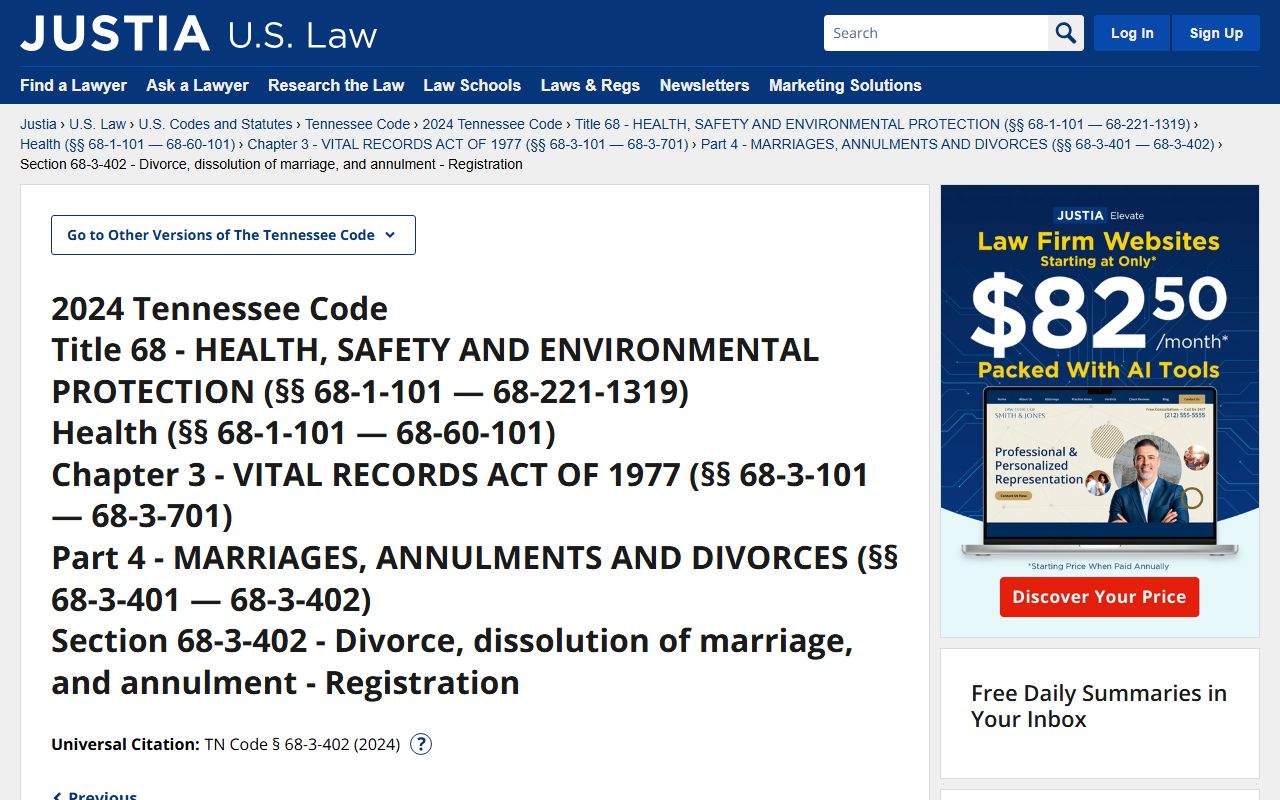
The state filing rule explains why the county clerk and the state office both play a role in the same divorce record trail.
Historical Dickson County Divorce Records
Dickson County is a strong historical county for divorce research because the archive span is so clear. The State Library and Archives lists divorce records from 1849 through 1932 on microfilm. That means a family historian does not always need to guess whether the record survived. There is a real path to search, and the record set has a start and end point that can be matched to a family timeline.
That history also explains why older Dickson County Divorce Records may not behave like newer files. The county was established in 1803, and the paper trail has moved through different storage systems over time. If a request is for a case that sits inside the 1849-1932 span, the archive path may be the fastest one. If the request is newer, the circuit court clerk still leads.
Archive work can feel slow, but it is often the right work. A microfilm record may give you the date, the names, and the county with more certainty than a broad online search. For Dickson County Divorce Records, that can be enough to confirm a family line or prove which county held the case.
Before you order a current copy, the historical search page helps frame the microfilm trail.
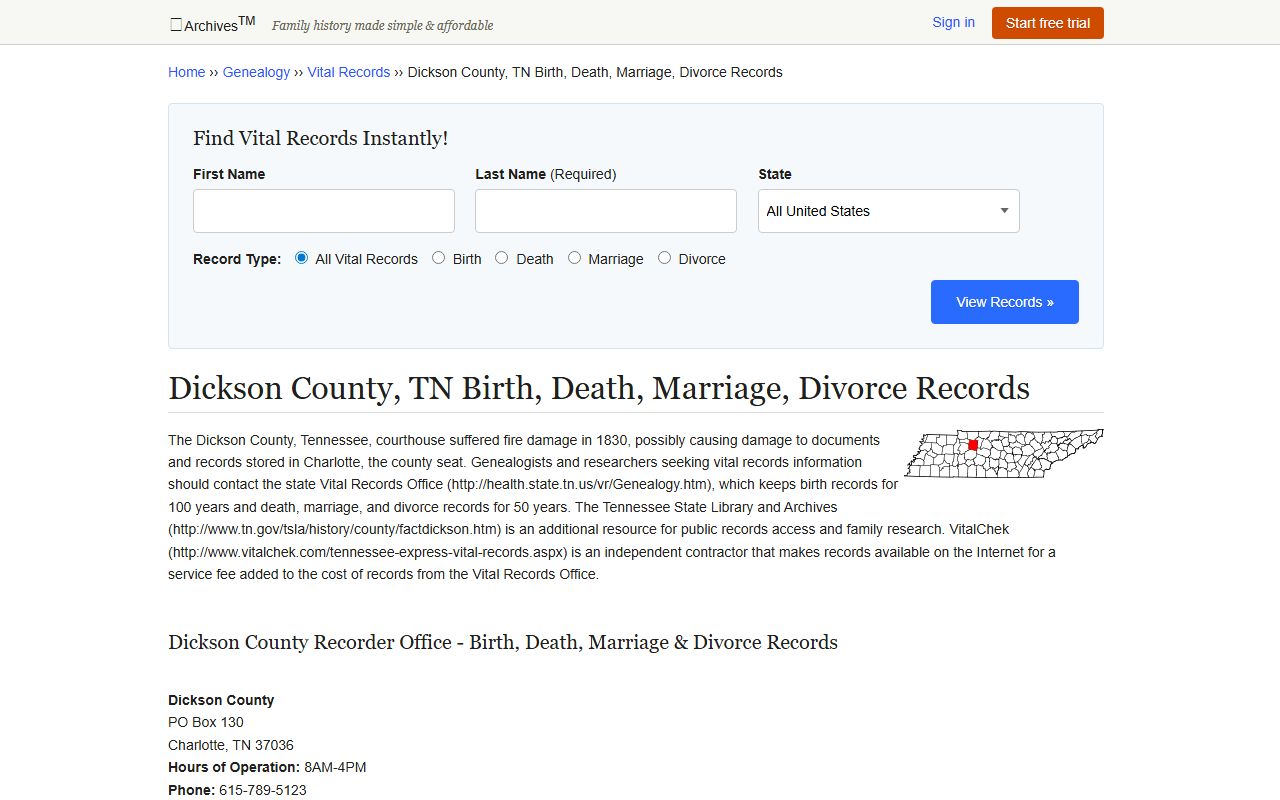
This image reflects the research trail for Dickson County Divorce Records in the historical record set.
Ordering Dickson County Divorce Records
Ordering Dickson County Divorce Records depends on the document you want. The county court is the place for the decree and the full file. The Tennessee Office of Vital Records is the place for the shorter certificate. If you want a quick state order, the help center explains how to request records in person, by mail, or online. That option is often useful when the record is needed for a basic proof step rather than a full court review.
Some searchers also need to think about entitlement. Tennessee limits certain certificate requests to the person named on the record, family members, or authorized representatives. That rule is not a problem if you are the spouse or child named in the research guidance, but it does matter if you are requesting for someone else. Dickson County Divorce Records can move quickly once the office knows whether you want a certified copy or a plain court printout.
For online ordering, Tennessee uses VitalChek as the official vendor. That can be helpful when you need a card-based request and want to avoid mailing forms. Still, the vendor does not replace the county file. It only changes how the state certificate order is processed. The record path stays the same.
When you are ready to order, start with the state office and then move to the county clerk if the certificate is not enough.
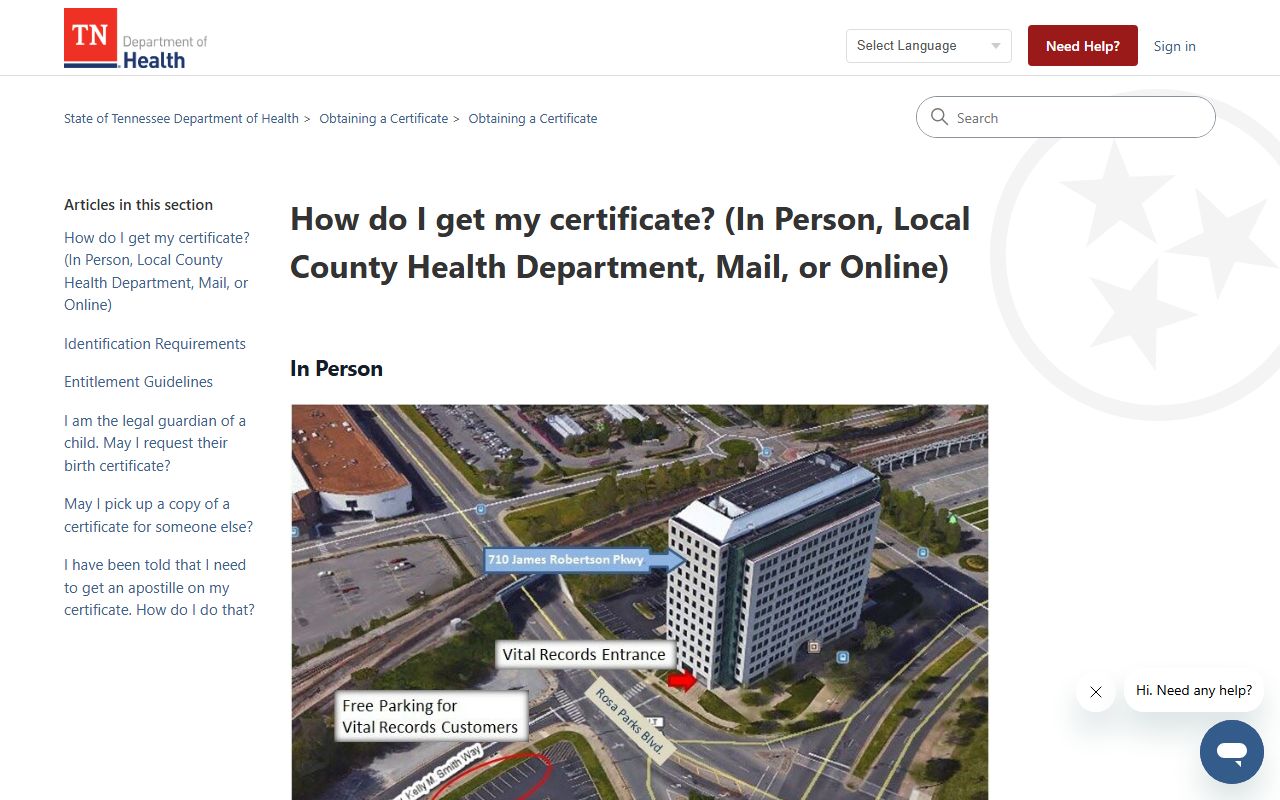
The state ordering page is the cleanest way to understand the certificate route for Dickson County Divorce Records.
Public Access to Dickson County Divorce Records
Public access in Dickson County is broad, but it does not mean every detail is open. Tennessee public records law gives the public access to government records, including most court files, yet sensitive information can still be redacted. That is normal. A divorce record can be open and still have a few lines blacked out. If you are looking for family history, that may not matter. If you need a certified decree for a legal process, the clerk copy is the safer bet.
That split between public access and certified proof is the same split that runs through most Dickson County Divorce Records requests. The public copy is good for research. The certified copy is better for formal use. When in doubt, ask the clerk which version fits your purpose before you pay for the wrong item. That small check can save time and postage.
Note: If the file is older, the archive copy may be easier to reach than the active court copy, especially when the case date falls inside the microfilm range.
Use the county and state sources together, and the state ordering page becomes a practical fallback when the court file is not the exact document you need.
This state ordering guide is a practical fallback when the court file is not the exact document you need.
Browse County Resources
Use the county index to compare Dickson County Divorce Records with the rest of Tennessee, or return to the state page when you need the broader search path.