
Search Fentress County Divorce Records
If you need Fentress County Divorce Records, begin in Jamestown with the Circuit Court Clerk. That office keeps the divorce case file and can issue certified copies of the decree. The local office that handles marriage licenses is still part of the record trail, but the court file itself stays with the circuit court. Older Fentress County cases can also lead you toward the Tennessee State Library and Archives, which makes the county useful both for current requests and for older family history work.
Fentress County Quick Facts
Fentress County Divorce Records Sources
The county source is the Fentress County Circuit Court. That office handles divorce proceedings and the clerk can provide certified copies from the file. The local office that handles marriage licenses is still worth knowing because it helps with related county work in Jamestown, but it is not the office that stores the divorce decree. The court file is the main record.
Fentress County Divorce Records also follow Tennessee's state reporting path. Under T.C.A. section 68-3-402, the court clerk forwards divorce records to the state vital records office. That is why a county file in Jamestown and a state certificate in Nashville can both exist for the same case. If you need proof that the divorce happened, the certificate may be enough. If you need the full terms, the county file is the better target.
The Tennessee State Library and Archives also keeps a Fentress County history page. It says the county was established in 1823 and that county records are preserved on microfilm. That matters when a search moves from a recent case to an older file. For Fentress County Divorce Records, the date range is often the first clue about which office will help fastest.
For the older county record path, the local clerk page is a useful starting point.
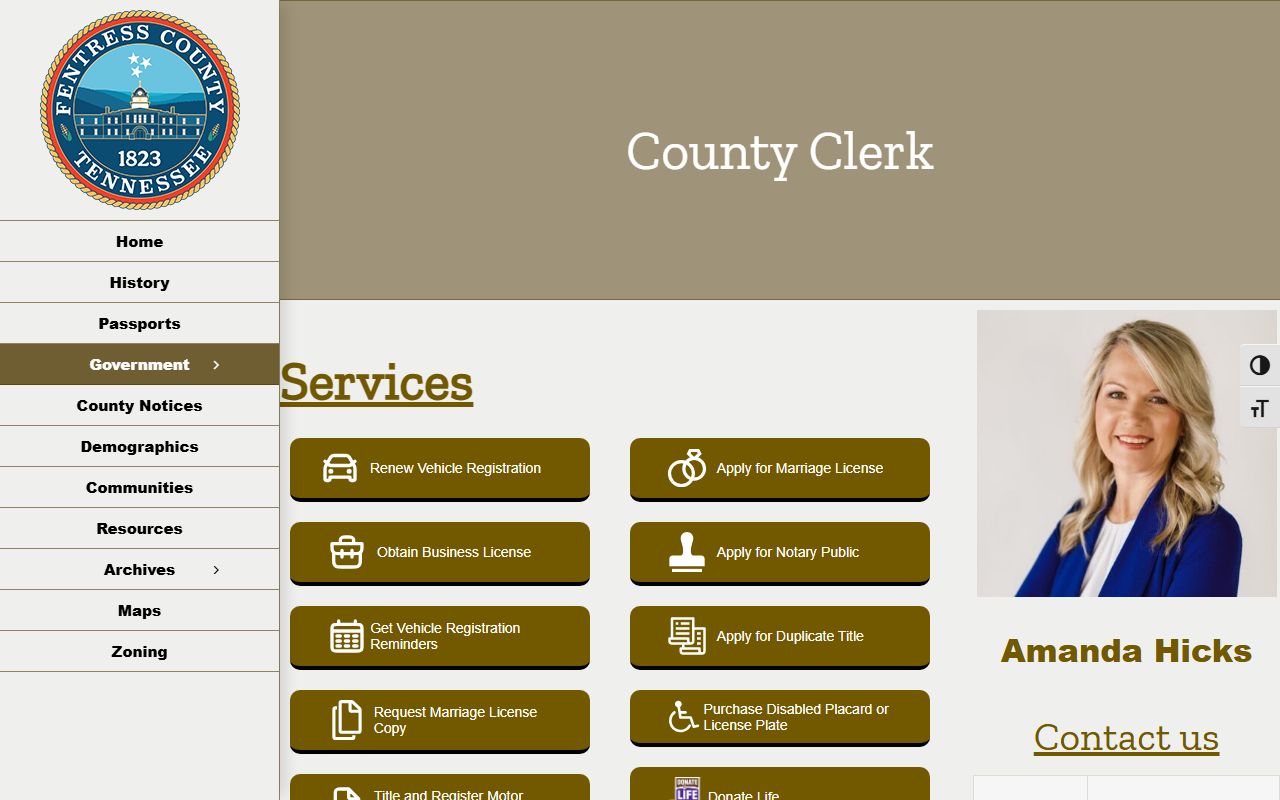
This county clerk image matches the local office that helps route Fentress County Divorce Records requests.
Search Fentress County Divorce Records
A Fentress County search works best when you start with Jamestown and a year range. If you know the spouse name, that helps. If you know the case number, even better. If you do not, the clerk can still search, but a rough filing year makes the request much easier. That is especially true for older Fentress County Divorce Records, where the paper trail may have moved into the archive set.
The county seat matters because that is where the court office is centered. The county name matters because it tells the clerk which file stack to check. A searcher who gives both pieces up front usually gets a better answer. That is true whether the case is fresh or whether it belongs in a historical collection of Fentress County Divorce Records.
Tennessee residency and venue rules also shape where a divorce is filed before it becomes a record. Once the case is entered, the county court keeps the decree and the state receives the report. That split is normal. It explains why a Jamestown search can lead to both a county file and a state certificate.
Note: A spouse name and a filing year are usually enough to get the clerk moving in the right direction.
Fentress County Divorce Records and Court Files
The full Fentress County Divorce Records file may include the complaint, any response, service papers, temporary orders, and the final decree. That is the record set to ask for when the question is not just whether a divorce happened, but how the court handled property, custody, or support. A decree can also include name restoration language, which is something a short certificate will not show.
Public access is broad, but Tennessee courts can still hide sensitive details in the public copy. That is normal in divorce records because child information and account data may need to be removed. It does not make the case private. It just means the public copy is cleaned before release. For Fentress County Divorce Records, the clerk can help you tell the difference between a public printout and a certified copy.
That difference matters if the record is going to a bank, a title company, or another office that wants a seal. A public copy is fine for research. A certified copy is better for a formal task. Fentress County Divorce Records requests go faster when the office knows which one you need.
When the case file is the goal, the state filing rule is usually the better answer.
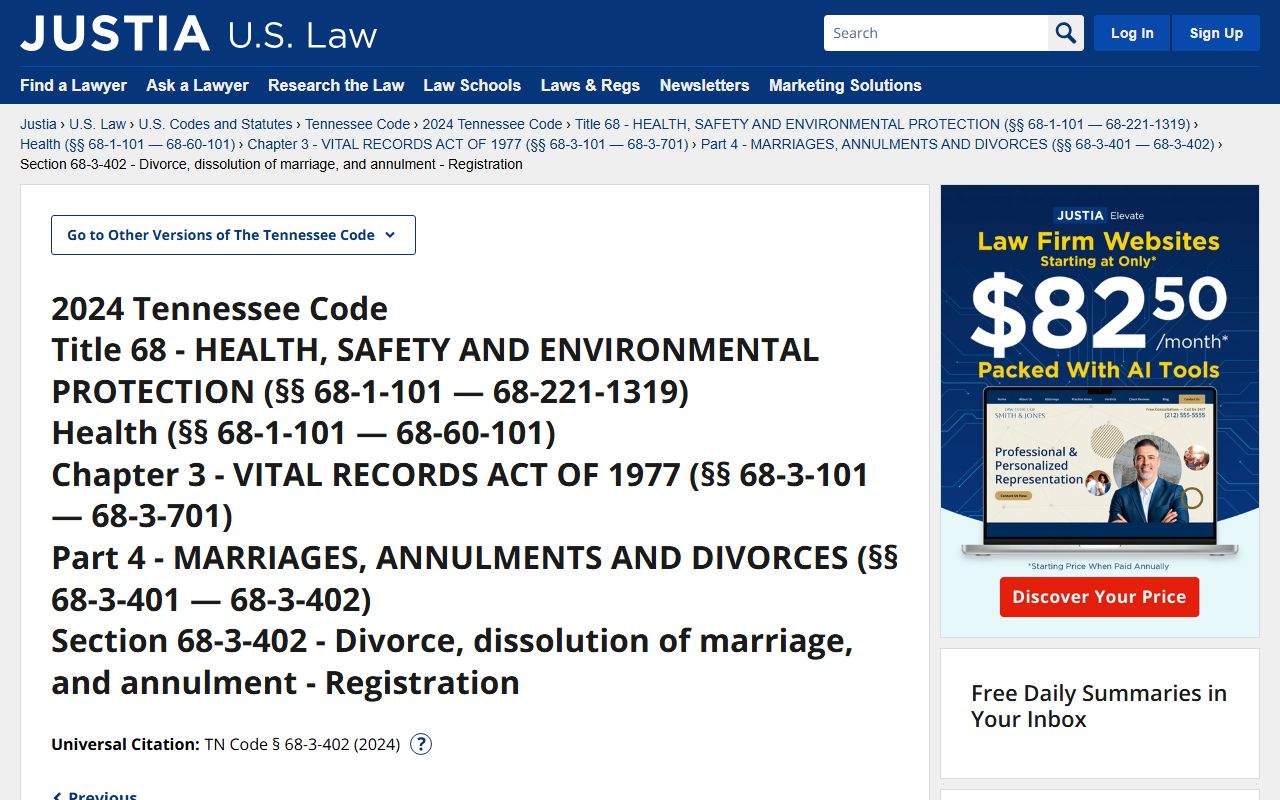
This state law image shows why the county file and the state certificate both exist for Fentress County Divorce Records.
Historical Fentress County Divorce Records
Historical Fentress County Divorce Records are part of a county that has been preserving court work since 1823. The Tennessee State Library and Archives notes that Fentress County records are available on microfilm, which is useful when a divorce happened long ago and the live court office is no longer the only place to look. Family historians often need this path when a marriage line or property trail reaches back several decades.
Older records may take more steps, but they can also give a cleaner answer. A microfilm image can confirm the names, the date, and the county more reliably than a broad online search. That is why the archive route matters for Fentress County Divorce Records. It gives the searcher a way to move from a family clue to a real record.
When the date is old enough, the archive guide and county history page work together. One explains where the older records live. The other shows why Fentress County is a good place to look. That combination is often enough to move a stalled search forward.
Before you place a current request, check the state archive guide and the county history page first.
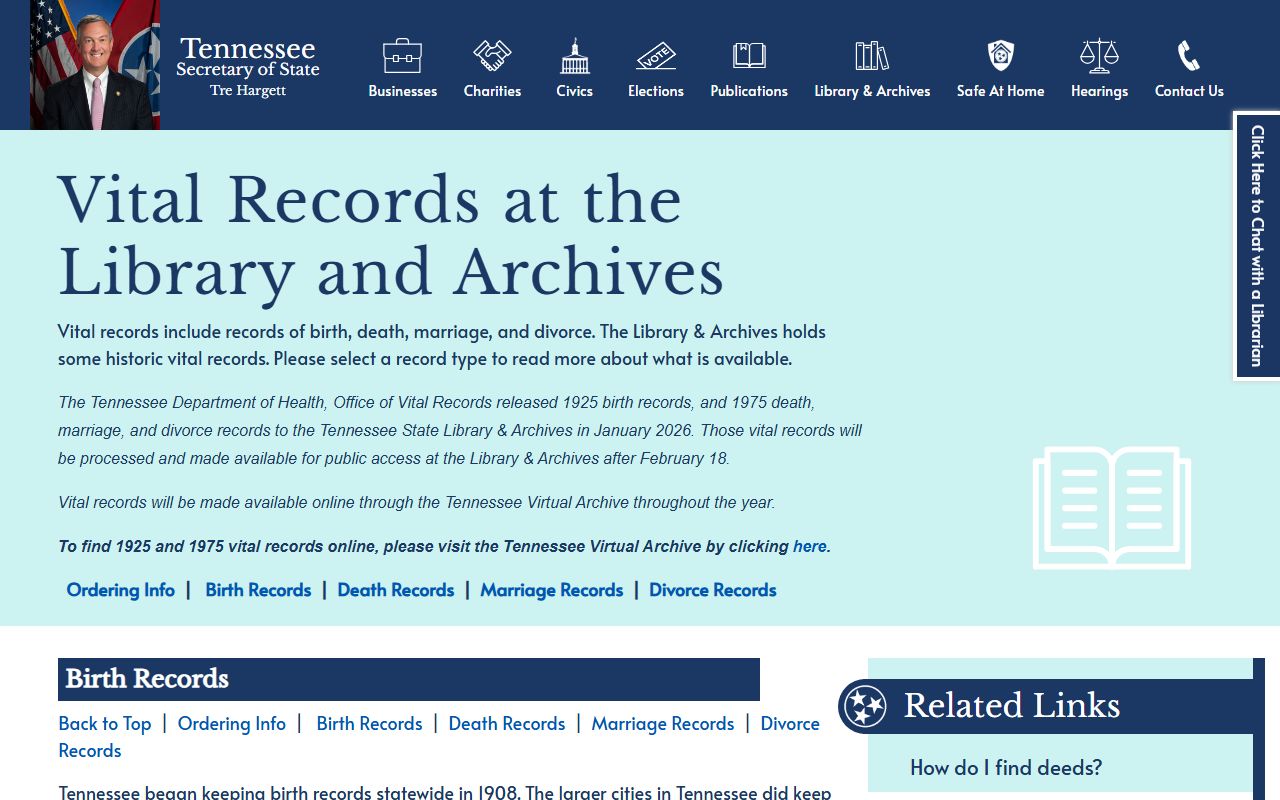
The archive guide helps show when a Fentress County search should move from the clerk to the historical record set.
Ordering Fentress County Divorce Records
Ordering Fentress County Divorce Records depends on the record type. If you need the decree, ask the Circuit Court Clerk in Jamestown. If you only need proof that the divorce happened, the Tennessee Office of Vital Records can handle the state certificate. That difference saves time because the county and state copies answer different questions.
The state office explains the request methods in plain steps. You can order in person, by mail, or online, which is helpful if you are not near Jamestown. Tennessee also limits some certificate requests to the person named on the record and certain family members or representatives. If you are requesting for someone else, make sure you have the right proof before you send the form.
The online order route can be useful when speed matters. It is a good fit for many people who want a Tennessee divorce certificate without making a courthouse trip. Still, the state route does not replace the county file if you need the full court order. Use the county source for the decree and the state source for the certificate.
For the certificate route, the state request page is the cleanest first step.
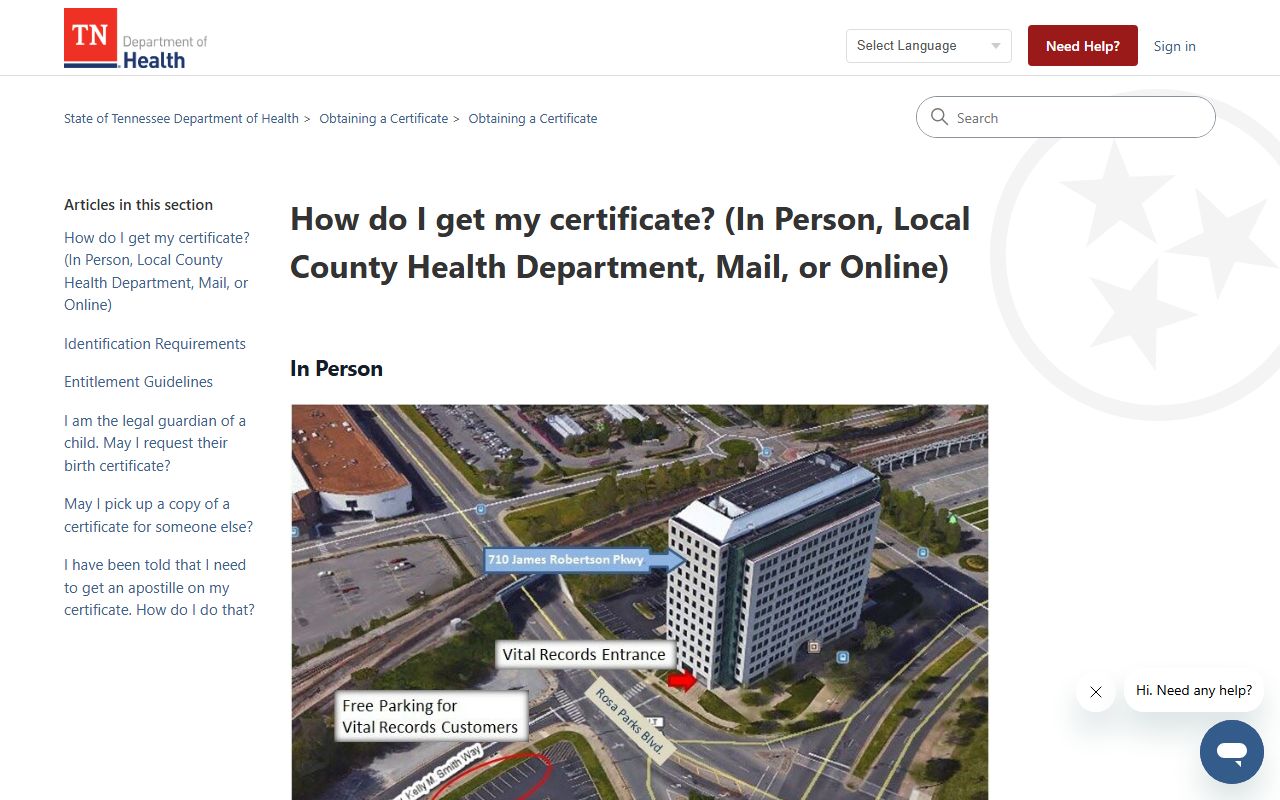
That page gives the step-by-step order path for the state certificate side of Fentress County Divorce Records.
Public Access to Fentress County Divorce Records
Public access to Fentress County Divorce Records is broad, but the copy you see may still have some parts hidden. Tennessee public records law generally lets the public inspect divorce case files, but sensitive details can be removed before the copy is released. That is common and expected. It does not mean the case is closed. It just means the public version has been cleaned up.
If you are using Fentress County Divorce Records for research, that public copy may be enough. If you need a certified version for a bank, title issue, or new filing, ask for the clerk-certified decree. The certified copy is the better form for formal use because it carries the court seal and clerk certification.
Older records can also change the access path. A historical divorce may live in the archive set instead of the active court stack, and the record copy may be easier to reach through the library guide than through the current clerk window. That is one more reason to match the date and the document type before you send the request.
Note: A public copy is often enough for research, but a certified copy is usually safer for anything official.
When the copy comes from the state office, the entitlement guide explains who can ask for it.
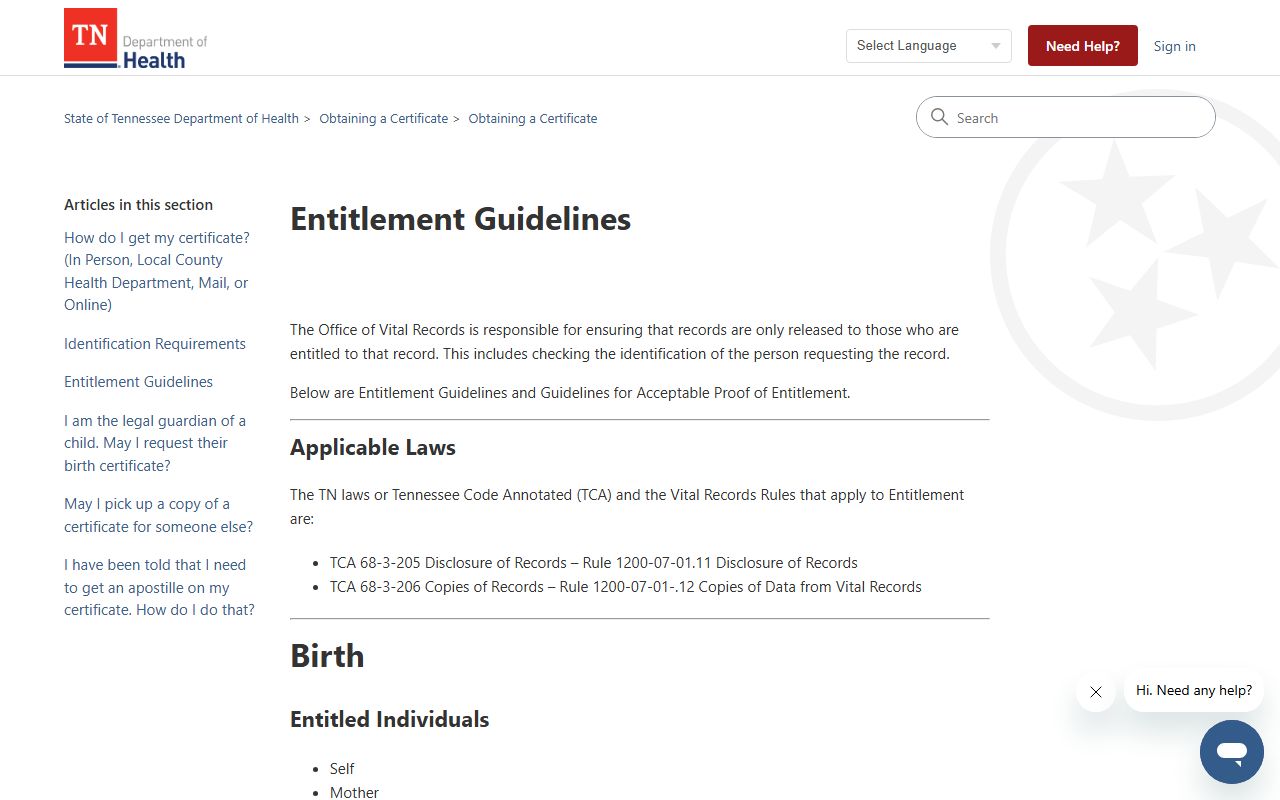
The entitlement guide is useful when a Fentress County request is for a state certificate rather than the county court file.
Browse County Resources
Use the county index to compare Fentress County Divorce Records with the rest of Tennessee, or return to the home page for the statewide search path.