
Find Hamilton County Divorce Records
Hamilton County Divorce Records are split across two courts in Chattanooga, with the circuit court clerk handling most divorce files and the chancery court handling some equity-heavy cases. That local split matters because the right office depends on how the case was filed and what the decree says. Hamilton County also has one of the most detailed local divorce guides in Tennessee, and that guide explains how a certified divorce decree can be used later for title work or deed cleanup. If you need the full case file, the county is the right place to start. If you only need proof that the divorce happened, the Tennessee state certificate route may be enough. This page pulls the county guide, the court offices, and the state record system into one Hamilton County Divorce Records search path.
Hamilton County Quick Facts
Hamilton County Divorce Records Office
The Hamilton County Circuit Court Clerk is the main local office for Hamilton County Divorce Records. The clerk's office is at 625 Georgia Avenue, Room 500, Chattanooga, TN 37402, and the county guide says that is one of the places where divorce records may be obtained. The Hamilton County Chancery Court, in Room 300 at the same address, also keeps records for certain divorce cases. That means the exact office depends on where the case landed. The county clerk office is useful for marriage licenses and routine county records, but the divorce file itself belongs with the court that heard the case.
The county guide on the register of deeds site is especially practical because it explains not only where to ask for the record, but also how the decree may later be used. The guide says that if a divorce decree is being used to remove an ex-spouse from the deed or tax notice, the document must clearly describe how the property is divested and vested and must include the legal description. That is a very Hamilton County detail. It shows why the certified decree matters long after the marriage is over. It also shows why the local file is more than just a history item. For many Hamilton County Divorce Records requests, it is the document that resolves later property work.
For the filing rule that creates the state record, review Tennessee Code Annotated section 68-3-402.
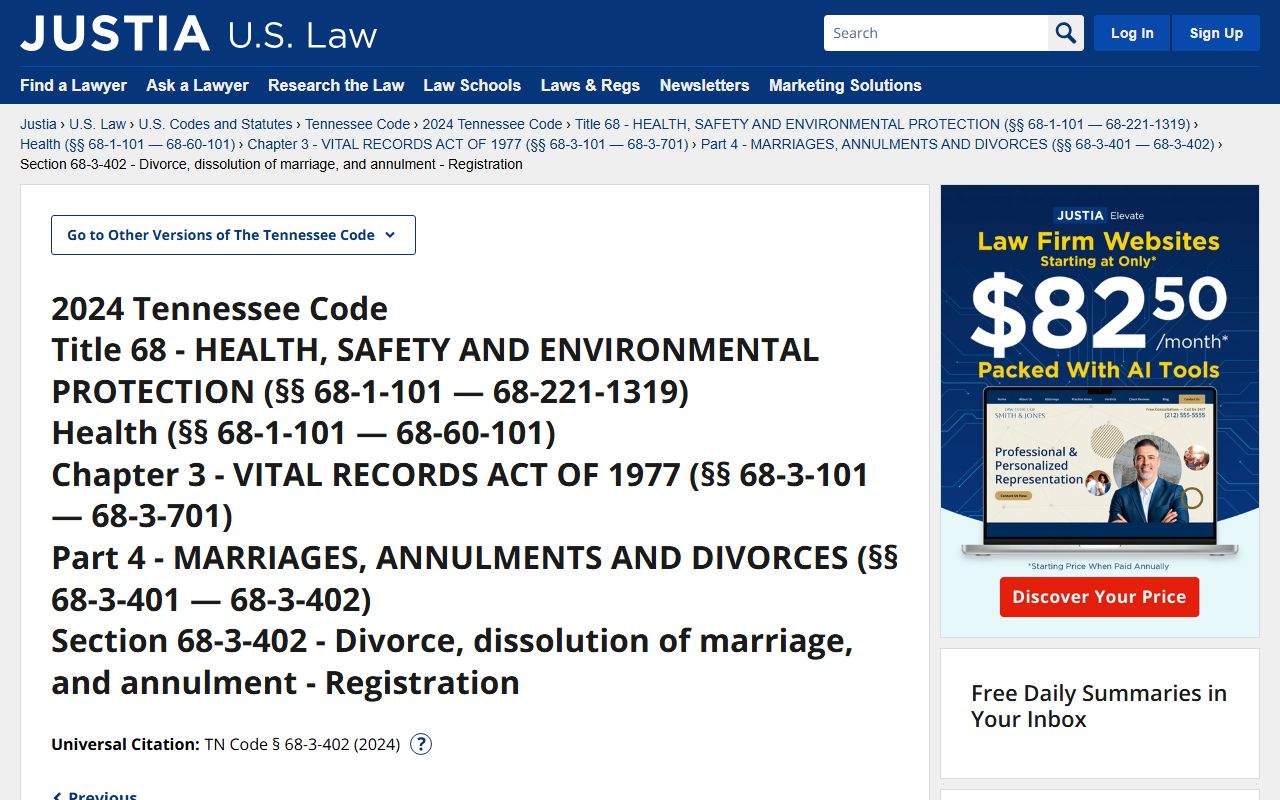
That image fits the county office section because the filing statute is what ties the court record to the state certificate system.
Note: In Hamilton County, the divorce decree can matter for property work long after the case is closed, so keep a certified copy handy.
Search Hamilton County Divorce Records
The search starts with the county court that heard the case. If you know the party names and the year, the circuit court clerk can usually narrow the file without much trouble. If the case was filed in chancery court, the chancery office is the one to ask. That sounds obvious, but a lot of Hamilton County Divorce Records requests go to the wrong room first. The county guide helps avoid that mistake. When you are not sure which court handled the matter, start with the circuit clerk and ask whether the file was kept there or routed through chancery.
The county guide also points out that the state vital records office can issue the short certificate version. Tennessee records law requires the court clerk to forward divorce records to vital records, which is why the state and county systems both have a role. For a Hamilton County Divorce Records search, that means a county clerk search finds the file and a state certificate search confirms the event. If your goal is proof of divorce for a name change or simple verification, the state route is fine. If your goal is the order itself, the county file is the better target.
Before you ask the clerk, gather these details.
- Full name of one spouse
- Approximate filing year
- Hamilton County as the filing county
- Case number, if known
- Whether the case was in circuit or chancery court
For a quick state certificate order, use the Tennessee Vital Records help center. That page explains the in-person, mail, and online order paths for Tennessee Divorce Records certificates.
Hamilton County Divorce Records and Property
Hamilton County is one of the few places where the property side of a divorce is spelled out right in the local guide. That matters because a divorce decree can do more than end the marriage. It can also move real property, clear a deed issue, or help a title company see who owns what after the case is done. The guide says the decree must state that property is divested from one spouse and vested in the other, and it must use the legal description, not just the street address. That is the kind of detail that makes Hamilton County Divorce Records especially useful in later land work.
Title companies also check whether court costs are paid and whether any money remains owed to the other spouse. That is another reason the certified decree matters. It is not just a proof record. It is the legal document that can keep later property work moving without a second court trip. If you are searching Hamilton County Divorce Records for a real estate issue, the decree should be the first document you ask for, not the last. If you only have the state certificate, you will still need the county decree before you can finish a deed question with confidence.
The federal court guidance at tnep.uscourts.gov/content/marriagedivorce-records explains the difference between verification letters and certified decrees.
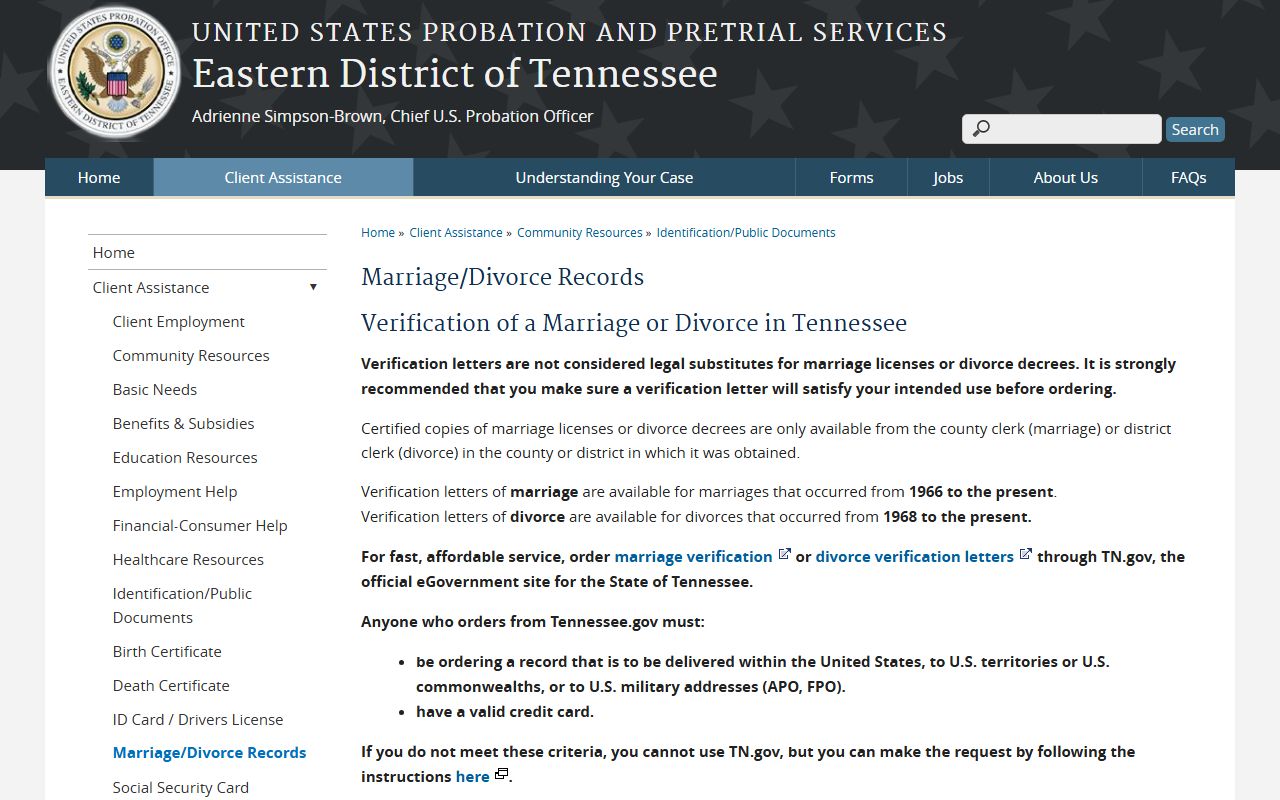
That image helps explain why a verification letter may not be enough when a later property filing needs a certified decree.
Note: If the decree does not clearly divest and vest the property, a title office may still ask for more paperwork.
Order Hamilton County Divorce Records
Ordering Hamilton County Divorce Records depends on whether you want the county file or the state certificate. The county file comes from the circuit clerk or chancery court. The certificate comes from Tennessee Vital Records. The state office says divorce certificates can be ordered in person, by mail, or online, and the official vendor is VitalChek. That route is fast when you want a short proof document. It is not the same as the decree, though. If you need the full legal terms of the divorce, ask the county court first and use the state order only as a supplement.
The county guide and the state help center work well together. The guide tells you where the file lives and why the decree matters. The state help center explains how to order the certificate and what identification you may need. For a Hamilton County Divorce Records request, the right order is often certificate first, then decree if the issue turns out to be property, custody, or support. That two-step approach keeps you from overbuying records you do not need while still making sure you can prove the divorce in a form that works for your situation.
The Tennessee Vital Records help center at vitalrecords.tn.gov explains the certificate route in plain steps.
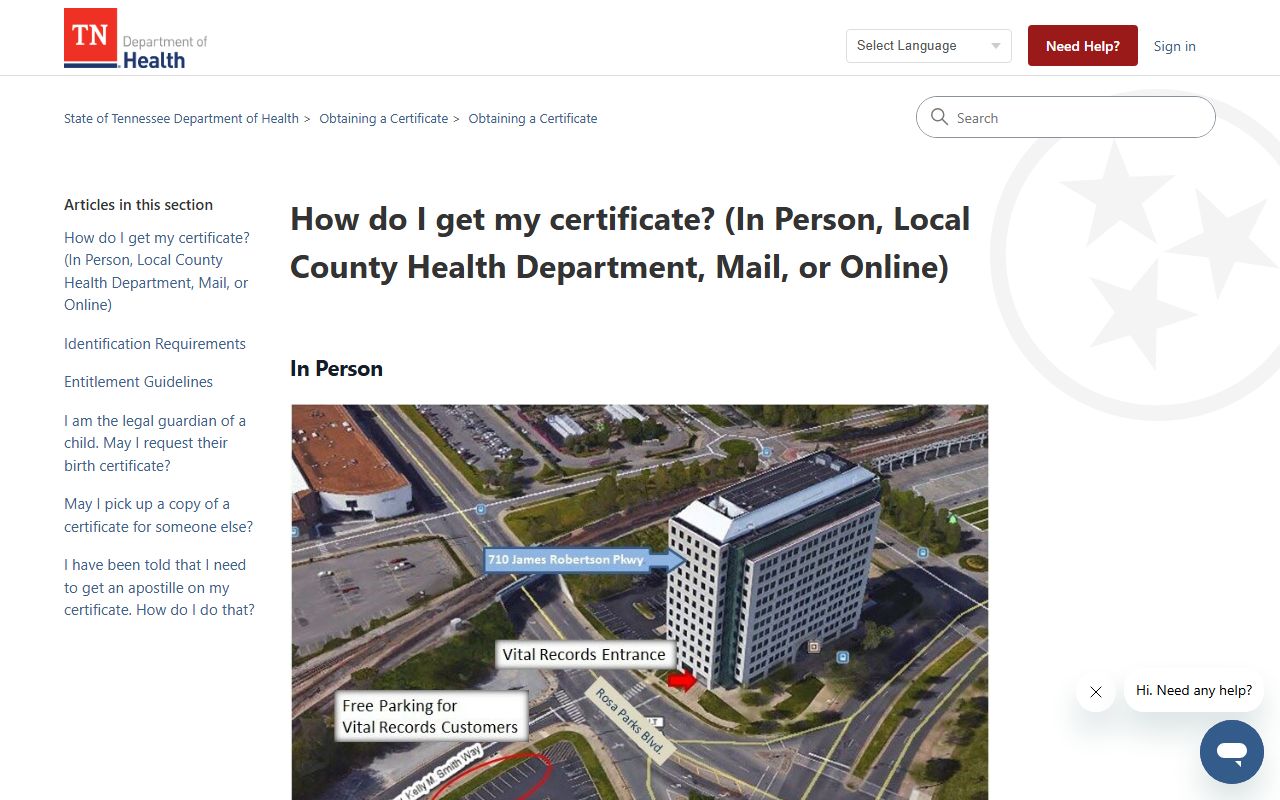
That image fits the ordering section because it shows the state certificate workflow that sits beside the county court file.
Historical Hamilton County Divorce Records
Historical Hamilton County Divorce Records can reach back into a long county history. Hamilton County was established in 1819, and the Tennessee State Library and Archives keeps older county material once it ages out of the active office. That matters in Chattanooga because older cases may not show up the same way a current clerk search would. They may be on microfilm or in archive references instead. If you are tracing a family line or checking a very old decree, the archive route can be faster than calling a current office that only handles active requests.
The state archive guide at the Tennessee State Library and Archives and the Secretary of State FAQ at the divorce records FAQ help narrow that older search. They point you to the right system based on the age of the record. That is useful in Hamilton County because a lot of older court material can live in more than one place, and the archive system may be the only practical way to get a starting lead. If the record is historical enough, the county guide and the archive guide should be used together.
The archive guide at sos.tn.gov/library-archives/guides/vital-records-at-the-library-and-archives works best when the case is old enough to move out of the active office.
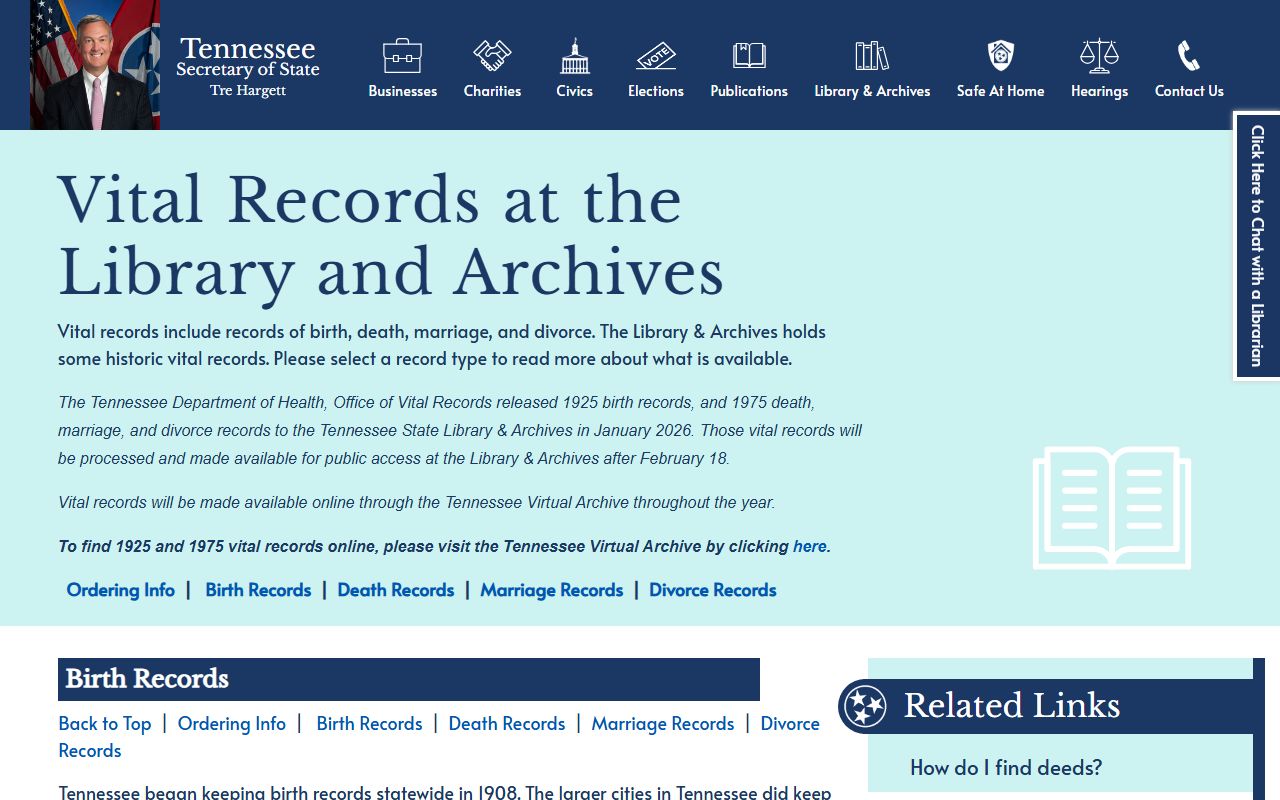
That image reflects the archive side of Tennessee Divorce Records and helps set the boundary between active files and older holdings.
Public Access to Hamilton County Divorce Records
Hamilton County Divorce Records are generally public, but public access still has limits. The county file may include redactions, sealed pages, or information that the court has protected because of privacy, child-related issues, or financial data. The Tennessee Public Records Act creates the broad access rule, while the state exceptions guidance explains why some pieces of the file stay out of view. If you ask for the file and do not get every page, the clerk can usually tell you whether the missing part is sealed, redacted, or stored under a different release rule.
The state entitlement rules also matter. A spouse, child, parent, or authorized representative may be able to get the certificate record from Tennessee Vital Records, but the office still wants proof of entitlement. That is separate from county court access. The reporting rule in section 68-3-402 is what creates the state divorce record in the first place. It is why Hamilton County Divorce Records can show up in both the county and state systems. When you understand that, the search becomes easier to plan and less likely to turn into a dead end.
For the certificate side, use the official VitalChek Tennessee page at vitalchek.com/vital-records/tennessee/tennessee-vital-records.

That image gives a practical view of the state certificate order path for people who only need proof of the divorce event.
Related Hamilton County Records
Hamilton County records often work together. Marriage licenses, property records, and old court dockets can all help you place the divorce in time. The county clerk is the marriage record office, while the circuit and chancery courts keep the divorce records. If property is part of the issue, the register of deeds may need the certified decree later. That is why Hamilton County Divorce Records searches often become multi-office searches. The record itself may start in one room, but its afterlife can touch several other offices before the matter is done.
The county clerk page at hamiltontn.gov/county-clerk is useful if you need marriage license help or a county contact point. The circuit clerk page at hamiltontn.gov/circuit-court-clerk is the better choice for the divorce case file, and the chancery court page at hamiltontn.gov/chancery-court helps when the case was filed there. If you are not sure where the file started, begin with the circuit clerk and ask whether the case moved to chancery or stayed in the circuit office. That simple check usually keeps a Hamilton County Divorce Records request on track.
For a practical county overview, review how to obtain divorce records in Tennessee.
That image is a useful final reference because it matches the general state advice for ordering the right divorce document the first time.