
Search Hancock County Divorce Records
Hancock County Divorce Records are kept in Sneedville at the circuit court, where the county clerk and the court system keep the public trail of the case. Hancock County was established in 1844, so the local record set is old enough to have historical depth but small enough that the clerk's office still plays a central role in most searches. If you need the full decree, the county court is the first place to ask. If you only need proof that a divorce happened, the state certificate system may be enough. This page points to both routes so a Hancock County Divorce Records search does not get stuck at the wrong office.
Hancock County Quick Facts
Hancock County Divorce Records Office
The Hancock County Circuit Court handles divorce proceedings and keeps the county divorce file in Sneedville. The circuit court clerk is the office that can provide a certified copy of the decree or help you find the case by name and approximate year. The county clerk office also sits in Sneedville and handles marriage licenses and administrative county work, but the divorce case file itself stays with the circuit court. For a Hancock County Divorce Records request, that distinction matters. People often begin with the county clerk because it is the most visible office, but the divorce decree belongs with the court that heard the case.
The county court page at tncourts.gov/courts/circuit-court/hancock-county is the best local court link, and the county clerk page at hancockcountytn.gov/county-clerk handles the broader county contact side. If you are planning a later land transfer, name change, or another record change, the certified decree is the record that usually carries the most weight. The court file is the full story. The state certificate is the shorter proof. Knowing which one you need before you call the clerk makes the Hancock County Divorce Records search much easier.
For the certificate route, review the Tennessee Vital Records help center at vitalrecords.tn.gov.

That image fits the county office section because it shows the state certificate route that sits alongside the local court file.
Note: The county clerk can point you to county business, but the divorce case file itself belongs with the circuit court clerk.
Search Hancock County Divorce Records
A practical Hancock County Divorce Records search begins with the spouse names, the filing year, and the county. A case number helps, but it is not required to start. If the file is old, the clerk may need a little more time to pull it or check older docket references. If the file is recent, the search is usually much faster. When you call or visit, ask whether the clerk wants the request by mail or in person. That simple question saves time and helps you avoid a second trip if the file needs to be located in another storage run.
Tennessee Vital Records keeps the shorter state certificate record and explains how to order it online, by mail, or in person. That route is not the same as the county court file. It only confirms that the divorce happened. For Hancock County Divorce Records, the decree is the stronger document when the record will be used for a legal filing, a name update, or a family law issue. If all you need is proof that the divorce existed, the certificate may be enough. If you need the terms, the county file remains the better request.
Before you ask the clerk, gather these search details.
- Full name of one spouse
- Approximate filing year
- Hancock County as the filing county
- Case number, if known
- Whether you need a decree or certificate
For the state certificate route, use the Tennessee Vital Records help center at vitalrecords.tn.gov. It explains the request methods that apply to Tennessee Divorce Records certificates.
Hancock County Divorce Records and Fees
The county and state fee paths are different. The circuit court clerk may charge for searches, copies, and certification, and those costs can change based on the number of pages in the file. A short decree is one price. A long packet with several orders is another. For Hancock County Divorce Records, that means the cost depends on what the case contains and whether you need a plain copy or a certified one. The state certificate route is easier to price because Tennessee Vital Records lists a fixed $15.00 certified copy fee for the divorce certificate.
If you only need to confirm that a divorce happened, the state certificate is often the most predictable option. If the divorce will be used in court, in a title matter, or in another official filing, the certified decree from the county clerk is usually worth the extra step. The clerk can help you decide which one makes sense. In practice, many Hancock County Divorce Records searches start with the state certificate and then move to the county decree if the first document does not show enough detail for the task at hand.
For the state archive side of the search, use the Tennessee State Library and Archives guide.
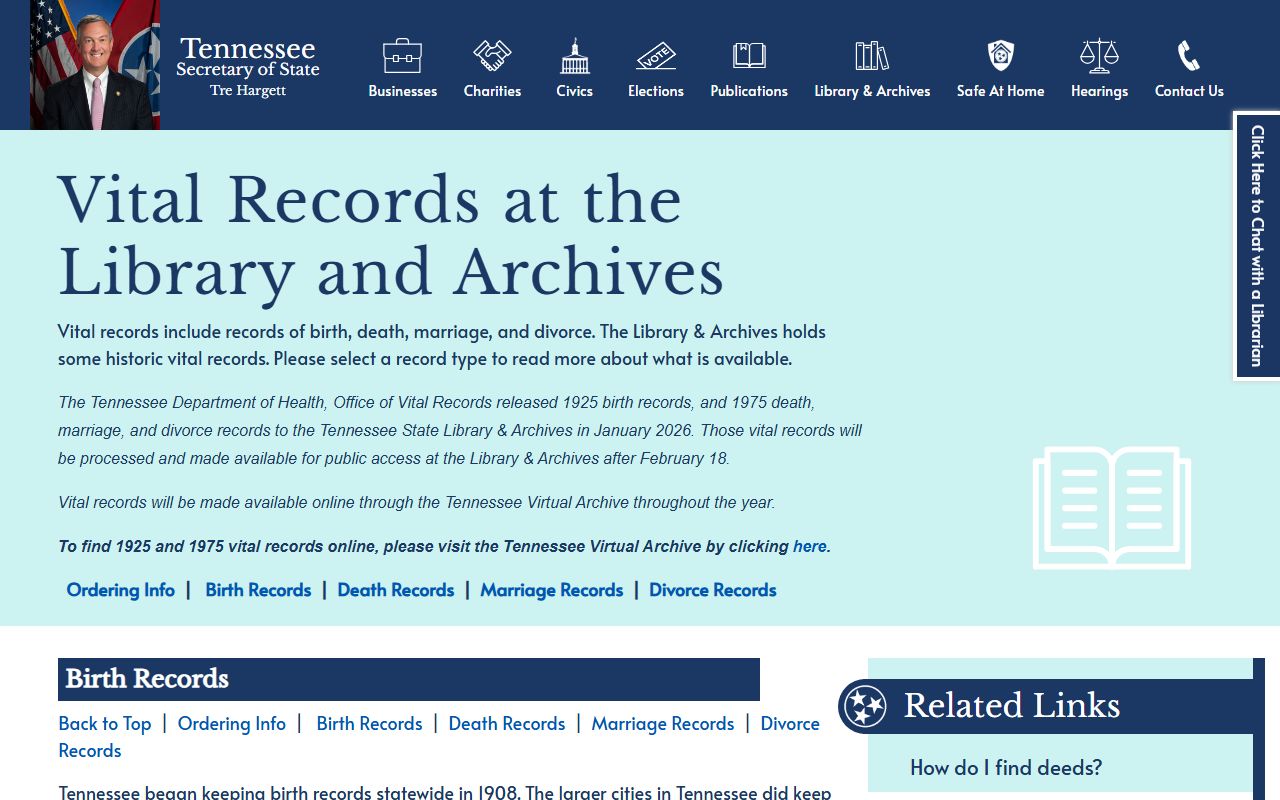
That image gives a useful bridge between current certificate orders and older archive records.
Note: County copy fees and the $15 state certificate fee are separate, so match the order to the document type before you pay.
Historical Hancock County Divorce Records
Historical Hancock County Divorce Records often move out of the active office and into archive custody after the state retention period passes. That is where the Tennessee State Library and Archives becomes important. Hancock County's long history, dating back to 1844, means older files may be available in microfilm or in county court references that no longer sit in the current clerk's active drawer. If you are tracing a family line or trying to find a very old decree, start with the court year first and then choose the archive path if the clerk cannot pull the file directly.
The Secretary of State FAQ at sos.tn.gov/tsla/faqs/how-do-i-find-divorce-records and the archive guide both point researchers back to the same historical route. Those pages are useful when the county file is old enough that a direct court lookup is no longer the easiest answer. For Hancock County Divorce Records, the archive system can give you the lead you need before you ask the court for a formal copy or use the file in a genealogy project.
The archive guide is the main tool for older divorce case work.
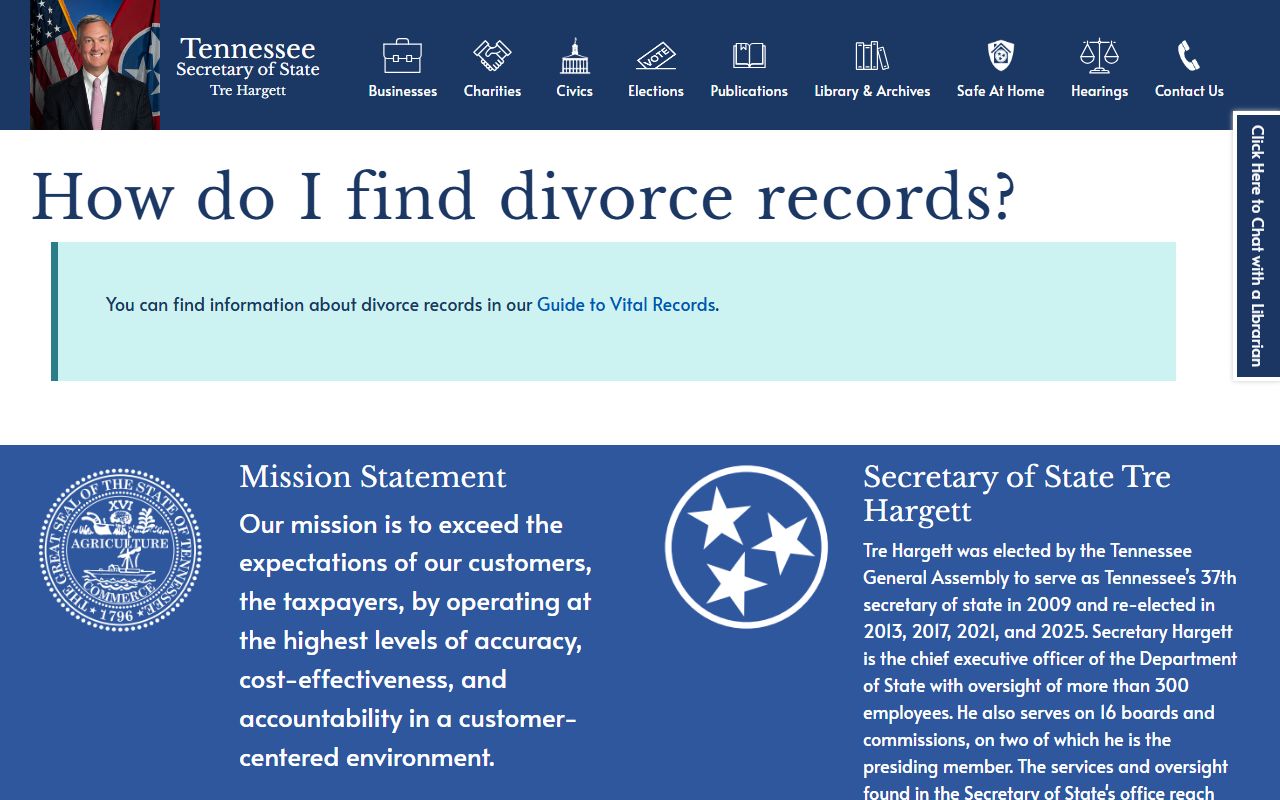
That image supports the historical search path because it reflects the guide that points searchers to older Tennessee Divorce Records.
Public Access to Hancock County Divorce Records
Hancock County Divorce Records are generally public, but the public copy may still be trimmed down. Court files can have redacted social security numbers, child-related details, and financial data. The Tennessee Public Records Act sets the public access rule, while the state exceptions guidance explains why some parts remain closed or limited. If a clerk gives you a partial file, that does not mean the file is missing. It may only mean the court has already protected the sensitive pages in the public version.
The state entitlement rules are more important for certificate orders. Tennessee Vital Records uses those rules to decide who can ask for a divorce certificate and what proof they need. The reporting rule in Tennessee Code Annotated section 68-3-402 is the reason the state keeps a divorce certificate at all. That filing rule links the county court file to the state record. It is also why the same Hancock County Divorce Records event may be found in both places when you search the right office.
For the privacy side, review the Library of Congress Tennessee vital records guide at guides.loc.gov/tennessee-local-history-genealogy/vital-records.
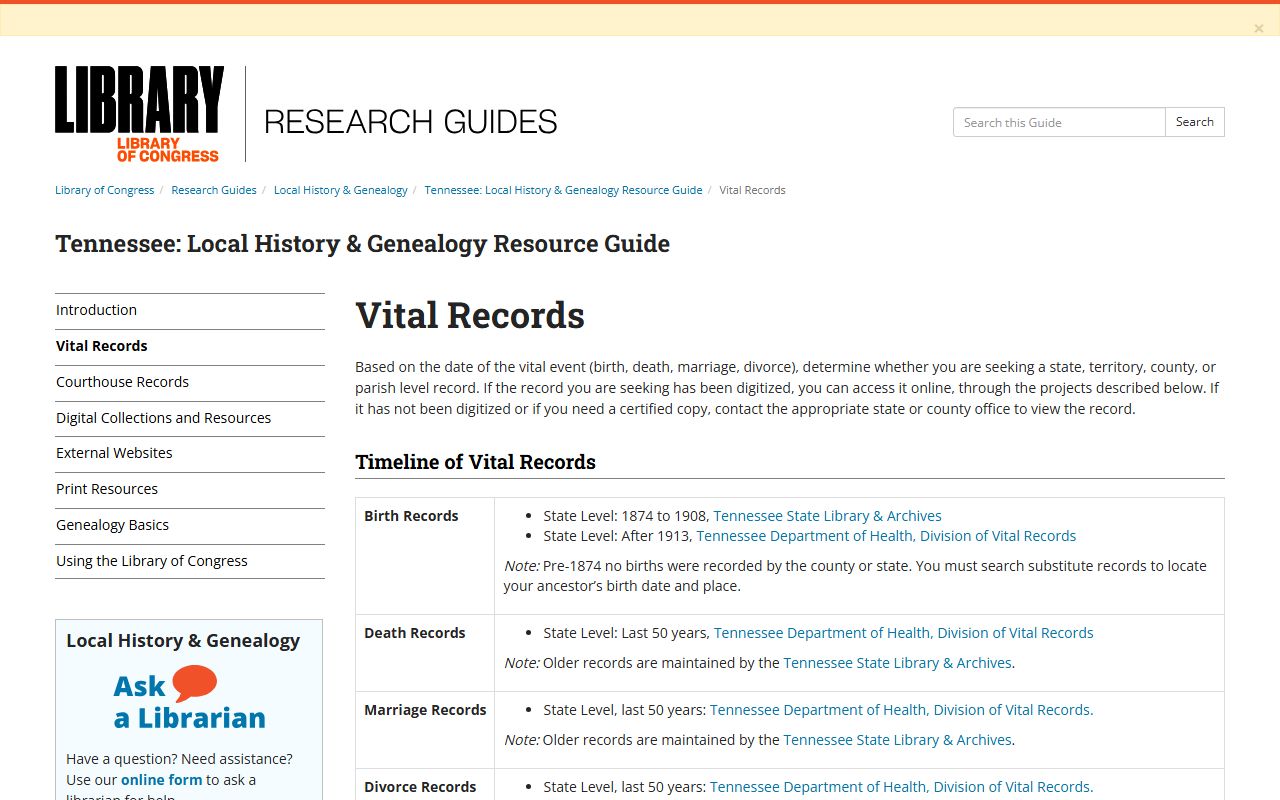
That federal guide is a good reminder that historical Tennessee Divorce Records often move from the county courthouse into archive custody.
Note: A public record can still be partly redacted when the court has limited private details in the file.
Related Hancock County Records
Hancock County records that sit next to divorce records include marriage licenses, older court files, and archive references. A marriage record can help you line up the right family, and a related land record can help you see whether a divorce changed ownership later. The county clerk handles marriage licenses and county business, while the circuit court handles the divorce file. That is why many searches start with a marriage date or a later deed change and then move to the county court. It keeps the search narrow and avoids wasting time on the wrong file year.
The Library of Congress Tennessee vital records guide at guides.loc.gov/tennessee-local-history-genealogy/vital-records is a good general tool when you need to place a divorce in a larger family line. The state archive guide gives you the older-record path, and the county court page gives you the current-office path. For Hancock County Divorce Records, those two views work best together. Use the county court for a live copy request and the archive guide for older research that may not yet have a direct clerk pull.
For one last state-level check, review the CDC Tennessee vital records page at cdc.gov/nchs/w2w/tennessee.htm.
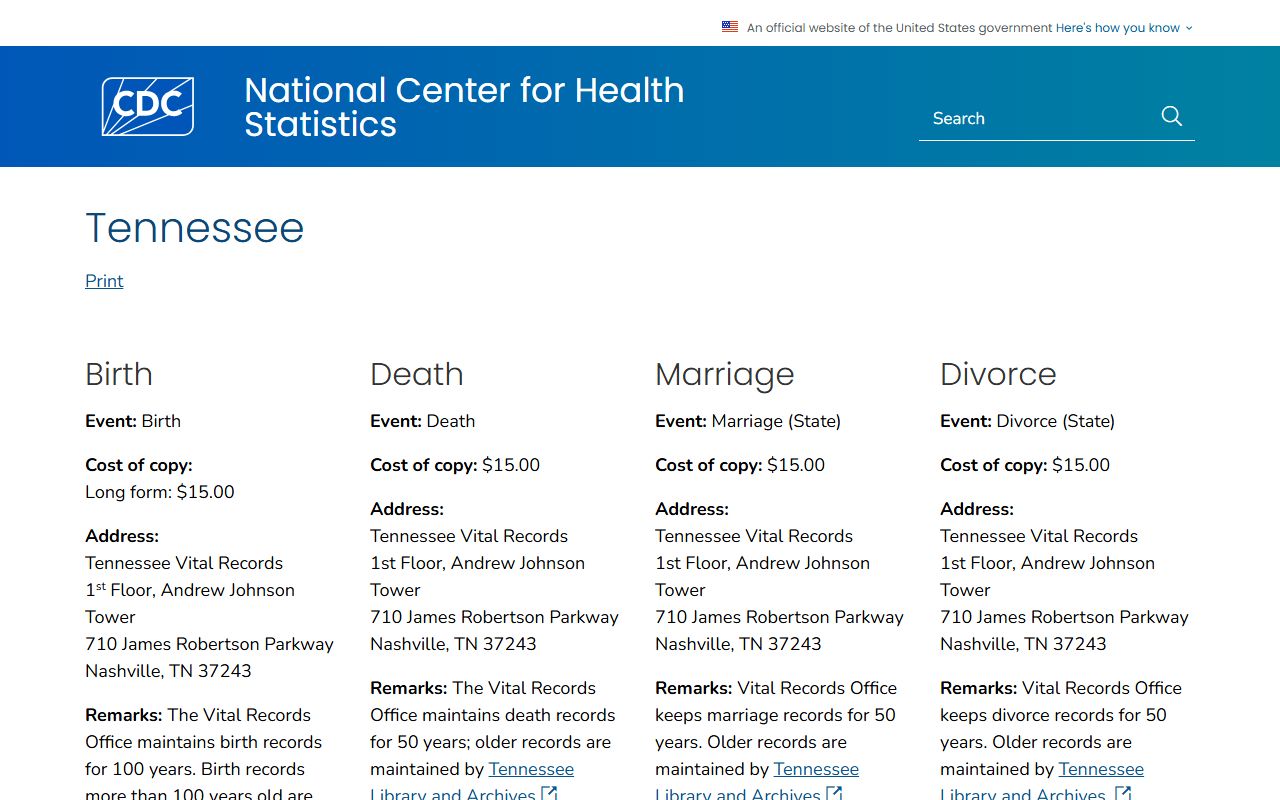
That image gives one last state-level anchor for the certificate side of Tennessee Divorce Records.