
Houston County Divorce Records Lookup
Houston County Divorce Records are usually handled in Erin, where the circuit court clerk keeps the case file and the county clerk handles related county work. That division makes the search easy once you know the difference between a decree and a certificate. The county court file is the full record. The state certificate is the shorter proof that a divorce occurred. In a small county like Houston, the office path is simple, but the record type still matters. A recent case may be found quickly at the courthouse. An older case may move through archive or state records before you reach the copy you want.
Houston County Quick Facts
Where Houston County Divorce Records Start
The Houston County Circuit Court handles divorce proceedings and keeps the record that most people need. That means the circuit court clerk is the office to contact when you want a decree or a certified copy of the court file. The county clerk office in Erin matters too, but mostly for marriage licenses and other county services. For Houston County Divorce Records, the court clerk is the main source because the divorce packet belongs with the court, not with the county clerk's general files.
Erin is the county seat, so the courthouse search is local and direct. That helps in a small county. If you know the spouse names and the approximate year, the clerk can often narrow the file fast. If the case is recent, the office may be able to point you to the active file right away. If it is older, the clerk may need to check a book, docket, or storage box. Houston County Divorce Records are still public records, but the path to the record depends on how old the case is.
For the related county office, use the Houston County Clerk page.
It is the official local reference for marriage and other county records that can sit next to a divorce search.
Search Houston County Divorce Records
The quickest Houston County search starts with a full spouse name, a rough filing year, and the county. A case number is even better. If you have that information, the circuit court clerk can narrow the file without much delay. The search is usually straightforward because Houston County is small and the court trail is not spread across many offices. That said, the right document still matters. A certificate, a decree, and a docket entry are not the same thing.
The reporting rule in Tennessee Code Annotated section 68-3-402 explains why a Houston County divorce also shows up in the state system. The court clerk forwards the record to the state vital records office. That gives you two ways to search. One is the county file. The other is the state certificate trail. If you need the full decree, stay with the court. If you only need proof that the divorce happened, the state certificate may be enough.
That is the cleanest way to think about Houston County Divorce Records. Use the county for detail. Use the state for a shorter confirmation copy. When the goal is a legal filing or property change, the county decree is usually the safer choice.
Note: A certificate can confirm the event, but a decree is the better record when the order itself matters.
Houston County Divorce Records Office
The Houston County Clerk page is the main official county reference, but the divorce file itself sits with the circuit court clerk. That office keeps the case papers and can provide certified copies when a requester gives the right details. In Erin, that means the courthouse is the place to start. A short request works best. Include the names, the year, and whether you need a plain copy or a certified one. The clerk can then tell you whether the record is active, stored, or archived.
The county clerk still matters because people often need marriage or related county records while they work on a divorce file. In a small county, the offices are close in function even when their record sets are not the same. Houston County Divorce Records are easier to manage when you understand that the court file and the county clerk file are separate things. That keeps you from asking the wrong office for the wrong paper.
See the local image source at houstoncountytn.gov/county-clerk.
The image below comes from the county clerk page and helps frame the local office side of the search.
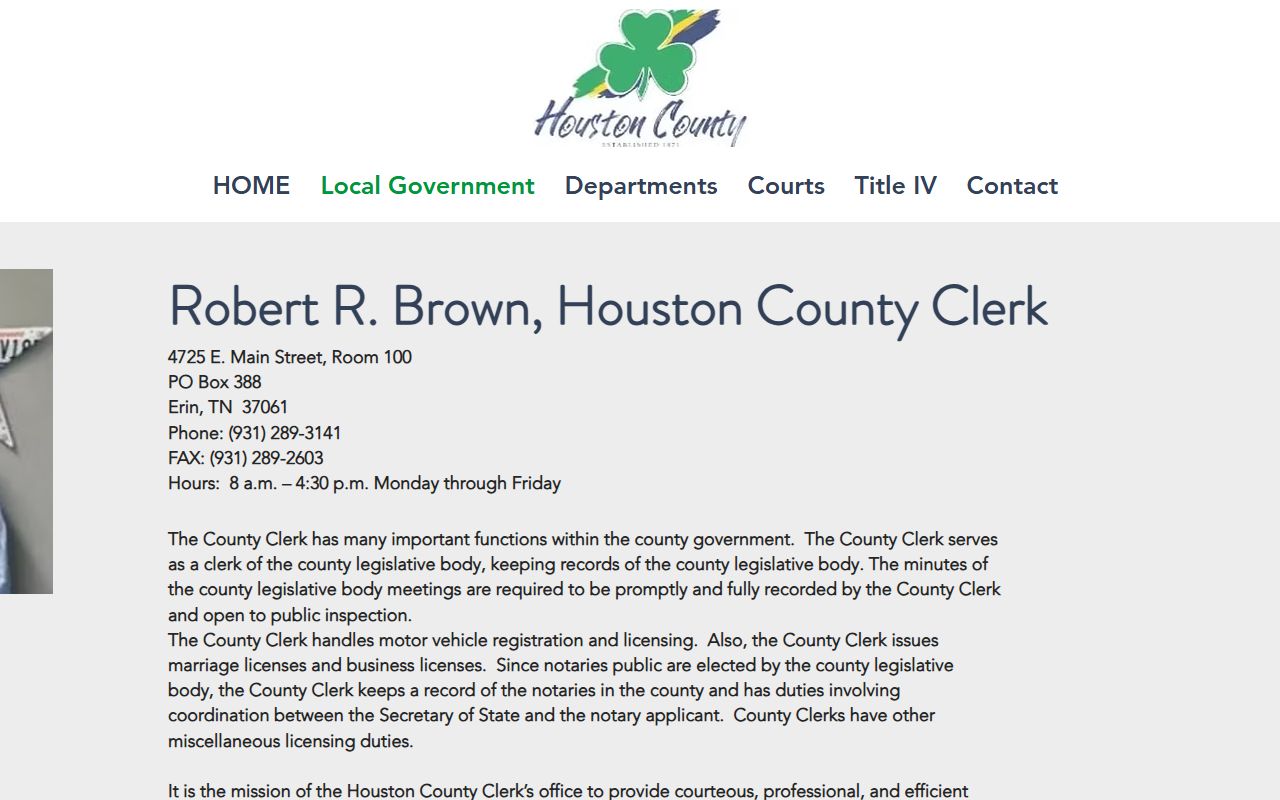
Use it as a visual reminder that the county clerk is related to the search, but the circuit court clerk keeps the divorce file.
Historical Houston County Divorce Records
Historical Houston County Divorce Records can move into state archive materials once they age out of the active court file. Houston County was established in 1871, so the search range is not as deep as some older counties, but the archive path still matters. The Tennessee State Library and Archives keeps county court material on microfilm and in collections that help researchers confirm old names, dates, and filing windows. That is useful when a family line crosses the county or when the divorce happened long before digital access.
Older cases are often best handled as a two-step search. First, confirm the spouse names and the rough year. Then ask the court or archive source where the file sits. That keeps Houston County Divorce Records work focused. If you jump straight to a copy request without the year, you may waste time. If you begin with an archive clue, the search is usually much smoother. Small counties still have old files, but the record may sit in storage or on microfilm rather than at the front desk.
For the archive route, use the Tennessee State Library and Archives vital records guide.
It gives the best official overview of how old divorce records move from the courthouse into archive use.
Order Houston County Divorce Records
If you only need proof that a divorce happened, the Tennessee Office of Vital Records can issue the certificate version. That option is good for people who do not need the full court file. The office explains how to order in person, by mail, or through the official online vendor. The state copy is often faster for a simple status check. The county copy is better when the divorce terms themselves matter. Houston County Divorce Records therefore have a short path and a full path.
Use the short path when the task is simple. Use the full court file when the document will be used for a name change, property issue, or another legal step. That distinction matters because a certificate does not show the full order. The decree does. In Houston County, the best result comes from asking for the right paper the first time. That saves a second trip and avoids a wrong order.
For state ordering help, use Tennessee's official VitalChek page.
It is the authorized online route for the state certificate side of Houston County Divorce Records.
Help With Houston County Divorce Records
The Tennessee Secretary of State divorce records FAQ is a useful backup when the local path is unclear. It points people toward the state archive guide and explains where older records live. The federal Eastern District court page is another good check because it reminds requesters that a verification letter is not the same thing as a certified decree. That point matters if you only need proof of a divorce versus the actual court order.
Houston County Divorce Records are not hard to search once you match the record type to the office. The county clerk can help with related records. The circuit court clerk can help with the divorce file. The state office can help with certificates. If you keep those lanes separate, the search tends to move fast and clean. That is the simplest rule to keep in mind when you are working Houston County.
Read the state FAQ at the Tennessee Secretary of State divorce records page.
It ties together the county file, the state certificate trail, and the archive path.