
Search Lewis County Divorce Records
Lewis County Divorce Records usually start with the circuit court clerk in Hohenwald, but the right copy depends on what you need. A full court file, a certified decree, or a state certificate all follow slightly different paths. If you know the spouse names, the rough filing year, or the county seat, you can narrow the search fast. This page shows where Lewis County records live, how older files move into state archives, and which offices help when you need a clear copy instead of a general search.
Lewis County Quick Facts
Where Lewis County Divorce Records Start
The Lewis County Circuit Court Clerk keeps the divorce case file in Hohenwald. That is the first office to check when you need the complaint, decree, or a certified copy of a final order. The county clerk is a related office, but that office handles marriage licenses and general county duties rather than the divorce file itself. Lewis County Divorce Records work best when you start with the court clerk and keep the request focused on the document you actually need.
The official court page at the Lewis County Circuit Court is the county's main judicial reference. The county clerk page at Lewis County Clerk is useful if you are checking related family records or confirming where marriage paperwork is filed. The county seat is Hohenwald, so an in-person search usually starts there. That keeps Lewis County Divorce Records tied to the right office from the beginning.
For an archive view, see the state guide at the Tennessee State Library and Archives vital records guide.
That guide is useful when Lewis County Divorce Records have aged into the archive period.
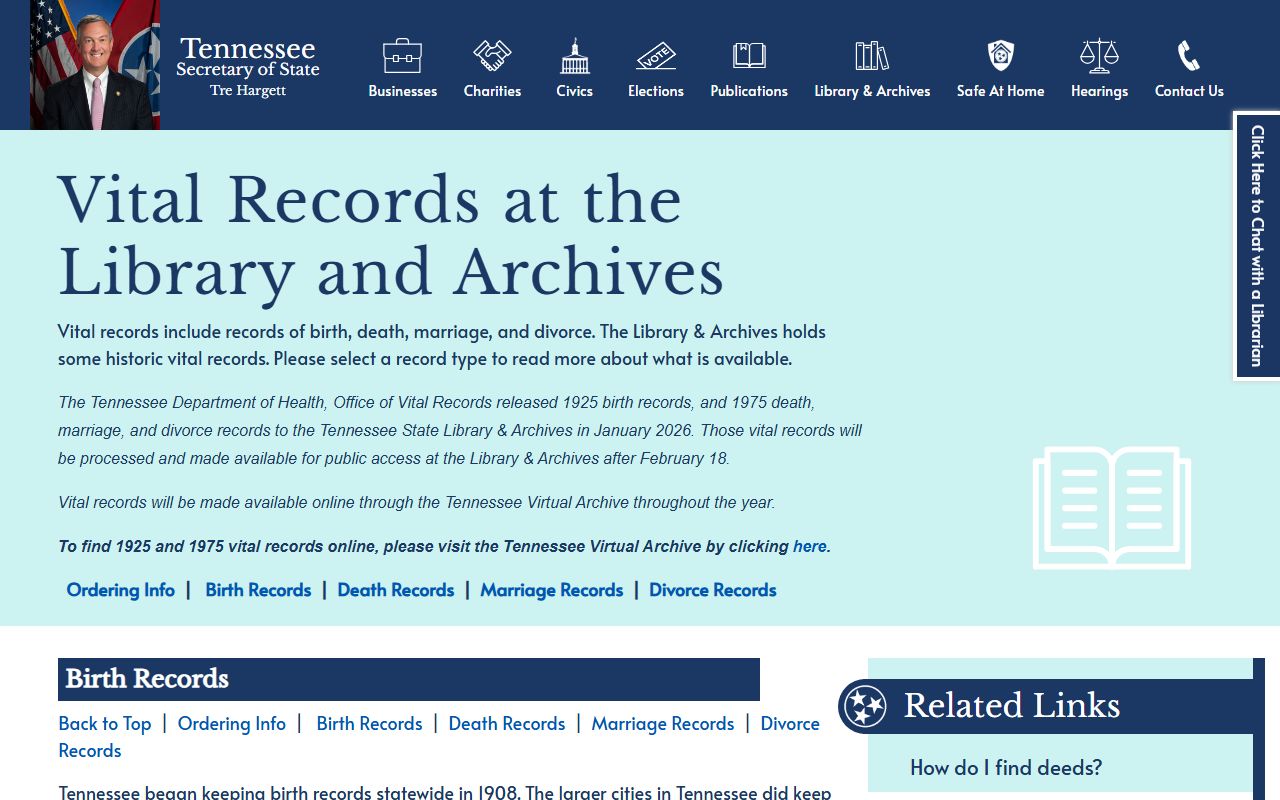
The image points to the archive route, which becomes important once the county file is no longer the easiest source.
Search Lewis County Divorce Records
A narrow search saves time. Bring the full name of one spouse, an approximate filing year, and the county name. A case number helps even more. The Lewis County Circuit Court Clerk can use those details to find the right file faster, and the clerk can tell you whether the case is still in active storage or has moved to a historical source. Lewis County Divorce Records are public records in general, but the office still needs enough detail to pull the right packet.
Tennessee law also explains why the county and the state records work together. Under Tennessee Code Annotated section 68-3-402, court clerks forward divorce records to vital records on a set schedule. That means a Lewis County case can show up in both the county file and the state certificate system. If you are tracking a live case, the filing rules in section 36-4-104 and the divorce ground rules in section 36-4-101 explain why the file may not close the same day it opens.
For the state record overview, use the CDC Tennessee vital records page.
It is a simple path when Lewis County Divorce Records are needed as a state certificate instead of a county packet.
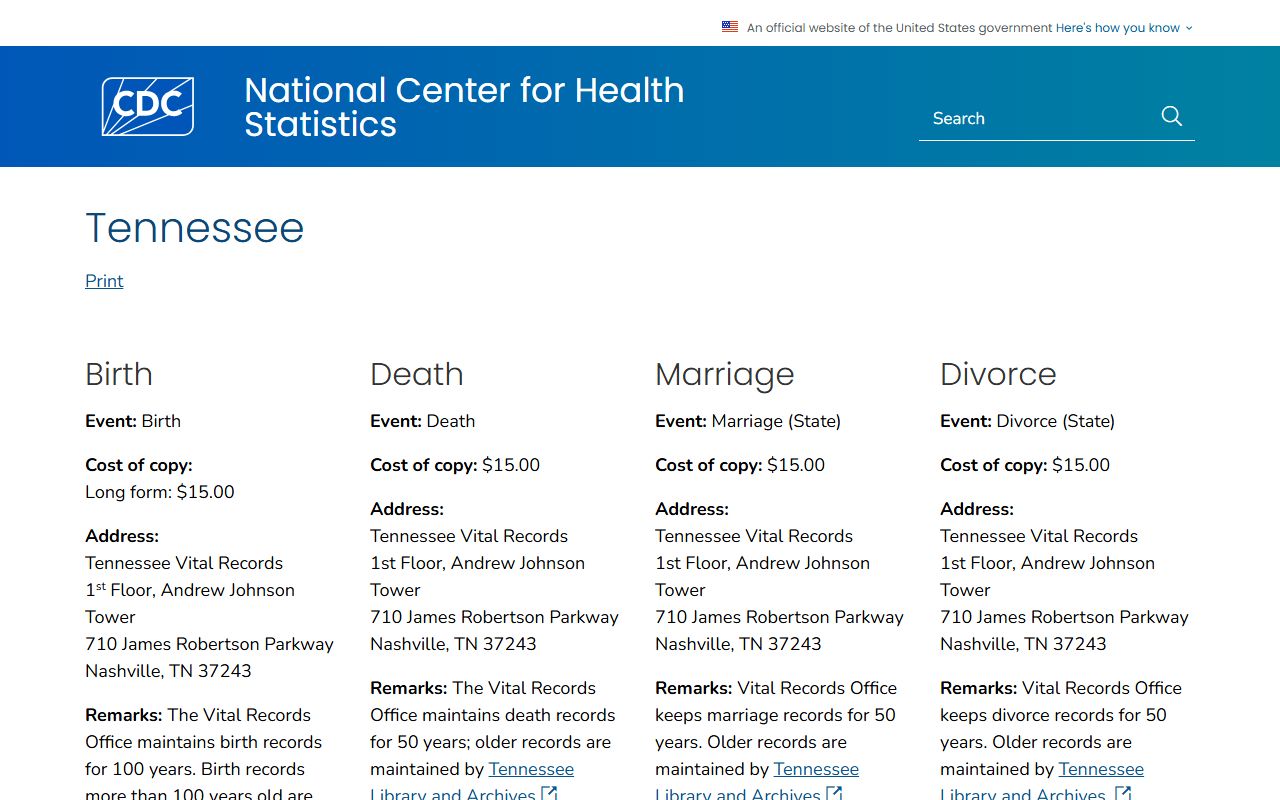
The CDC page helps confirm the state certificate route before you request a certified copy.
Note: A state certificate confirms the divorce event, but the county court file is still the better source for the full decree.
Lewis County Divorce Records and Access
Lewis County Divorce Records are generally open, but access is not unlimited. Courts can redact private data, and a judge can seal a document when there is a legal reason to do so. That is normal in family cases. The public can still inspect many Lewis County divorce files, yet the clerk has to guard personal data, financial numbers, and child-related material that is not meant for open release.
If you request a certificate from the state office, the entitlement rules matter too. The Tennessee Office of Vital Records explains who may request a divorce record and what proof may be needed in its entitlement guidelines. Those rules do not replace the county court's file access, but they do control who can get the state copy. Lewis County Divorce Records searchers should decide early whether they need the public case file or the restricted state certificate path.
The Tennessee Public Records Act is the reason most Lewis County divorce files can be requested at all. The court record is public unless a law or order says otherwise. That is why a request often works best when it names the exact document. Ask for the decree if you need the decree. Ask for the case file if you need the full set of papers. Precision helps the clerk and saves time for everyone.
For a closer look at the state request rules, use the Tennessee Vital Records help center.
That page explains the in-person, mail, and online paths for state records tied to Lewis County Divorce Records.
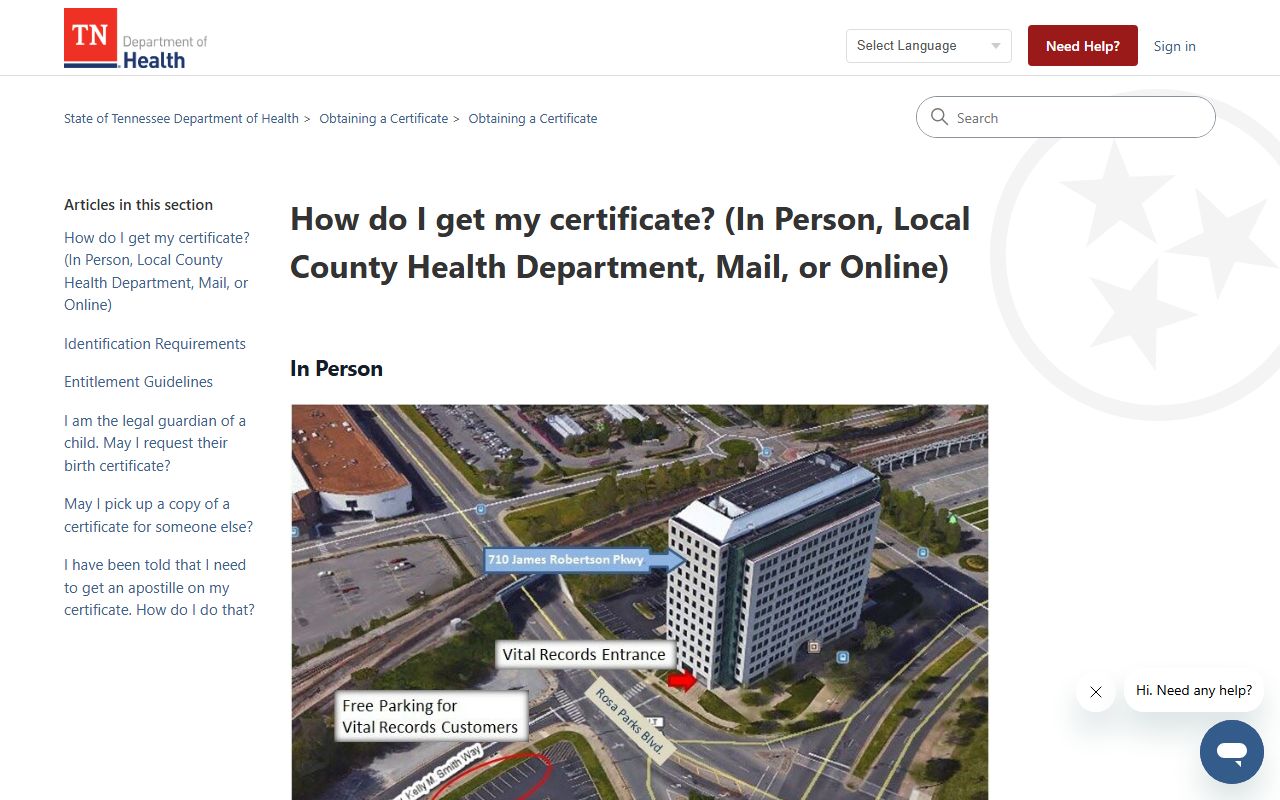
The state help page is the best short guide when you only need the certificate side of the record.
Historical Lewis County Divorce Records
Lewis County was established in 1843, so the local divorce trail is older than many of the active court systems people search today. Once a record gets old enough, the Tennessee State Library and Archives becomes the better place to check. The archives keep county court records on microfilm, and that can matter a lot when a Lewis County divorce predates the modern filing system. Historical research often starts with a name and a date range, then moves into the archive shelves or microfilm indexes.
That archive path is especially useful when a Lewis County file is not sitting in the clerk's current storage. The county clerk can still be the right first call, but the archive trail may give you the faster answer for older matters. If you are tracing a family line, a divorce record can also sit next to marriage papers, property changes, or later probate work. Lewis County Divorce Records are often easier to place once you understand how the county and state record systems overlap.
Use the Secretary of State divorce records FAQ when you want the shortest official guide to the archive route.
That FAQ points back to the library and archives system that holds older Lewis County Divorce Records.
The FAQ is brief, but it tells you where to look once the county office is no longer enough.
Order Lewis County Divorce Records
If you need a certified copy, the Tennessee Office of Vital Records is the state source for the divorce certificate. That office accepts requests in person, by mail, and through the official online vendor. The state office keeps divorce certificates for the retention period described in Tennessee records guidance, and older records move to the archives. That split matters because a Lewis County request can be filled in two different ways depending on the age of the record and the level of detail you need.
For the online route, Tennessee uses VitalChek as its official vendor. That is helpful when you want a fast state certificate and do not need the entire court file. If the case is newer or you need the decree itself, the Lewis County Circuit Court Clerk remains the better office. The clerk can provide the local copy, while the state office handles the shorter certificate record. Lewis County Divorce Records are easier to order once you know which version serves your purpose.
See Tennessee VitalChek ordering for the state online certificate channel.
That vendor is the fastest path when the county file is not required.

The image shows the state ordering route that many Lewis County requesters use for a certificate copy.
Note: Rush ordering is useful for certificates, but it does not replace the county clerk if you need the full divorce file.
Help With Lewis County Divorce Records
The Lewis County Circuit Court Clerk is the main local help point for divorce files. If you have the case name and a rough year, the office can usually tell you whether the file is easy to pull or whether it will take a little time. The county clerk office can help with marriage-related records and other local office questions, but Lewis County Divorce Records still belong to the circuit court side when you want the decree or the case packet.
If you are not sure where the record lives, the Tennessee State Library and Archives guide and the Secretary of State FAQ can keep you on track. They are useful when a Lewis County record has aged past the active clerk window. They also help when you are trying to tell the difference between a public court file and a state certificate. The office choice is the key point. Once you choose the right office, the search gets much simpler.
Lewis County Divorce Records also connect to other records in a way that matters to family history work. Marriage records show the start. Divorce records show the end. Property records or probate work can show what changed in between. If you are building a timeline, check all three together. That is often the cleanest way to make sense of a Lewis County case.
Related Lewis County Records
Lewis County marriage licenses are handled through the county clerk, not the circuit court clerk. That makes marriage and divorce useful as a pair. If a divorce case is hard to date, a marriage record may help you find the right window. Property records and later court papers can also help confirm whether the divorce changed land ownership, custody, or support details. Lewis County Divorce Records rarely stand alone in a family paper trail.
When you need more context, look at the county clerk page, the circuit court page, and the archives guide together. That approach works well because Lewis County records can be split across local office files and state archive storage. If the divorce is old, the archive route may be the shortest path. If it is newer, the circuit clerk is still the best first stop. Lewis County Divorce Records are manageable once you match the age of the case to the office that keeps it.