
Access Loudon County Divorce Records
Loudon County Divorce Records usually begin with the circuit court clerk in Loudon, but the right route depends on whether you need the file, the decree, or a state certificate. A short search can be enough if you already know the spouse names and filing year. If not, the county clerk, the court clerk, and the state archive tools can help narrow the trail. Loudon County is newer than some Tennessee counties, so the archive path matters a lot for older records. This page keeps the local and state steps in one place.
Loudon County Quick Facts
Where Loudon County Divorce Records Start
The Loudon County Circuit Court Clerk keeps the divorce case file in Loudon. That is the first stop if you need the decree or the file that contains the court's papers. The county clerk is a related office and handles marriage licenses and other county records, but the divorce packet itself stays with the circuit court clerk. Loudon County Divorce Records are easier to locate when the request starts in the court that heard the case.
The local court reference is the Loudon County Circuit Court. The county clerk page at Loudon County Clerk helps with related record questions. Loudon County was established in 1870, so the older file trail may be shorter than in some of the older Tennessee counties, but historical records still move into the archive system when they age out of active use. Loudon County Divorce Records can therefore live in both county storage and state microfilm.
For the archive path, use the Secretary of State divorce records FAQ.
It keeps Loudon County Divorce Records tied to the library and archives system once the file is no longer in active court storage.
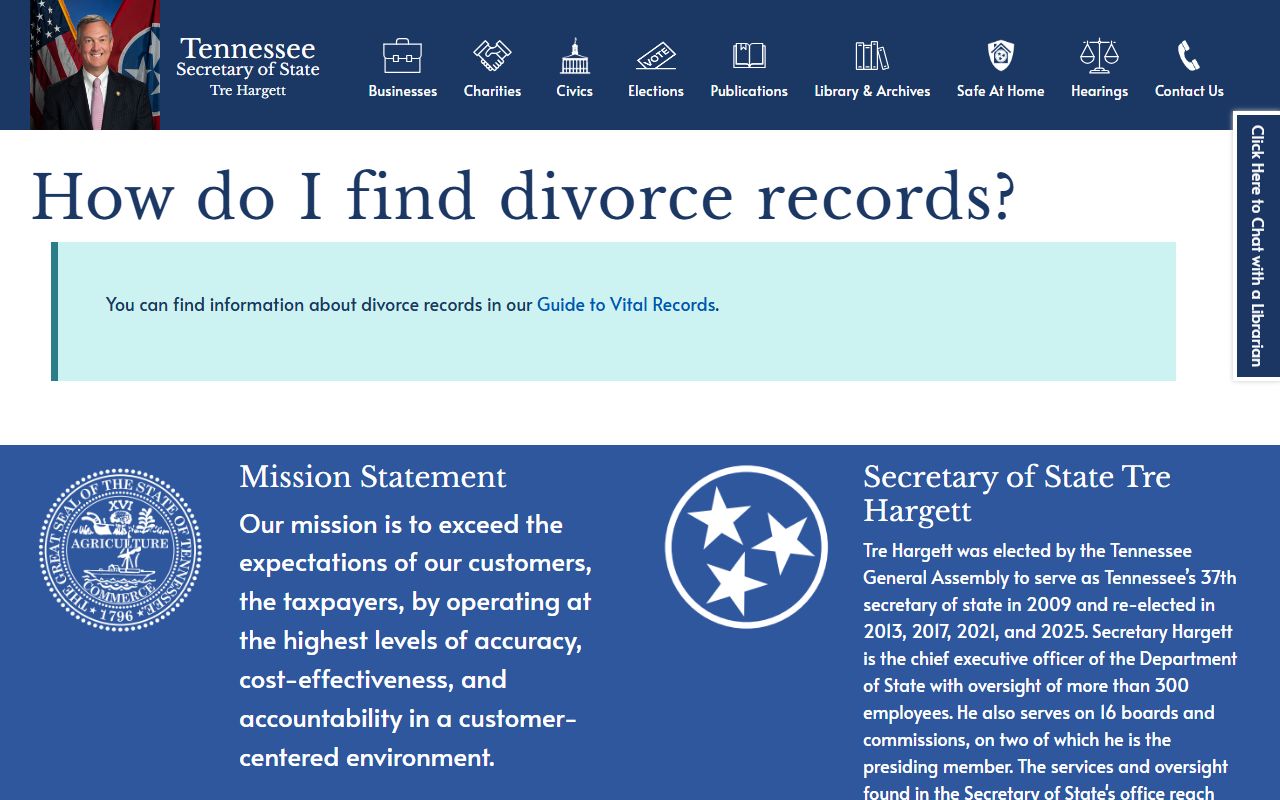
The image shows the official archive guide that points searchers to older Tennessee divorce records.
Search Loudon County Divorce Records
A clean search starts with the basics. Bring the spouse names, the approximate year, and the county name. A case number is even better. The circuit court clerk can use those details to look through the file faster. Loudon County Divorce Records are public in general, but the office still needs enough detail to avoid pulling the wrong matter. If you are not sure whether the record is active, archived, or statewide, the clerk can help narrow that down too.
Tennessee law explains the record split. Under section 68-3-402, the court clerk reports the divorce to vital records. That gives you a second route for confirming the event. If you are following a live case, section 36-4-104 and section 36-4-101 explain the filing and divorce-ground rules that shape the record trail. That is why Loudon County Divorce Records can show filings first and a final decree later.
For the state certificate route, use the CDC Tennessee vital records page.
It gives a quick path when you only need the state record tied to Loudon County Divorce Records.
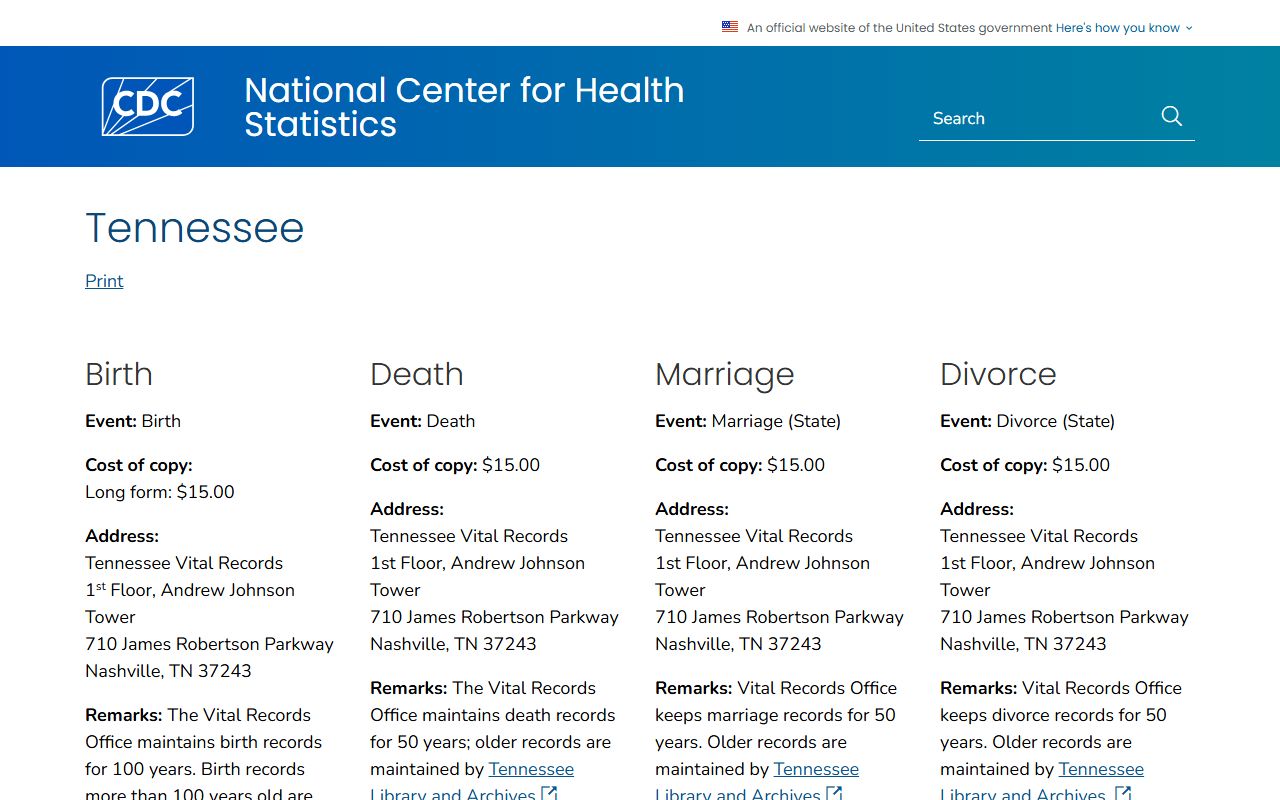
The image confirms that the state certificate is a different record from the county court file.
Loudon County Divorce Records and Access
Loudon County Divorce Records are public records, but access is not unlimited. Courts can redact private items, and sealed documents stay sealed unless the court allows release. That protects personal data and child-related material. The county office can still usually tell you whether a record exists, but the clerk must follow the rules about what can be copied or shown. The public record right is real, yet it is still bounded by privacy law and court orders.
If you request a state certificate, the Tennessee Office of Vital Records entitlement rules matter. The guidelines explain who may request a divorce record and what proof may be required from family members, attorneys, or guardians. That makes the state certificate route more controlled than the court-file route. Loudon County Divorce Records searchers should know which version they want before they contact the office. The wrong choice can slow the request and create extra work.
A key point is the difference between proof and detail. A certificate proves the divorce happened. The decree explains what the court ordered. That is why the county file is often the better choice for property changes, remarriage paperwork, or name changes. Loudon County Divorce Records can do both jobs, but not with the same document. The office you choose should match the purpose of the request.
See the Tennessee Vital Records entitlement rules for the state copy side of the search.
That page shows who qualifies for a certified state record and what proof may be needed.
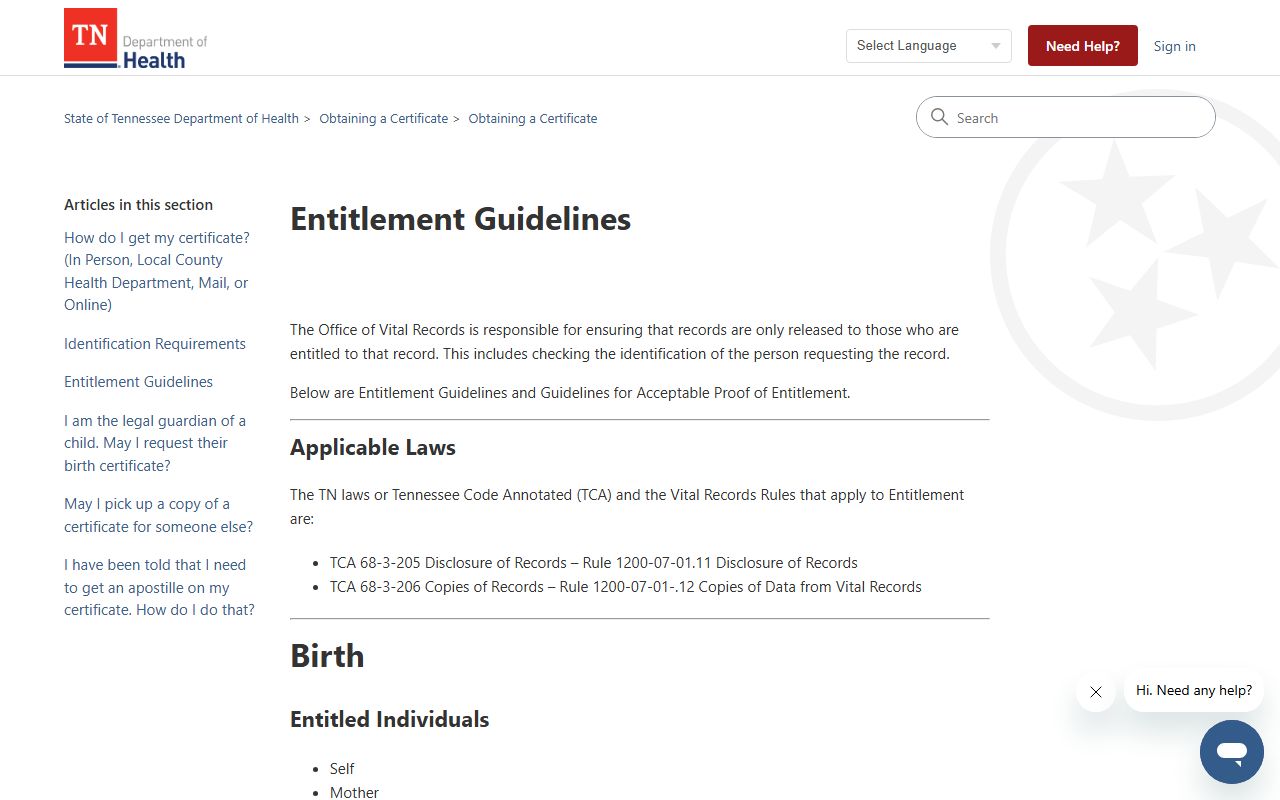
The image is a good reminder that the state certificate path has stricter request rules than the public court file.
Note: If you need the full court order, the county decree is usually more useful than the state certificate.
Historical Loudon County Divorce Records
Loudon County was established in 1870, and older divorce records eventually move to the Tennessee State Library and Archives. That archive path is important because county storage does not hold every old case forever. The state archive guide explains how older divorce records leave the active office and become part of the historical record set. Loudon County Divorce Records from earlier periods may show up on microfilm or in archive indexes rather than on a live clerk shelf.
That matters if you are doing family history work. A divorce record can help place a marriage end date, a property shift, or a later name change. Once a file moves into the archive system, the search tends to become more about dates and names than about office counters. Loudon County Divorce Records are often easier to manage once you know whether the record is still active or is already in historical storage.
For a second official archive guide, use the Library of Congress Tennessee vital records guide.
It points back to the state archive system that holds older Loudon County Divorce Records.
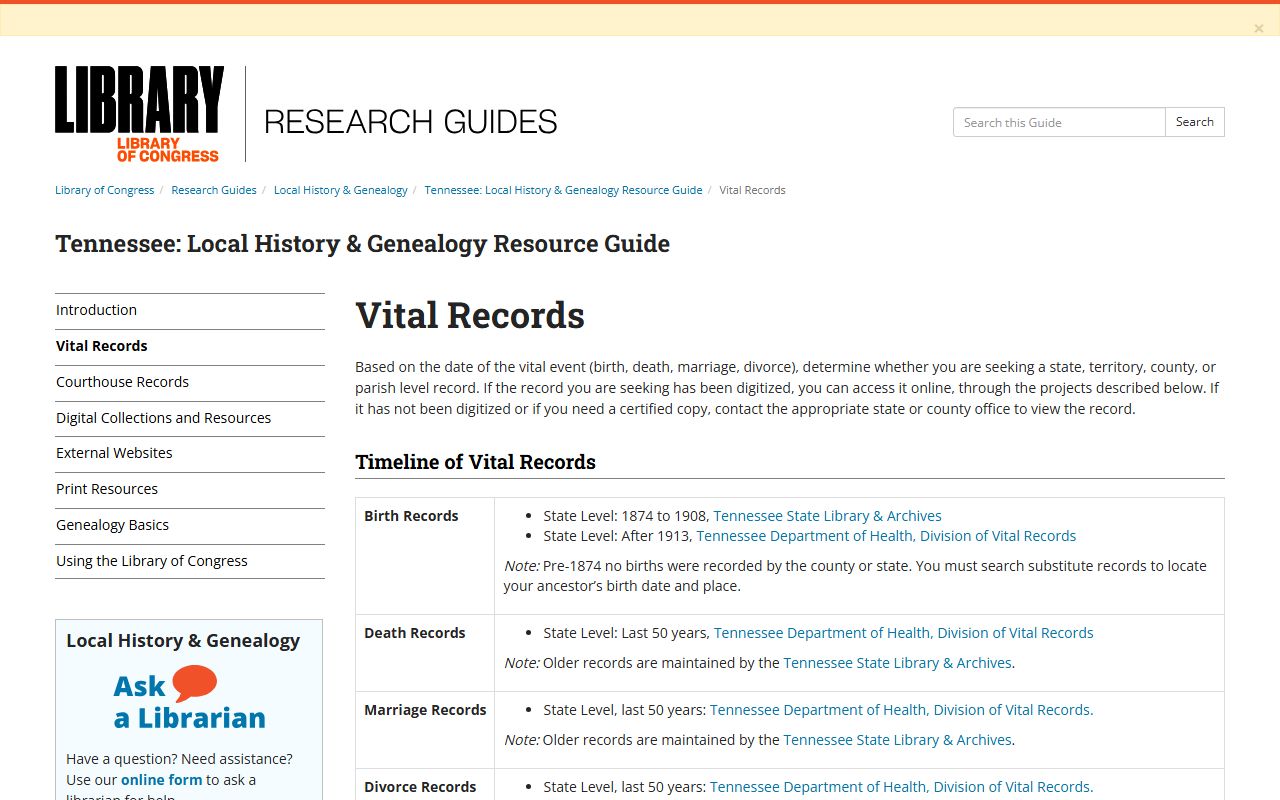
The image helps anchor the older-record search in a trusted federal research guide.
Order Loudon County Divorce Records
For a certified copy, the Tennessee Office of Vital Records is the state office to use. It accepts requests in person, by mail, and through VitalChek. That is the path for the state certificate, not the full county file. If you need the decree itself, the Loudon County Circuit Court Clerk is still the right office. Loudon County Divorce Records are easier to order once you know whether you need the event record or the court order.
The state help center explains the request steps, the identification rules, and the payment methods. That is useful when you want the shortest possible version of the record. If the case is older, the state office may also point you toward the archive path. Loudon County Divorce Records can therefore be ordered through either the county or the state, but the document type decides which door to use.
See Tennessee VitalChek ordering for the online state certificate channel.
It is the fastest route when you need the shorter state record tied to Loudon County Divorce Records.

The image points to the official online order route for a certified Tennessee certificate.
Help With Loudon County Divorce Records
The Loudon County Circuit Court Clerk can help you narrow the file if you know the spouses or the year. The county clerk office can help with marriage records and other related county questions. That is useful because divorce research often starts with a marriage record and ends with a decree. Loudon County Divorce Records are easier to understand when you use both offices as part of the same search plan.
If the file is old, the state archives may be the best next stop. The Secretary of State FAQ and the library and archives guide both point to that route. If the file is newer, the circuit clerk is usually enough. Loudon County Divorce Records become much simpler once you match the age of the record to the office that keeps it. Most of the confusion comes from asking the wrong office first.
Related Loudon County Records
Marriage licenses, property records, and probate papers often sit next to a divorce in a family search. That is true in Loudon County as well. A marriage record can help confirm the start date. A deed can show what changed after the divorce. Loudon County Divorce Records are only one part of the paper trail, but they are often the key part when a family timeline needs a firm end date.
Once you know which office holds which record, the search gets much easier. The county clerk handles the marriage side. The circuit court clerk handles the divorce file. The state archives and the state certificate office handle the older or shorter record trail. That is the basic structure that makes Loudon County Divorce Records manageable.