
Search Marion County Divorce Records
Marion County Divorce Records can start in Jasper, move through Tennessee Vital Records, or shift into archive storage when the case is old. That makes the county a good example of how Tennessee divorce searches work in practice. If you need a decree, a certificate, or a historical clue, the office you choose depends on the age of the record and how much detail you need. Marion County's court and clerk offices handle the live county file, while the state office and archives help when the search needs a broader path.
Marion County Quick Facts
Where Marion County Divorce Records Start
Marion County divorce work points first to the Chancery Court Clerk and the Circuit Court Clerk in Jasper. The Marion County court research says the Chancery Court Clerk maintains divorce records, and the county clerk office handles marriage licenses and other county business. If you want the court file, the clerk in Jasper is the office to ask. If you want the short state certificate, Tennessee Vital Records is the other part of the search path. That split is normal in Tennessee, and it matters when you want a decree rather than a summary copy.
The county clerk office is also useful when you are matching names or checking a marriage record before you request a divorce file. A clear request helps in a small county. Marion County is not a place where you should guess at the record type. Say whether you need the case file, a certified decree, or just a search lead. The county clerk and the court clerk can then point you in the right direction with less back and forth.
The county clerk site is listed in the research set at marioncountytn.gov/county-clerk.
The court side is listed at tncourts.gov/courts/circuit-court/marion-county.
For the state certificate side, the Tennessee Vital Records help article explains how in-person, mail, and online orders work.
Tennessee Vital Records help is the best place to compare that route with the county file request.
The image below shows the state certificate workflow that sits beside the county court file.
The source is Tennessee Vital Records.
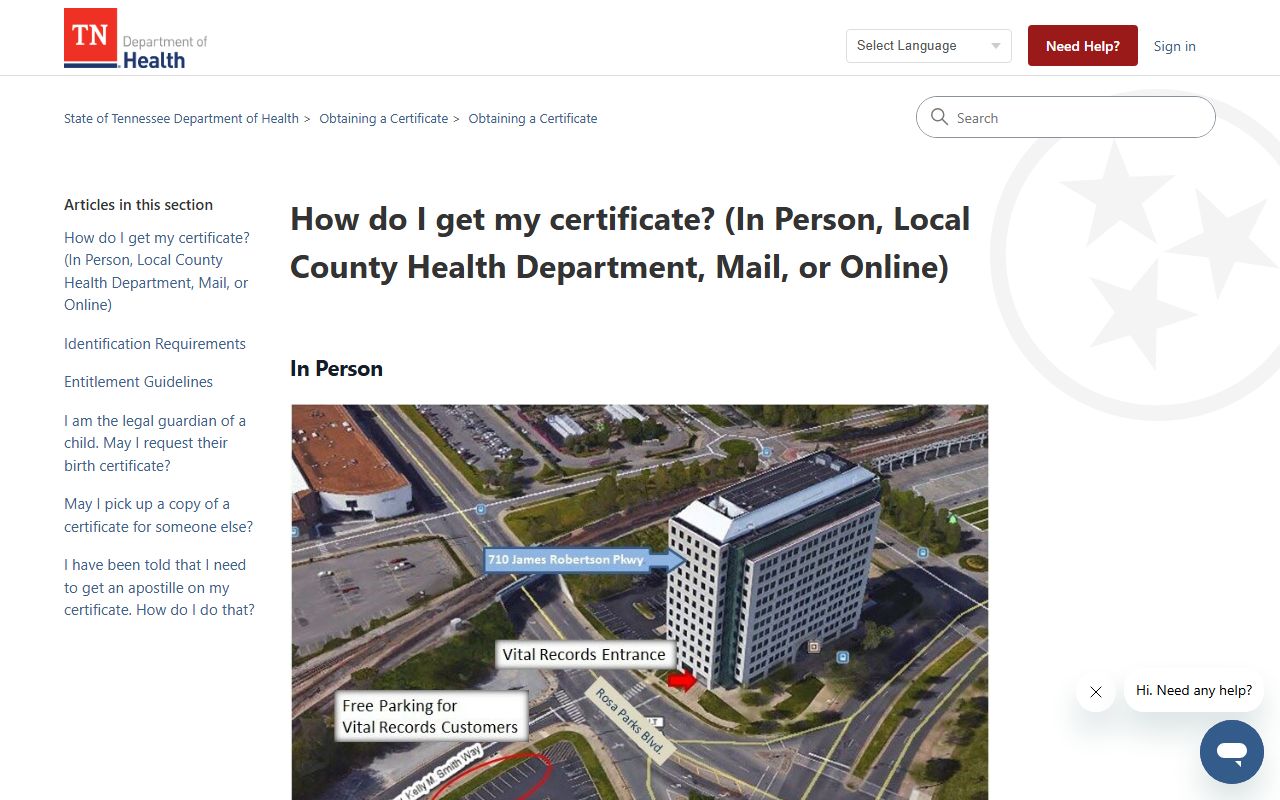
That guide is useful when Marion County searchers only need the short state certificate rather than the full court file.
Note: The county court file and the state certificate are separate records, so it helps to know which one you need before you request copies.
Search Marion County Divorce Records
Searching Marion County Divorce Records works best when you start with a spouse name and a rough year. A case number helps, but it is not required for the first step. If the filing date is vague, the county clerk or court clerk may still be able to narrow the search by surname and record type. That is especially true in a county where divorce records often move through the chancery clerk and then into state reporting.
For state reporting, Tennessee Code Annotated section 68-3-402 explains why the county clerk's record and the state record both exist. The county sends divorce record information to vital records on a set schedule, so the county file and the state certificate can answer different questions. If you know you need the decree, ask for the court file. If you only need proof that the divorce was granted, the state certificate may be enough.
Before you search, gather a few basics.
- Full name of one spouse
- Approximate filing year
- County name
- Case number, if known
- The record you want copied
Use Tennessee Code section 68-3-402 when you want to see how the county record and the state record connect.
That statute is the reason Marion County Divorce Records appear in both local and state systems.
The federal court guidance also helps people decide whether a certificate is enough for the task at hand.
See the United States District Court for the Eastern District of Tennessee marriage and divorce page.
Note: A short certificate can confirm the event, but the county decree usually carries more detail for legal follow-up work.
Marion County Divorce Records Fees
Marion County fees depend on what you ask for. The county office may charge for copies or certification, and those costs can change. If you only need a name check or a filing date, ask first so you do not pay for a copy you do not need. If you want a certified decree, expect a higher cost than for a plain copy. That is typical in Tennessee counties and it applies to Marion County Divorce Records as well.
The state fee is easier to pin down. Tennessee Vital Records says a certified divorce certificate costs $15 per copy. If you order online through the official vendor, a processing charge may also apply. That makes the state certificate a good fit for a simple proof-of-divorce request, while the county court file remains the better choice for a full divorce order or a record with more detail.
For the state fee, start with the CDC Tennessee vital records page.
CDC Tennessee vital records points to the current state process and the current fee structure.
The image below shows the state fee and ordering path in one place.
It comes from cdc.gov/nchs/w2w/tennessee.htm.
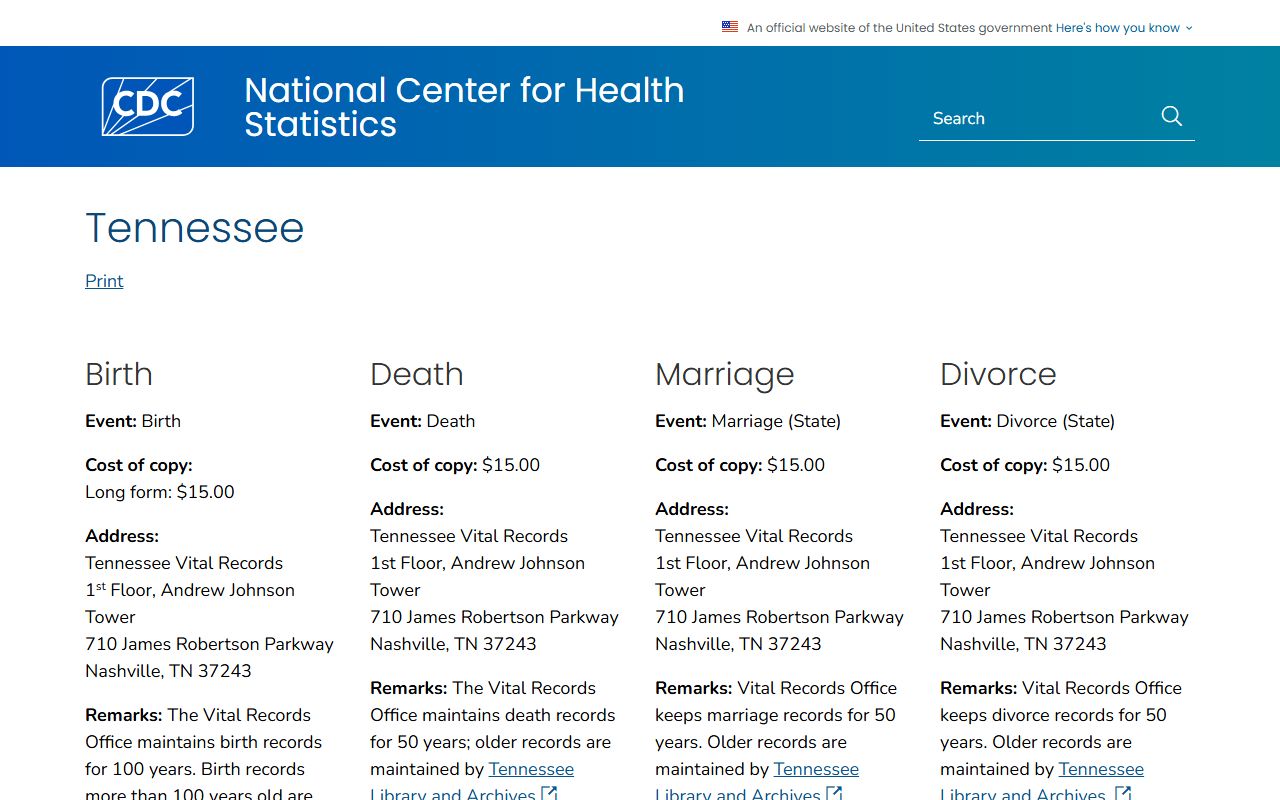
That image is a useful reminder that the county file and the state certificate do not cost the same thing.
For online ordering, Tennessee also uses VitalChek as the official vendor.
See VitalChek Tennessee vital records for the state ordering channel.
Historical Marion County Divorce Records
Historical Marion County Divorce Records can be easier to trace than newer ones if you know where the archive trail begins. The Tennessee State Library and Archives keeps older vital-record material once the retention window moves the record out of active state handling. Marion County research also notes that the archives hold county court records on microfilm. That means the search can move from the courthouse to an archive shelf or reel when the divorce is old enough.
Marion County's broader record history helps too. The research set notes that related county records include birth registrations beginning in 1908, marriage registrations beginning in 1881, and probate records beginning in 1874. That context matters because a divorce search often starts with a marriage date or ends with a land or probate question. If a family file is old, the archive may answer the first question faster than the courthouse does.
Start the archive search with the state guide.
Tennessee State Library and Archives vital records guide explains where older records go after they leave active vital-record handling.
The image below matches that archive path.
Its source is the Tennessee State Library and Archives guide.
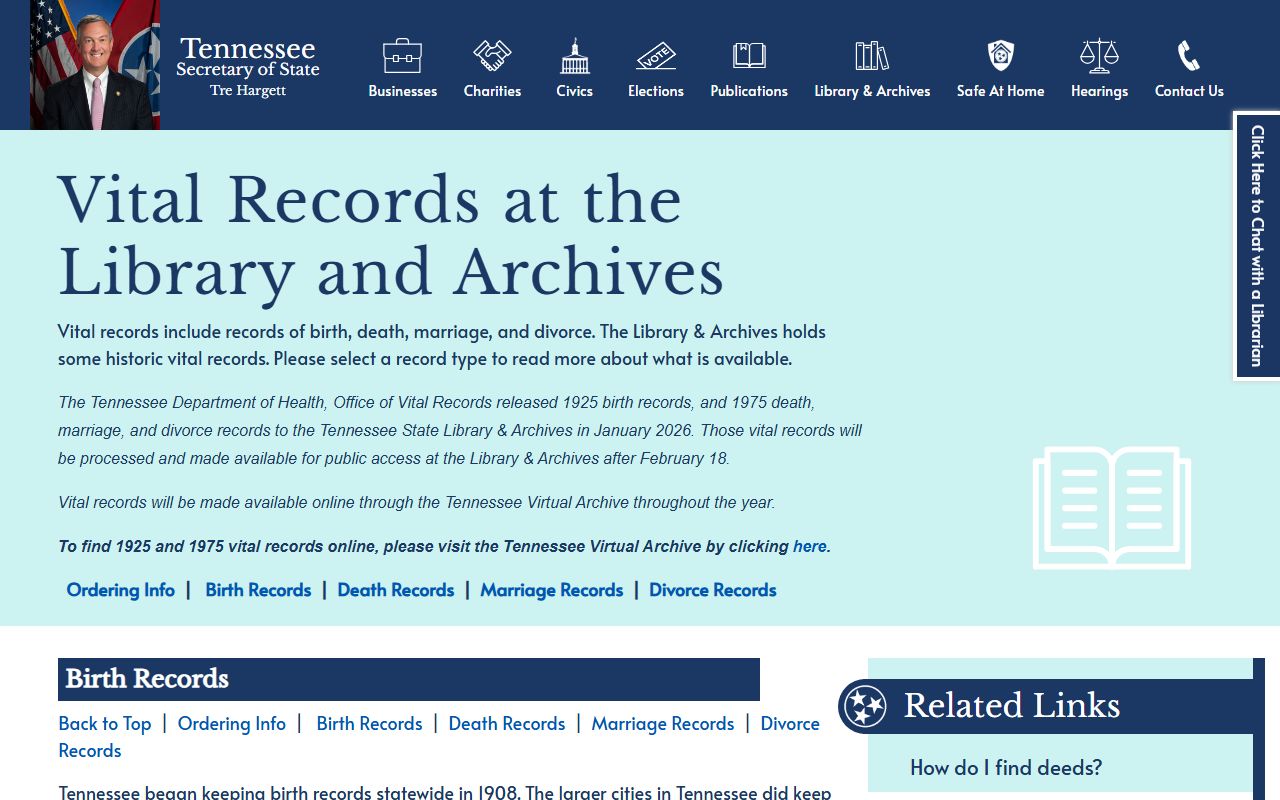
That guide is the right next step when the county file is old enough to have moved into archive care.
The Secretary of State FAQ adds a short road map for finding older divorce records.
See the Tennessee divorce records FAQ for the archive side of the search.
Order Marion County Divorce Records
Ordering Marion County Divorce Records usually means choosing between the county case file and the state certificate. If you need the decree, contact the Marion County Chancery Court Clerk or the Circuit Court Clerk in Jasper. If you only need the proof-of-event copy, Tennessee Vital Records is the better route. The state office accepts in-person, mail, and online requests, and it requires proof of identity for many orders.
The entitlement rules matter when you request a state certificate. Tennessee allows certain family members, the person named on the record, legal guardians, and authorized representatives to request the document. That is why a careful order goes faster than a broad one. Marion County Divorce Records requests work best when you decide early whether you need a court decree or a state certificate, because the paperwork and the request path are not the same.
Review the entitlement rules before you order.
Tennessee entitlement guidelines explain who can request the state certificate and what proof may be required.
The image below shows the same state rules in visual form.
It is linked to Tennessee Vital Records entitlement guidelines.
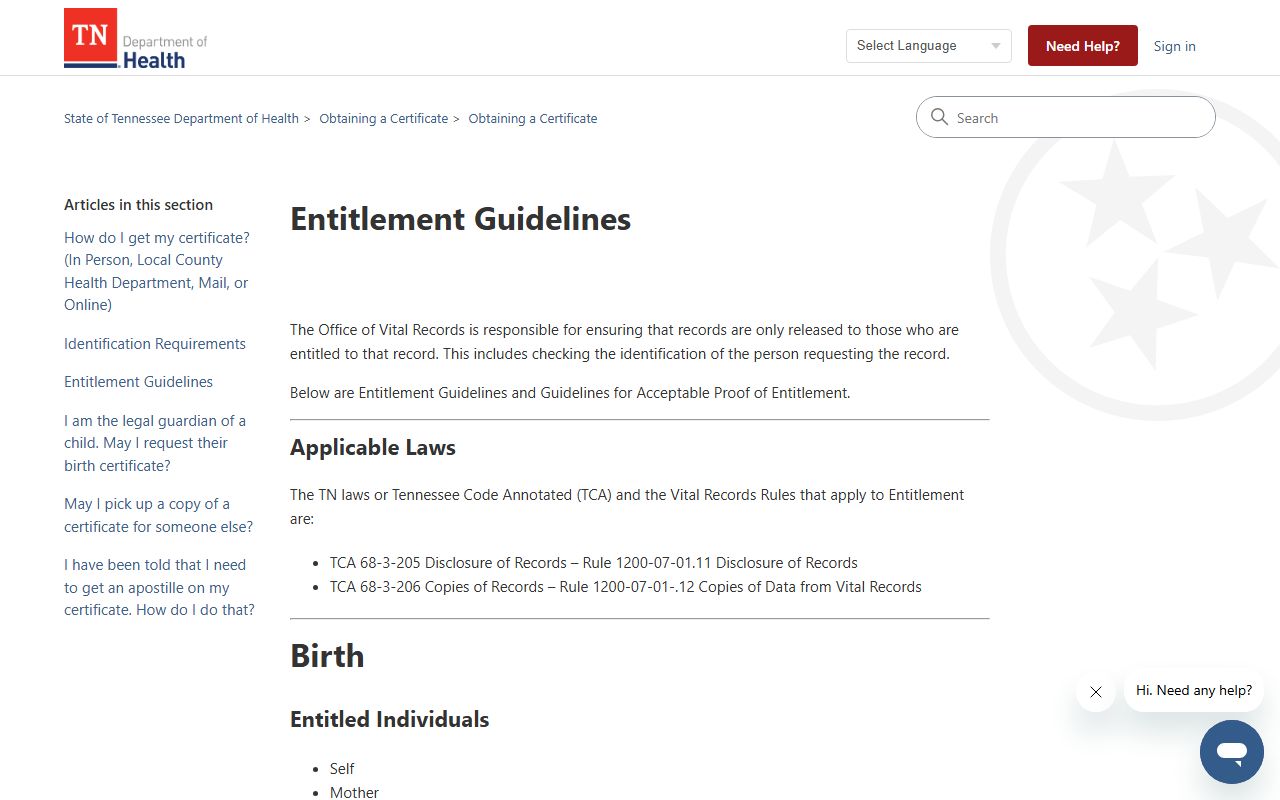
That page is most useful when an attorney, guardian, or family member is making the request.
For a fast online order, Tennessee also directs people to the official VitalChek channel.
The state vendor page is VitalChek Tennessee vital records.
Marion County Divorce Records Access
Marion County Divorce Records are generally public, but some parts of a case file can be limited. Courts may redact private data, and some documents can be sealed when a judge finds a reason to do so. That means public access exists, but it is not unlimited. The county court clerk still has to protect sensitive details while giving access to the public side of the record.
The public-record rule is also why a divorce certificate does not always answer every question. A certificate confirms the event. The court file shows the work of the case. If you need to see property terms, custody language, or other details, the county court file is the better source. For Marion County Divorce Records, that distinction matters because the state and county systems serve different needs.
Read the state access rule here.
T.C.A. section 68-3-402 explains the county-to-state reporting rule that keeps the record trail alive.
The federal court guidance also helps explain why verification letters are not always the best substitute.
See the Eastern District of Tennessee guidance page for that distinction.
Note: Public access is broad, but it does not erase redactions, seals, or the difference between a certificate and a court decree.
Related Marion County Records
Marion County Divorce Records often sit beside other county records that help explain the family story. Marriage licenses show when the marriage began. Probate records can help when a divorce was followed by an estate question. Land records can show how a property division worked out after the divorce. The Marion County clerk office and the court offices are the best places to start when those records need to be matched together.
That mix of records is common in Tennessee counties. A divorce search can begin with a spouse name, then expand into marriage records, land records, or archive materials once the case is found. Marion County is especially good for that kind of work because the county research points to both the court clerk and the archive trail. If you are still unsure which record you need, start with the county clerk office, then move to the court clerk or state office as needed.
For county context, the official county clerk page is Marion County Clerk.
For the county court side, use Marion County Circuit Court.