
Marshall County Divorce Records Lookup
Marshall County Divorce Records are tied to Lewisburg's court offices, but the best starting point depends on what you need. A certified decree lives with the court clerk, while the state certificate route runs through Tennessee Vital Records. Older records can also shift into the archive trail. If your search starts with a spouse name and a rough year, Marshall County is usually manageable. If you already know the case number, the clerk can move faster. The goal is to match the request to the right office the first time.
Marshall County Quick Facts
Where Marshall County Divorce Records Start
The Marshall County Circuit Court handles divorce proceedings, and the circuit court clerk keeps the county case files. That makes the court clerk the right office when you want the complaint, decree, or any filed order from a Marshall County case. The county clerk office in Lewisburg handles marriage licenses and other county business, so it is a useful companion office when you are building a record trail. Marshall County Divorce Records often start with the court file, then expand into marriage or archive records if the request goes beyond the current court packet.
The county research notes also say the county clerk is the contact point for marriage records, which matters when you are checking the start of the marriage before the divorce. If you need the short state certificate instead of the full decree, Tennessee Vital Records is the other office in the chain. The county seat is Lewisburg, so most in-person searches land there first. In a county this size, a short and direct request usually gets you to the right record more quickly than a broad one.
The official county clerk page is Marshall County Clerk.
The court route is listed at Marshall County Circuit Court.
The local manifest image shows the county clerk office, which is a natural starting point for marriage and related record checks.
The source is marshallcountytn.gov/county-clerk.

That image helps anchor the local search path in Lewisburg before you move to the court file itself.
Note: The county clerk office helps with related records, but the circuit court clerk is the office that keeps the divorce case file.
Search Marshall County Divorce Records
A Marshall County divorce search goes faster when you have the spouse names and an approximate filing year. A case number is even better, but it is not required to begin. The court clerk can often narrow the file by surname if you know the county and the time frame. That is useful in Lewisburg because the county record set is smaller than in the large metro counties. The trick is still the same. Give the clerk enough detail to find the right case without making the search vague.
Tennessee's monthly reporting rule also explains why a Marshall County divorce can be found in both the courthouse and the state system. Under T.C.A. section 68-3-402, the clerk forwards divorce records to the Office of Vital Records. That means the county file and the state certificate are not interchangeable. If you need the decree, ask for the county court file. If you only need proof that a divorce happened, the state certificate may do the job.
Before you ask for copies, gather the basics.
- Full name of one spouse
- Approximate filing year
- County name
- Case number, if known
- The record type you want
For the county side, the state court system page is still useful as a reference point.
Use the Eastern District of Tennessee marriage and divorce records page if you want a simple explanation of the decree versus certificate split.
Note: A short certificate confirms the event, but the county decree usually gives you the detail needed for follow-up work.
Marshall County Divorce Records Fees
Fees in Marshall County depend on the office and the copy type. A plain court copy is usually cheaper than a certified decree. The county clerk or court clerk may charge per page, and that can change over time. If you only need a file search, ask before paying for copies. That keeps Marshall County Divorce Records requests lean and avoids unnecessary copy charges.
The state fee is more predictable. Tennessee Vital Records charges $15 for a certified divorce certificate, and the official online vendor may add a processing cost. That route is useful when you only need proof of the divorce and not the full court packet. If you need the decree, the county file is still the better source. The county and state offices solve different problems, so the cheapest option is not always the one you need.
For the state fee, use the CDC Tennessee page.
CDC Tennessee vital records gives the current state path and links to the certificate process.
The image below matches that state fee path.
Its source is cdc.gov/nchs/w2w/tennessee.htm.
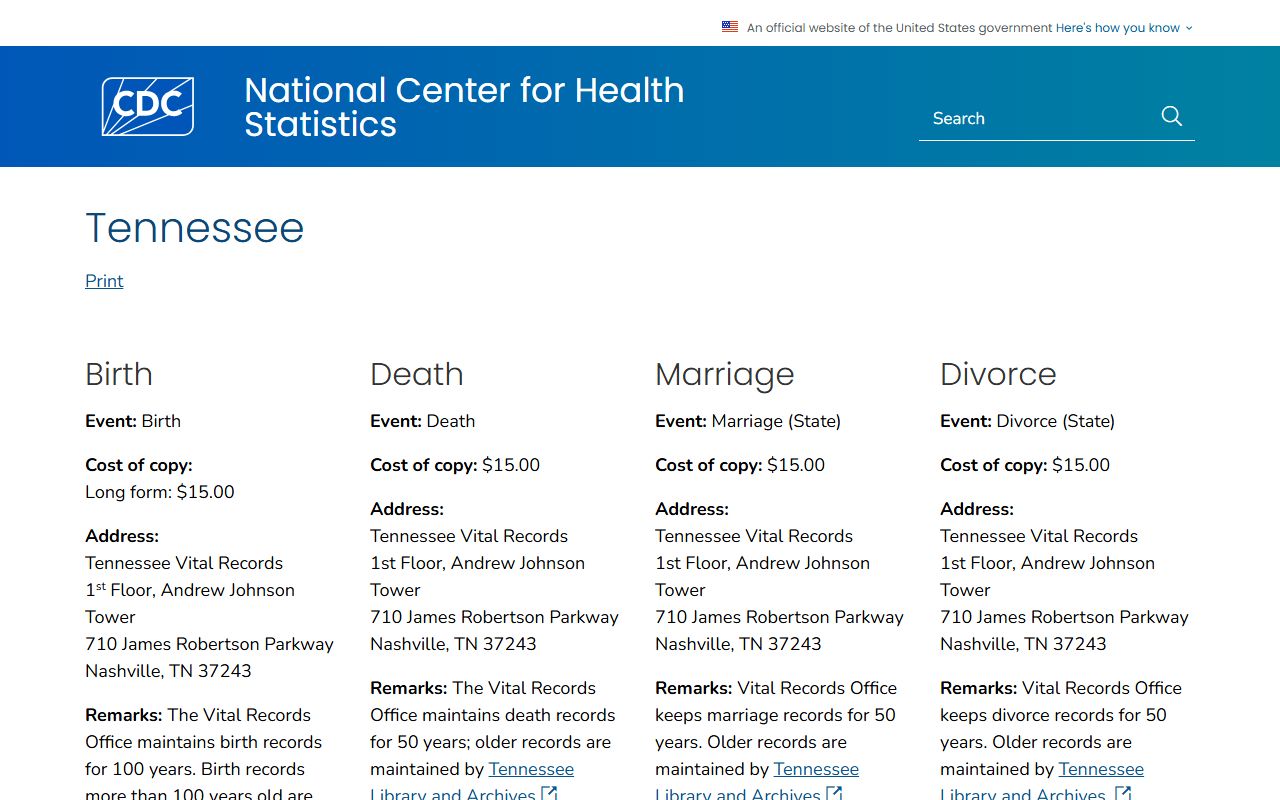
That image helps show where the state certificate cost fits beside the county court copy cost.
VitalChek is the official online ordering vendor for Tennessee Vital Records.
See VitalChek Tennessee vital records if you want the online order option.
Historical Marshall County Divorce Records
Marshall County Divorce Records that are old enough to leave the courthouse often show up in the Tennessee State Library and Archives. Marshall County was established in 1836, and the archive trail can be useful when a record predates the current clerk file or when the docket book is no longer on the active shelf. For family history work, that older material matters. It can tell you when the case was filed, where the marriage was ended, and which office handled the record at the time.
Historical searches in Marshall County often begin with an index, then move to a scanned minute book or microfilm reel. The county research set says the archives have various county court records on microfilm, which means the historical path is real, not theoretical. If you are trying to prove a relationship, confirm a divorce date, or rebuild a family line, the archive route can be the fastest path once the courthouse file is too old or too thin to answer the question fully.
Use the archive guide as the first historical stop.
Tennessee State Library and Archives vital records guide explains how older records move into archive care.
The image below matches the state archive path.
It is tied to the state archive guide.
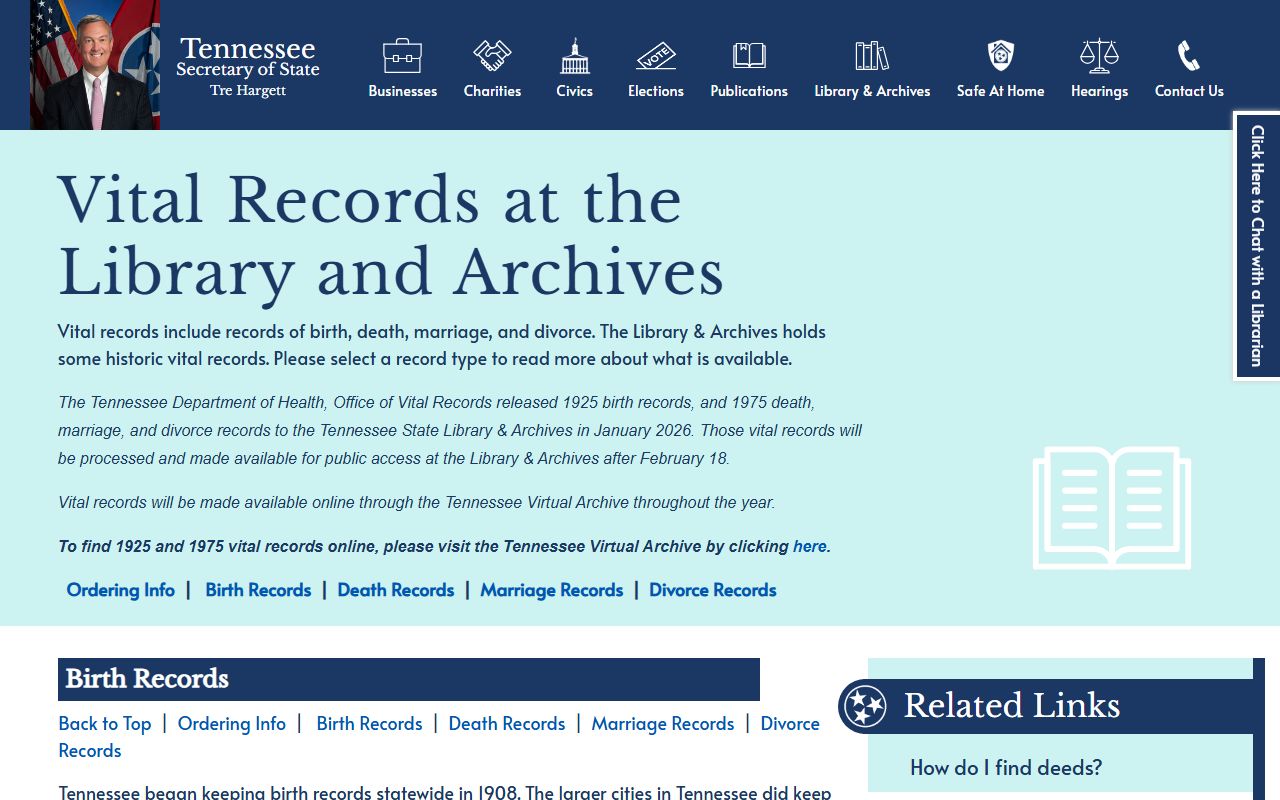
That page is the right next step when the county file is older than the current courthouse record set.
The Secretary of State FAQ gives a shorter explanation of the same record trail.
Read the Tennessee divorce records FAQ for a quick archive guide.
Order Marshall County Divorce Records
Ordering Marshall County Divorce Records usually means deciding between the county file and the state certificate. If you need the decree, the county court clerk is the office to contact in Lewisburg. If you only need a certificate, Tennessee Vital Records can handle that request by mail, in person, or online. The county request and the state request do not use the same forms, so it helps to know which paper you need before you start.
The state entitlement rules also matter. Tennessee allows the person named on the record, certain close family members, legal guardians, and authorized representatives to request a divorce certificate. That keeps the state copy process focused and prevents confusion when someone is ordering for another person. Marshall County Divorce Records requests go smoother when the requestor knows whether the county file or the state certificate will satisfy the purpose.
Review the entitlement rules before you order.
Tennessee entitlement guidelines explain who can request the state certificate and what proof may be required.
The image below shows that same state rule set.
Its source is Tennessee Vital Records entitlement guidelines.
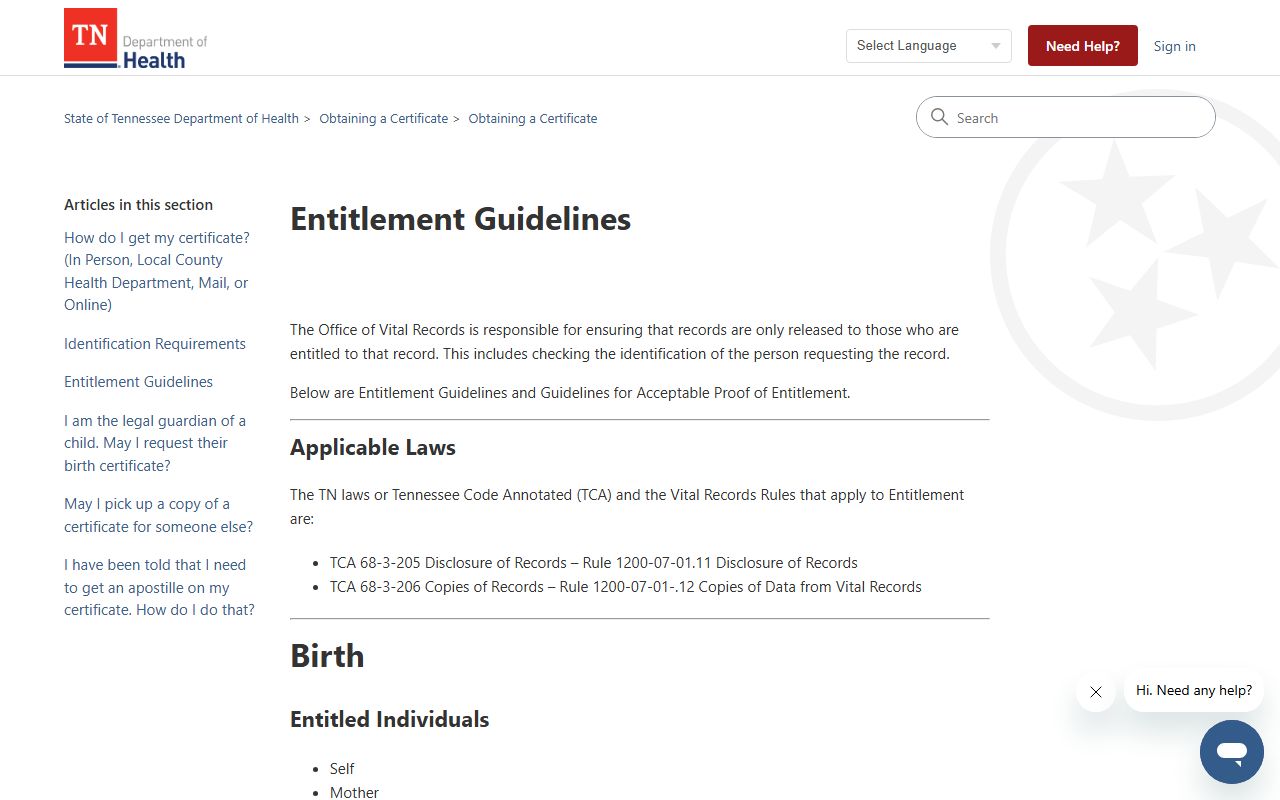
That image is most useful when a family member or lawyer is making the state request.
Marshall County Divorce Records Access
Marshall County Divorce Records are public in the broad sense, but public access still has limits. Courts can redact private data, and a judge can seal parts of a file when the law allows it. That means you can usually ask for the file, but not every page will always be fully open. The clerk has to balance access with privacy, which is normal in divorce work.
The federal court guidance is a good reminder that a verification letter is not the same thing as a decree. If your task needs the actual court order, the county file is the safer choice. The state certificate is useful for proof-of-event requests, but it does not replace the county record when the terms of the divorce matter. Marshall County Divorce Records searches get easier when you decide that difference at the start.
Use the state access rule here.
T.C.A. section 10-7-503 is the public-record rule that gives you the right to ask for records.
Note: Access is broad, but it is not absolute, so redactions and seals can still limit what you receive.
Related Marshall County Records
Marshall County Divorce Records often connect to marriage licenses, land records, and probate material. A marriage record tells you when the marriage began. A deed or land file can show what happened to property after the divorce. Probate records can help when the family history keeps moving past the divorce date. The county clerk office and the circuit court clerk work together in that kind of search.
If the divorce record is hard to find, start with the names, then look at the marriage record trail and the county archive trail. Marshall County is small enough that the right office can usually help once the request is specific. If you still need a broader search, the state archive guide and the county clerk site are the right next stops.
For county context, use Marshall County Clerk.
For the court record side, use Marshall County Circuit Court.