
Pickett County Divorce Records
Pickett County Divorce Records are rooted in Byrdstown, but the search usually stretches beyond the courthouse desk. The circuit court clerk keeps the case file, while the state library and archives become more important as the record gets older. Pickett County was established in 1879, so the county history is shorter than some Tennessee counties, yet the archive trail still matters because older files may sit on microfilm or in index form. If you need a decree, a certificate, or a historical reference, the first step is to match the record type to the right office.
Pickett County Quick Facts
Where Pickett County Divorce Records Start
The Pickett County Circuit Court handles divorce proceedings and keeps the county case file. That is the record most people want when they ask for a decree or a certified copy. If the case is recent, the circuit court clerk is the quickest stop. If the file is older, the request may move into a state archive search. The county seat in Byrdstown gives the search a clear place to start, but the age of the record still decides where the work ends up.
Pickett County also has a local clerk office that handles marriage licenses and routine county business. That office matters for the local record map, but the divorce file itself stays with the circuit court clerk. The Tennessee State Library and Archives says the county has historical court records on microfilm, which means older Pickett County Divorce Records may be easier to trace through archive indexes than through a fresh courthouse walk-in. A narrow request is still the best way to move the search along.
Use the Pickett County Circuit Court to start the local file search.
The manifest image below comes from the state library guide and fits the older-record path well.
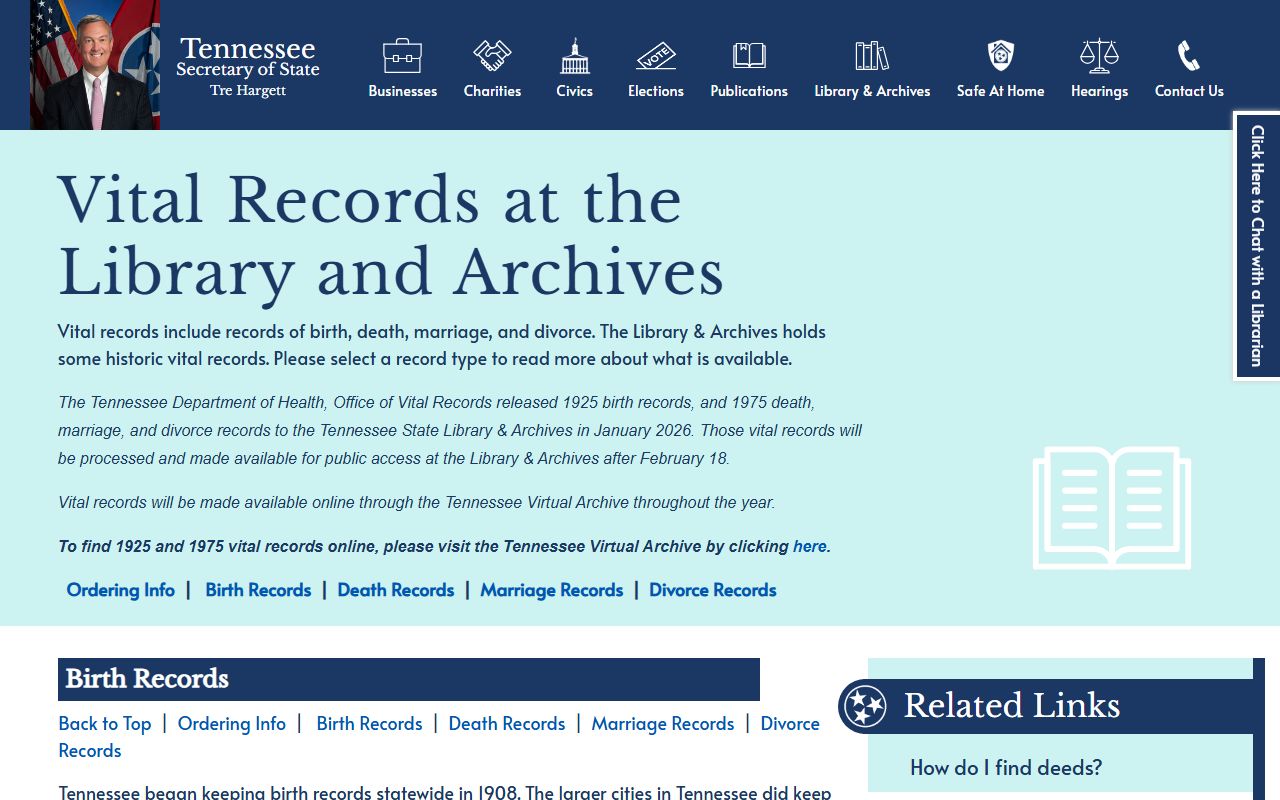
That guide is the safest fallback when Pickett County Divorce Records have moved into archive custody.
Search Pickett County Divorce Records
Searches for Pickett County Divorce Records go faster when you bring a spouse name and an approximate filing year. A case number helps even more. If you do not have one, the circuit court clerk can still search by name and date window. That matters in a small county because older cases may need a manual pull from storage or archive holdings. The more exact your request, the less time it takes to see whether the file is active, archived, or only indexed.
The state certificate system is the next part of the search. Tennessee Vital Records explains how to order divorce certificates in person, by mail, or through VitalChek. That route is useful when you need proof that the divorce happened and do not need the full court packet. If you need the decree itself, stay with the circuit court file. Pickett County Divorce Records often split into those two tracks, and the right choice depends on how much detail the end user needs.
For the certificate route, use Tennessee Vital Records.
That page explains the short state record path when the county file is not the only thing you need.
Note: A certificate proves the event, but the county decree is usually the better record for any later legal step.
Pickett County Divorce Records and Access
Pickett County Divorce Records are generally public, but access still has limits. Court files can carry redactions for private data, and the judge can seal parts of a divorce case when the law allows it. That means the public record rule is broad, but not total. It is common to see a file available in part and protected in part. That is normal for divorce work, especially when the file includes children, money, or other private issues.
The state entitlement rules also matter if you want a divorce certificate from the Office of Vital Records. Tennessee limits state release to the person named on the record, close family members, guardians, and certain representatives who can prove entitlement. That rule does not replace court access, but it does govern the certificate side of Pickett County Divorce Records. If you are asking for a state copy on someone else's behalf, check the entitlement rules before you send the request.
Use Tennessee entitlement guidelines for the state certificate rules.
Those rules help explain who can ask for the short state record and what proof the office wants.
Historical Pickett County Divorce Records
Historical Pickett County Divorce Records often lead into the Tennessee State Library and Archives. The county history note says Pickett County was established in 1879, and the archive note says the county has court records on microfilm. That means the old record trail may start with an index or reel, not with a fresh courthouse copy. In a small county like Pickett, that is a normal part of the search. A good index can save a lot of time because it can point you to the year and the court long before you ask for a certified copy.
The statewide rule is the same here as anywhere else in Tennessee. Once a divorce record ages beyond the Office of Vital Records retention period, the archive becomes the better source. The Library of Congress guide says the same thing. So if a Byrdstown request stalls at the courthouse, the archive route is the right next step rather than a fallback of last resort. It is often the quickest path to the older file or index note you need.
See the Tennessee State Library and Archives guide for old-record research.
That guide is the best map for historical Pickett County Divorce Records that have moved out of active court storage.
Order Pickett County Divorce Records
If the request is for a certificate, Tennessee Vital Records can handle it. The office in Nashville accepts in-person, mail, and online orders through VitalChek. If the request is for the decree, the circuit court clerk is still the office that matters most. That is the basic split for Pickett County Divorce Records. One path proves the event. The other gives the court order and the case detail.
The reason that split exists is section 68-3-402 of the Tennessee Code. The statute requires the court clerk to forward divorce records to the Office of Vital Records, which creates the state certificate trail. That rule matters in Pickett County because a case can be found in the county file first and then verified at the state office later. If the record is historical, the archive trail may come first and the county copy second. The record office depends on the age of the file.
For online state orders, use VitalChek for Tennessee.
It is the official card-processing path for a short state certificate.
Note: The county decree is still the better paper when the record is needed for court, property, or identity work.
Help With Pickett County Divorce Records
Pickett County Divorce Records searches get easier when you know whether you are dealing with a recent file, a certificate request, or a historical index. The county clerk office can help with local record context, but the circuit court clerk controls the divorce file itself. When the case is old, the state archive guide and county microfilm note become more important than the live desk. That is the practical way to approach a small-county records search in Tennessee.
The Tennessee Secretary of State FAQ and the Library of Congress guide both reinforce the same simple rule. Recent records usually stay with the Office of Vital Records. Older records usually move to the Tennessee State Library and Archives. That helps Pickett County researchers choose the right office before they send a request. Once the office and the record type line up, the search becomes much shorter.
Use the Tennessee divorce records FAQ when you need a quick direction check.
That FAQ helps confirm where Pickett County Divorce Records should be requested.
Related Pickett County Records
Pickett County Divorce Records often connect to marriage records, older court indexes, and property changes that happened after the divorce. A marriage record gives you the start of the timeline. A land record can show what changed later. An index entry can point you to the right year when the file itself is still on microfilm. Those related records are not a replacement for the decree, but they can make the divorce search much faster.
That is why a flexible search works best in Pickett County. If the court gives you an index reference, use it to narrow the year. If the state gives you a certificate, use it to confirm the event. Then go back to the county for the decree if you need the court details. The record trail is usually shorter once the office and document type are clear.