
Search Scott County Divorce Records
Scott County Divorce Records begin at the courthouse in Huntsville, then branch into state certificate and archive paths when the record gets old. That split is useful. It tells you where the file lives, who keeps it, and whether you need a full decree or only a short proof that a divorce happened. If you know the spouse names and a rough year, you can usually get a clean start. If you do not, the clerk can still help narrow the search. This page keeps the local office first and the state trail close behind.
Scott County Quick Facts
Scott County Divorce Records Office
The Scott County Circuit Court handles divorce cases and keeps the court file for Scott County Divorce Records. The research notes point to Huntsville as the county seat, and that is the place to start when you need a decree or a docket note. The Scott County Clerk handles marriage licenses and routine county work, but divorce requests belong with the circuit court clerk. That matters because the clerk that keeps the marriage record is not the same office that keeps the divorce packet. When you ask the right office first, you save time and keep the search simple.
For the local court path, use the Scott County Circuit Court page at tncourts.gov/courts/circuit-court/scott-county. For county clerk context, use scottcountytn.gov/county-clerk. Those two pages show the line between a county office that handles marriage licenses and the court office that keeps Scott County Divorce Records. If you are in doubt, start with the court. The clerk can tell you whether the file is active, archived, or better handled by a written request.
See the CDC Tennessee vital records page at cdc.gov/nchs/w2w/tennessee.htm.
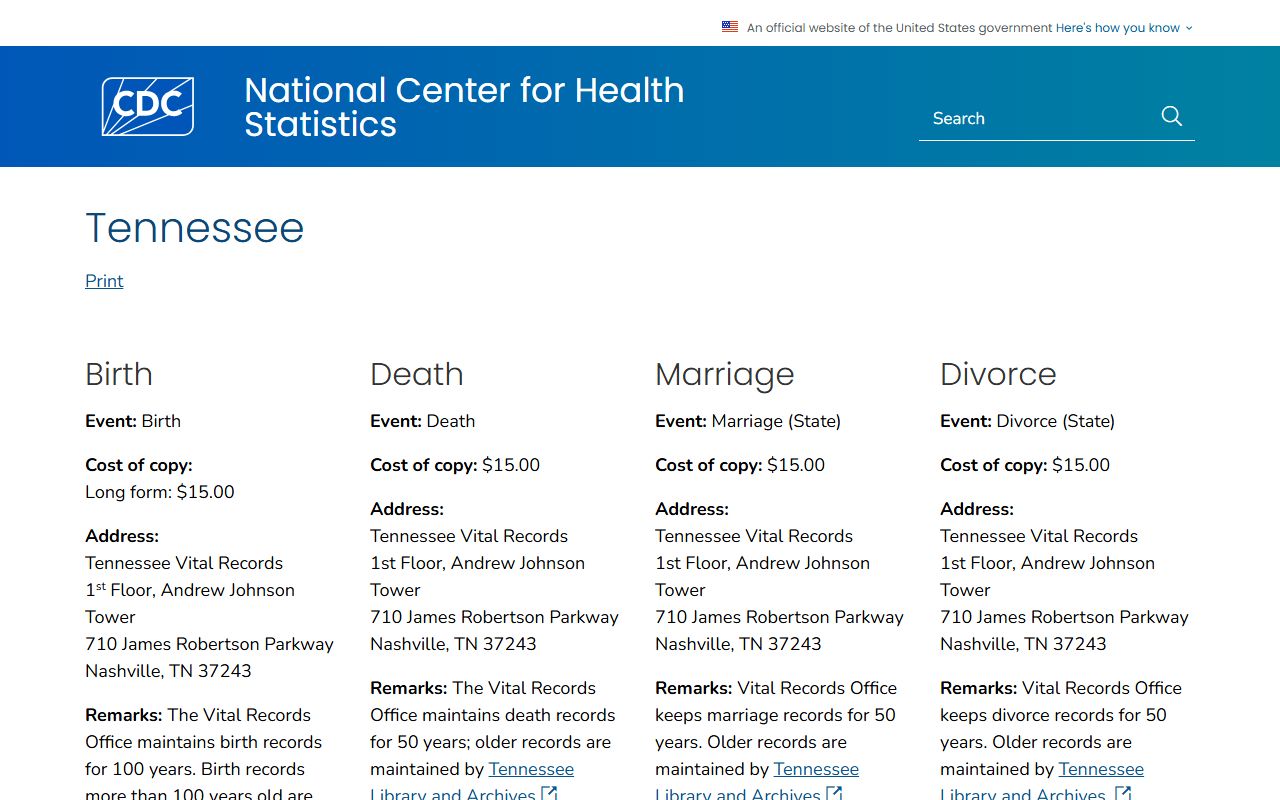
That state page is the cleanest place to check when you only need the short certificate side of a Scott County divorce search.
Note: The county court file and the state certificate are different records. Pick the one that matches your need.
Search Scott County Divorce Records
You can search Scott County Divorce Records by name, year, or case number. The clerk will usually work faster when you give a full spouse name and a narrow date range. If you know where the divorce was filed, say that too. Scott County records are kept in Huntsville, so a courthouse visit is often the best way to confirm what is on hand. If the case is old, the clerk may need time to pull a file or look at an index. A short, direct request works best.
Keep your ask tight. Tell the clerk whether you need the full decree, a certified copy, or just a search. If you are asking for a decree, say so. If you only need proof that a divorce happened, say that instead. The Tennessee Office of Vital Records can also help with the certificate version of Scott County Divorce Records, and the state help center explains the in-person, mail, and online paths. That helps if you do not need the full county packet.
Before you go, gather the basics.
- Full name of one spouse
- Approximate filing year
- County name
- Case number, if known
- What record you need
Use the Tennessee Vital Records help center at vitalrecords.tn.gov if your Scott County search turns toward the state certificate path.
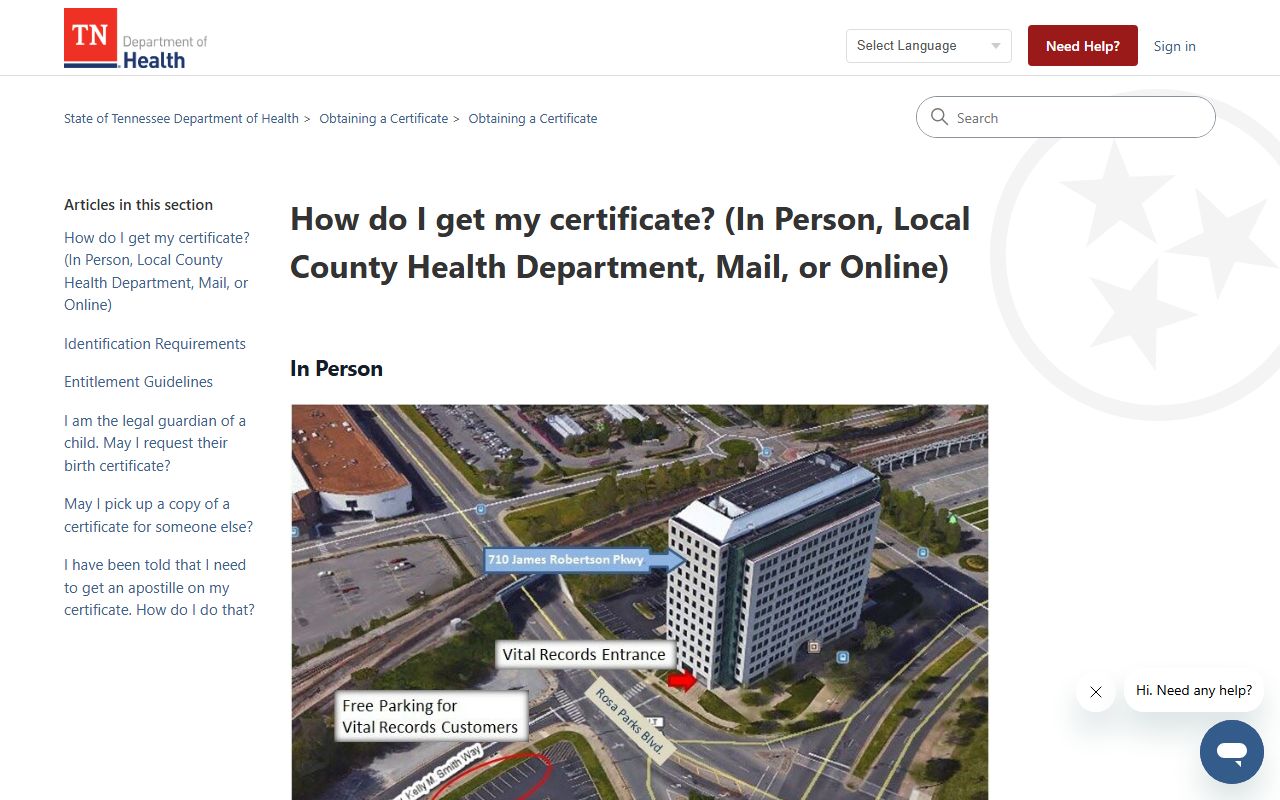
That guide explains how to request a divorce certificate in person or by mail, which is often enough for simple proof of record.
Note: Older files can take time. A tight date range will help the clerk find the right Scott County Divorce Records faster.
Scott County Divorce Records Fees
Fees depend on the record you ask for. Scott County may charge a copy fee for the court file, and a certified copy usually costs more than a plain copy. The state certificate has its own fee. Tennessee Vital Records says a certified divorce certificate costs $15 per copy. That is the fee for the state certificate only. It does not include county court copy charges. If you need the full case packet, ask the clerk what it costs before you order a stack of pages you may not need.
The state fee is simple, but the county path can vary. A clerk may charge by page, by certification, or by a combination of both. If you only need one proof document, the state certificate may be the faster and cheaper route. If you need the final decree or any attached orders, the court file is the better choice. Scott County Divorce Records often sit in both places, so the real job is choosing the right source first.
For the filing rule that sends divorce records from the court to the state office, use T.C.A. section 68-3-402.
That law is why the state certificate trail exists at all. The clerk must send each divorce record to the Office of Vital Records on a set schedule.
Note: County copy fees and state certificate fees are not the same. Ask which record you need before you pay.
Historical Scott County Divorce Records
Historical Scott County Divorce Records can move out of the active courthouse file and into archive care. Scott County was established in 1849, and the Tennessee State Library and Archives maintains county court records on microfilm. That gives family historians a good path when the divorce is old or the file is hard to reach at the courthouse. The archive trail matters even more when the office file is thin. It can point you to a minute book, an index, or a copy made long ago for state storage.
The county history page at sos.tn.gov/tsla/history/county/factscott.htm is the local history reference for Scott County. The broader archive guide at sos.tn.gov/library-archives/guides/vital-records-at-the-library-and-archives explains how older divorce records move from the state vital records office to the Tennessee State Library and Archives. If a case is old enough, that is where the paper trail often ends up.
See the Tennessee State Library and Archives guide at sos.tn.gov/tsla/faqs/how-do-i-find-divorce-records.
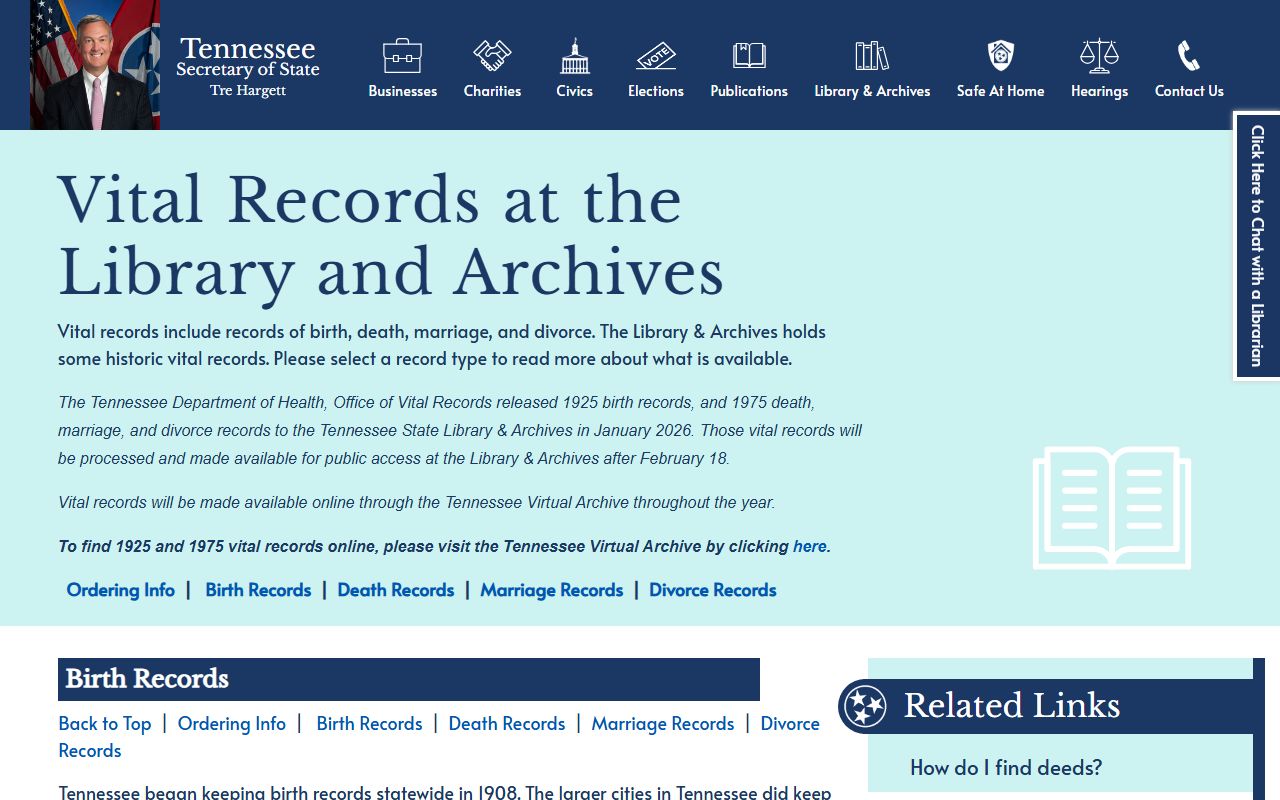
That guide is useful when you are chasing a Scott County divorce that is old enough to have left the live court file.
Another broad guide is the Library of Congress Tennessee vital records page at guides.loc.gov/tennessee-local-history-genealogy/vital-records.
It helps place Scott County Divorce Records in the wider Tennessee archive system and gives you a clear next step for older files.
Get Copies of Scott County Divorce Records
To get copies of Scott County Divorce Records, ask the circuit court clerk for the file side and the state office for the certificate side. If you need a decree, say that. If you need a certified copy, say that too. A full request is easier to fill when you include the spouse names, the year, and any case number you have. The court clerk in Huntsville can tell you whether the file is ready, needs a search, or must be ordered from a storage spot.
The state office is good when you want a short proof of divorce. The Tennessee Office of Vital Records can issue a certified divorce certificate if you qualify under state rules. That is often enough for a name change, a marriage record update, or a simple proof-of-status need. If you need the full case, the court file still matters more. Scott County Divorce Records are easiest to manage when you match the request to the office that actually keeps that piece of the record.
If you need a request with more legal weight, the federal court guidance still makes one thing plain. A verification letter is not the same as a certified decree.
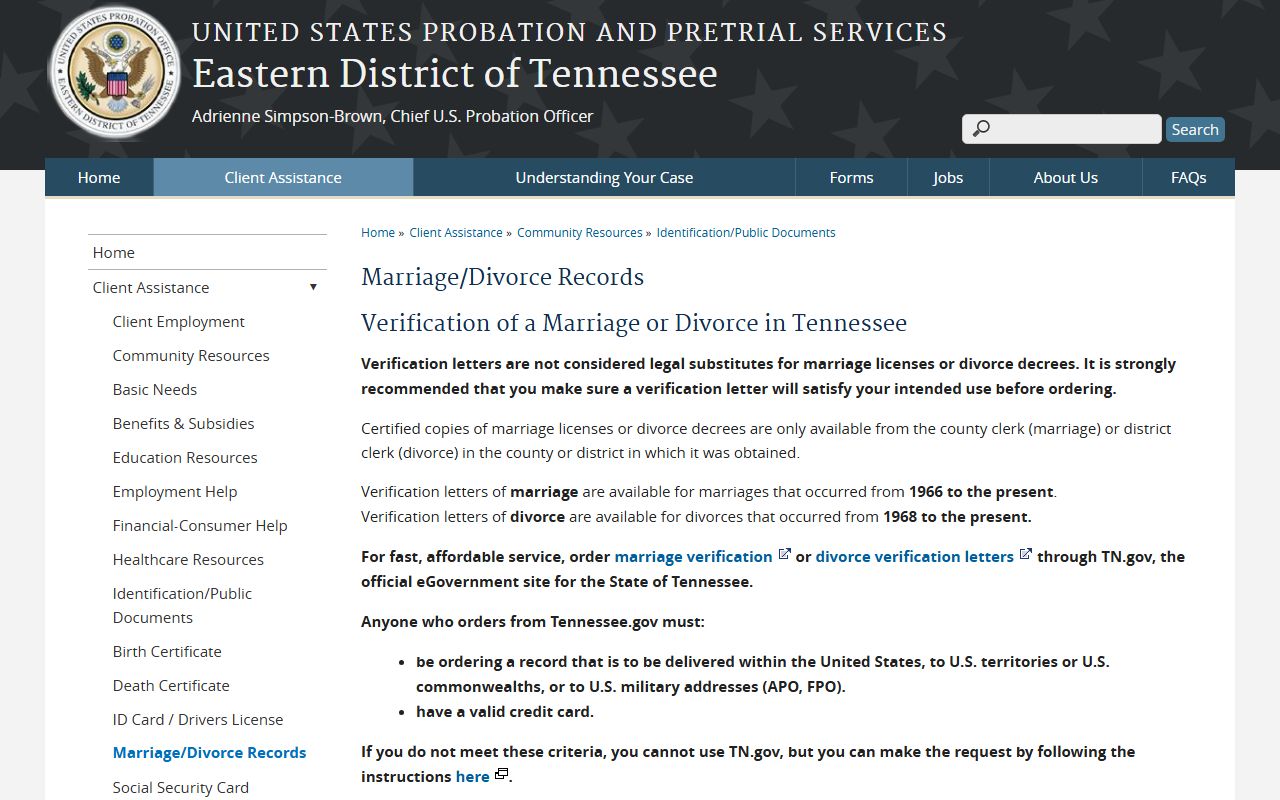
The federal court page is useful when you need to compare a verification letter with a county decree.
Note: If you only need a proof letter, a state certificate may do the job. If you need the court order, ask for the decree.
Public Access and Related Records
Scott County Divorce Records are generally open to the public, but some parts of a file can still be sealed or redacted. Tennessee public records rules allow access, yet they also protect some private details. Child information, bank data, and other sensitive facts may be hidden in a public copy. That means a record can still be public even when a few lines are missing. If you see a redaction, that does not always mean the file is incomplete. It may just mean the court protected one page.
Related records can help you make sense of the divorce. Marriage records show where the marriage began. Court minutes can show the timing. Property records can show what changed after the decree. If you need the broader rule for what the state will release, look at the entitlement guide at vitalrecords.tn.gov/hc/en-us/articles/45896937912595-Entitlement-Guidelines. That guide explains who can request a state record and what proof they need.
Scott County Divorce Records also sit inside Tennessee's monthly reporting system under T.C.A. section 68-3-402.
That is why the county court file and the state certificate both matter. They are two parts of the same record trail.