
Find Sequatchie County Divorce Records
Sequatchie County Divorce Records are filed in Dunlap, then move into the state system when a certificate is needed or when the record grows old enough for archive care. The main path is the Circuit Court Clerk. The county clerk helps with marriage licenses and county business, but the divorce file itself stays with the court clerk. That split makes the search easier to plan. If you know the spouses and a rough year, you can usually narrow the record fast. If you only need proof that the divorce happened, the state certificate path may be enough.
Sequatchie County Quick Facts
Sequatchie County Divorce Records Office
The Sequatchie County Circuit Court handles divorce proceedings and keeps Sequatchie County Divorce Records for cases filed in the county. The local research points to Dunlap as the county seat, so that is the first place to look when you want the full case file. The county clerk office handles marriage licenses and other county work, but divorce decrees stay with the circuit court clerk. That is the key line. If you start at the wrong desk, you may get a marriage record when you really need the divorce file. A quick, direct request keeps the search on track.
Use the court page at tncourts.gov/courts/circuit-court/sequatchie-county for the court side of the file. Use sequatchiecounty-tn.gov/county-clerk for county clerk context. Those official pages help you sort the office that keeps marriage licenses from the office that keeps Sequatchie County Divorce Records. If the file is old, the clerk can tell you whether the courthouse has it on site or whether an archive search makes more sense.
See the Tennessee State Library and Archives county page at sos.tn.gov/tsla/history/county/factsequatchie.htm.
That state resource helps when a Sequatchie County search starts to move from the courthouse toward archive care.
Note: A county clerk may help with marriage records, but the divorce decree belongs with the circuit court clerk.
Search Sequatchie County Divorce Records
Search Sequatchie County Divorce Records by spouse name, case number, or filing year. A tight date range helps the clerk work faster. If you know the divorce was filed in Dunlap, say so. That cuts the search time and keeps the request short. The clerk can then check the index, the active file, or a stored record. For older cases, a little patience helps. The file may live in storage, or the clerk may need to review a microfilm or ledger copy before making a certified copy.
If you only need a state certificate, Tennessee Vital Records can handle that. The state help center explains how to order in person, by mail, or online, and it gives the rules for identification and payment. That is the right route when you need proof of the event rather than the whole court packet. Sequatchie County Divorce Records often sit in both places, so the right route depends on the document you need, not just the county name.
Before you ask, gather the basics.
- Full name of one spouse
- Approximate filing or decree year
- County seat, if you know it
- Case number, if available
- Whether you need a decree or a certificate
Use the state help center at vitalrecords.tn.gov if your Sequatchie County request needs the state certificate route.
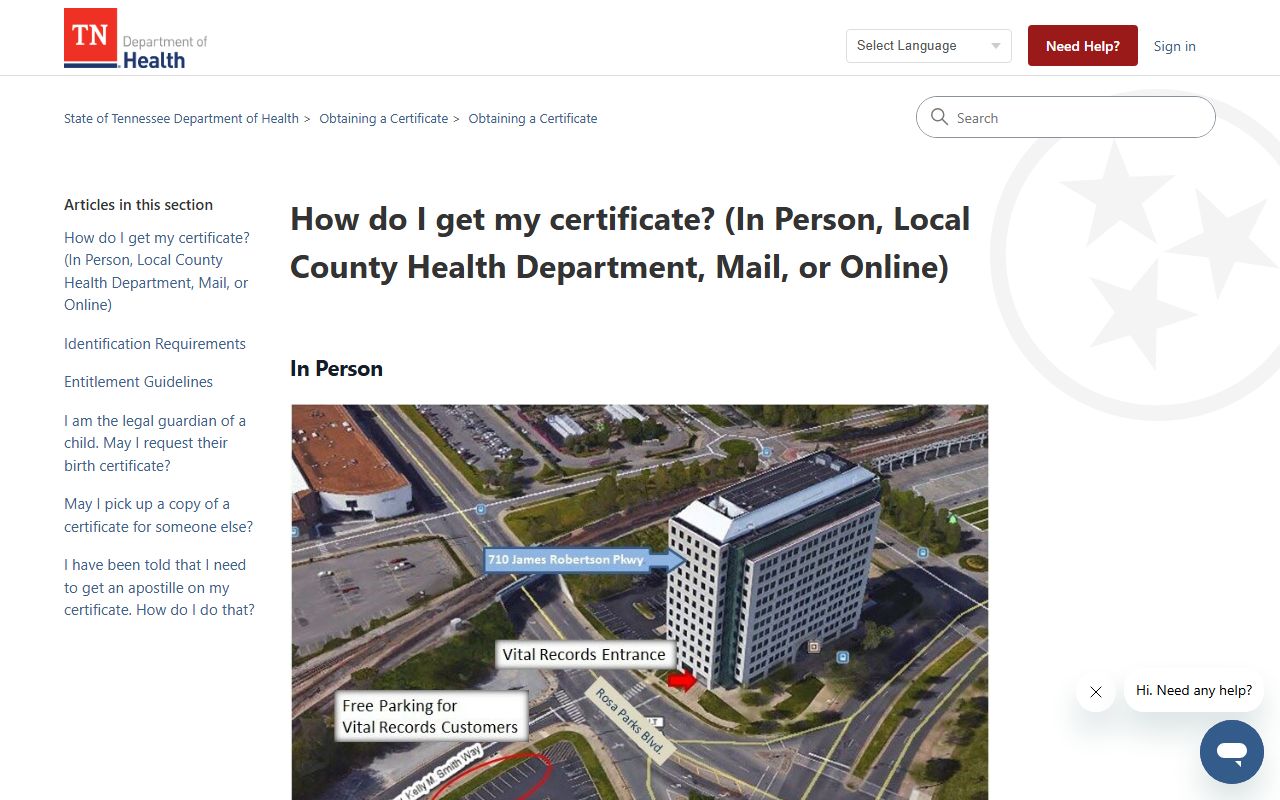
That page covers the office, the hours, and the way to order when the county file is more than you need.
Note: A short certificate can be enough for some needs, but it is not the same as the court decree.
Sequatchie County Divorce Records Fees
Fees change by office and by document. Sequatchie County may charge one amount for a plain copy and another for a certified court copy. The state certificate has a separate fee. Tennessee Vital Records says a certified divorce certificate costs $15. That is the state rate for the certificate only. It does not include county copy charges. If you want the full case file, the circuit court clerk will tell you what the current copy fee is for Sequatchie County Divorce Records.
When a divorce case is active, the filing fee and later copy fees may be different from the cost of a historical file. Ask the clerk to break the request into pieces if you are not sure what to order. A straight answer saves time and money. The state fee is simple. The county fee may depend on page count, certification, or search time. In most cases, the best move is to ask for the smallest copy that still solves the problem.
For the monthly filing rule that sends divorce records from court to state, use T.C.A. section 68-3-402.
That rule is why the state certificate path exists and why Sequatchie County Divorce Records can show up in two places.
Note: County copy fees and state certificate fees are not the same. Ask for the right one before you pay.
Historical Sequatchie County Divorce Records
Historical Sequatchie County Divorce Records can move out of the live court file and into archive care. Sequatchie County was established in 1857, and the Tennessee State Library and Archives keeps county court records on microfilm. That matters when a file is old, partial, or hard to pull from the courthouse. It also matters for family history work. A microfilm copy or index can show a date, a name, or a court term that is hard to spot in a loose packet.
The county history page at sos.tn.gov/tsla/history/county/factsequatchie.htm is the best local history clue. The general archive guide at sos.tn.gov/library-archives/guides/vital-records-at-the-library-and-archives explains when older divorce records leave the state vital records office and move to the Tennessee State Library and Archives. That is the point where a current request turns into a historical search.
See the Secretary of State divorce records FAQ at sos.tn.gov/tsla/faqs/how-do-i-find-divorce-records.
That guide helps when the record is old enough that the courthouse is no longer the only place to look.
The Library of Congress Tennessee vital records guide at guides.loc.gov/tennessee-local-history-genealogy/vital-records also helps Sequatchie County Divorce Records research.
It gives a broad view of how Tennessee historical records are held and where older county files often end up.
Get Copies of Sequatchie County Divorce Records
To get copies of Sequatchie County Divorce Records, start with the Circuit Court Clerk in Dunlap. Ask for the exact document you need. A decree is the most common request. A certified copy is more useful than a plain one when you need proof outside the courthouse. If the file is recent, the clerk may print or certify it quickly. If the file is old, the clerk may need extra time. A clear request, with names and dates, helps the office move faster.
If you only need a state certificate, Tennessee Vital Records is the better route. It is built for short proof documents, not for the full county case packet. Sequatchie County Divorce Records can be split that way. The court keeps the file. The state keeps the certificate. Knowing that line helps you order the right thing and avoids a second trip.
Use the federal court guide at tnep.uscourts.gov/content/marriagedivorce-records if you are not sure whether a certificate or decree will meet your needs.
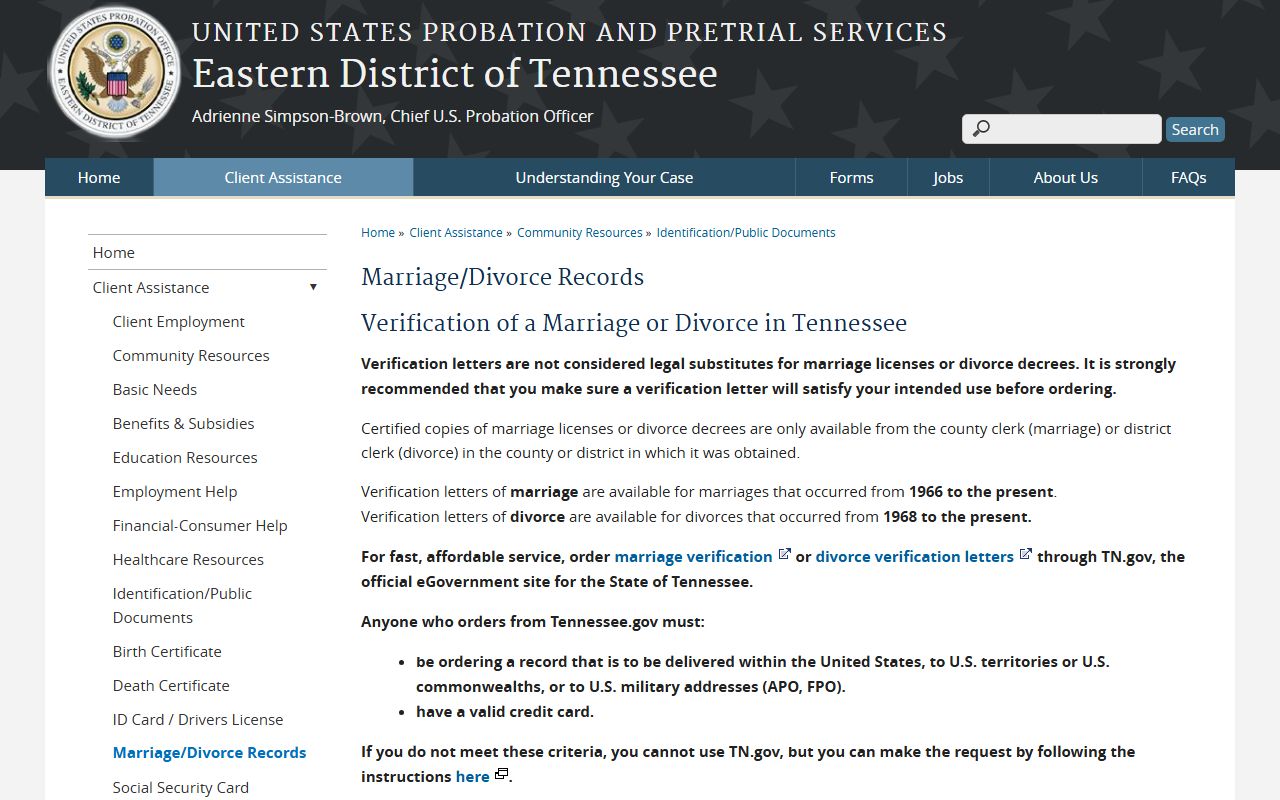
The federal page is a useful reminder that a verification letter is not the same as a certified decree.
Note: If you need the court order itself, ask for the decree. If you only need proof, the certificate may be enough.
Public Access and Related Records
Sequatchie County Divorce Records are generally public, but public does not mean every line is open. Tennessee records law can hide minors' data, bank numbers, and some private facts. A court may also seal a page or block part of a file if there is a good reason. That means a redacted page does not always mean a missing file. It often means the court protected a small part of the record while leaving the rest open for review.
Related records can help you make sense of the divorce file. Marriage records show when the marriage started. Court minutes can show when the case moved. Archive indexes can point to the right year. If you need a rule for who can ask for a state record, the entitlement guide at vitalrecords.tn.gov/hc/en-us/articles/45896937912595-Entitlement-Guidelines explains the state access rules and the proof people may need.
Sequatchie County Divorce Records also follow Tennessee's monthly reporting rule under T.C.A. section 68-3-402.
That is why the county file and the state certificate are tied together even when you request them from different offices.