
Search Williamson County Divorce Records
Williamson County Divorce Records are usually easy to place because Franklin is the county seat and the county court system is well defined. The circuit court clerk keeps the divorce case file, the county clerk handles related local business, and the Tennessee State Library and Archives becomes important when the record is old enough to live in a historical file run. Williamson County also has a deep archive history, so a search can begin as a courthouse request and end as an archive lookup if the divorce is older. A clear spouse name and a rough filing year make the search much faster.
Williamson County Quick Facts
Where Williamson County Divorce Records Start
The Williamson County Circuit Court handles divorce proceedings and keeps the county case file in Franklin. That office is the first stop when you need the decree, the settlement language, or a certified copy from the active court record. The county clerk office is nearby and handles marriage licenses and other county business, but the divorce file belongs to the circuit court clerk. Williamson County Divorce Records are well organized, which helps when you know the filing year or the spouse name.
The Williamson County Circuit Court clerk in Franklin is the main court source for the decree and the full case file. The county clerk helps with related county records and marriage licenses, but the divorce decree stays with the circuit clerk. Williamson County Divorce Records are best handled as court records first and county records second.
Williamson County also has a strong historical run. The Tennessee State Library and Archives notes divorce files from 1900 to 1950 and older county records that extend back into the nineteenth century. That means Williamson County Divorce Records can show up as current courthouse files or as older archive material. If the divorce is older, the archive trail may be the best place to confirm the date before you ask for a copy.
Note: The circuit court clerk keeps the county decree, while the archive trail covers older files.
For the archive trail, use the state-backed image below.
The source link is the Tennessee divorce records FAQ.
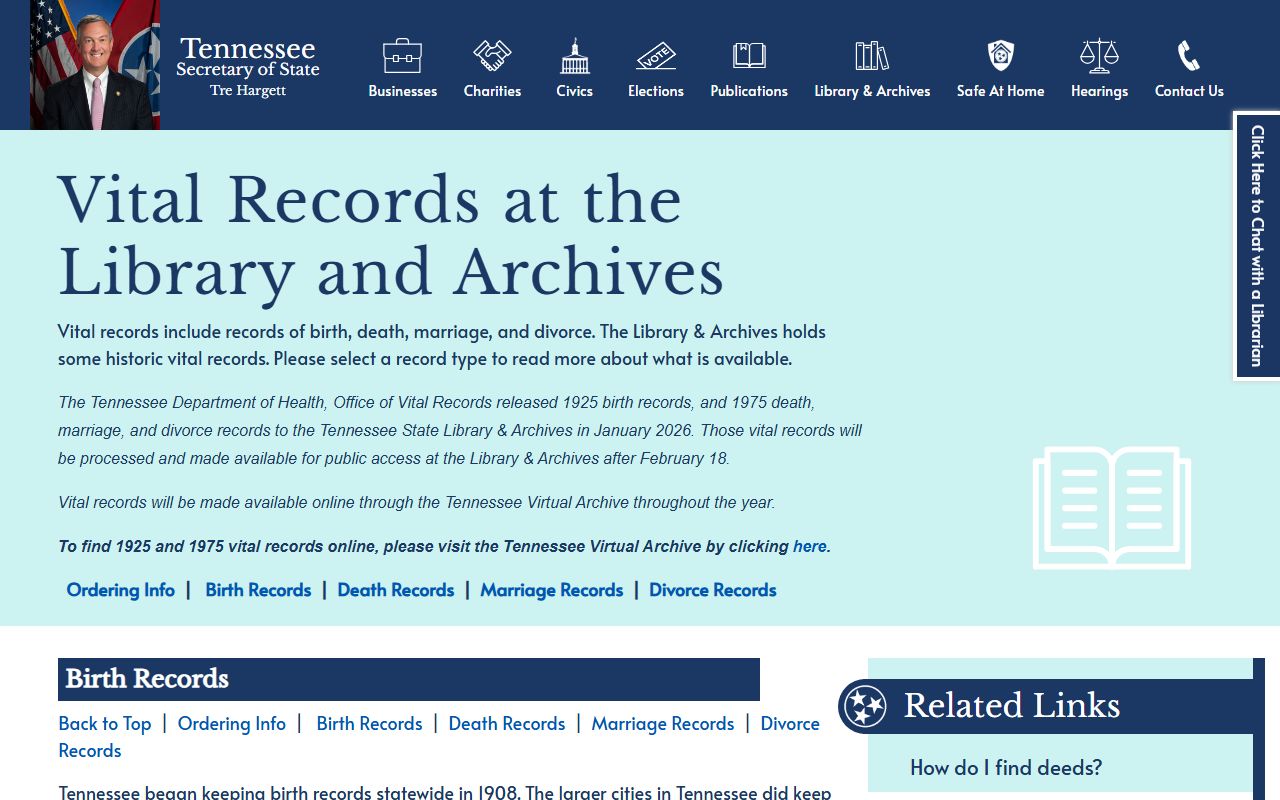
That archive guide is useful when Williamson County Divorce Records move beyond the active clerk file.
Search Williamson County Divorce Records
Williamson County searches work well when you bring a precise time frame. Franklin is the county seat, and the court system is close enough that a narrow request often gets a quick answer. If you know the filing year or even the decade, the circuit court clerk can usually move faster. If the case is older, the state archive trail becomes the more useful route. Williamson County Divorce Records can therefore be found through both the courthouse and the archives.
The archive side is especially important here because the county has an unusually deep record history. Older divorce files may be preserved in the state archive collection instead of the active court file. That does not mean the record is missing. It means the county and state work together to preserve it. Williamson County Divorce Records are easier to chase when you understand that the archive is part of the search, not a backup after the search fails.
To keep the request clean, gather the basics first.
- Full name of one spouse
- Approximate filing year or decade
- Franklin or Williamson County
- Case number, if known
- Need for decree, certificate, or archive copy
Those details make Williamson County Divorce Records easier to find because the clerk or archive staff can limit the search window. A focused request is the best way to avoid a long back and forth.
Williamson County Divorce Records Access
Williamson County Divorce Records are public, but the copy you receive may still have some redaction. Courts protect private financial details, sensitive family data, and other restricted material before they release a copy. That is standard in divorce work. Public access exists, but it is not absolute. The county record may be trimmed to protect the parts that should not travel with a routine request.
The state reporting rule in Tennessee Code Annotated section 68-3-402 explains why the county and state systems are connected. The clerk forwards the divorce record to the state office, which creates the certificate trail. That means Williamson County Divorce Records can show up as a county decree, a state certificate, or a historical archive entry. Those are related, but they are not the same paper.
If you need proof of the divorce for a state form, the certificate may be enough. If you need the court's order or the terms of the judgment, the decree is the better record. Williamson County Divorce Records requests go smoother when that decision happens before the request is filed.
Note: A certificate confirms the event, but the decree is the better paper for most court or property follow-up work.
For the state certificate route, use Tennessee Vital Records ordering guidance.
Historical Williamson County Divorce Records
Historical Williamson County Divorce Records are one of the county's strongest features. The state archive notes divorce files from 1900 to 1950, and older county records reach back beyond that. That means a family history search can go well past the modern courthouse window. If you are tracking a spouse name, a property change, or a name change across generations, the archive trail is often the fastest way to confirm the divorce date.
Older Williamson County records may show up in divorce files, probate material, or broader county court collections. That is normal in Tennessee history work. Williamson County Divorce Records can therefore be easier to find when you search the archive collections first and then ask the circuit clerk for the official copy. The archive trail gives you the map; the clerk gives you the certified paper.
For a wider research map, use the Tennessee divorce collection on Ancestry.
It helps confirm names and dates before you make the official county request.
Order Williamson County Divorce Records
To order Williamson County Divorce Records, decide whether you need the county decree or the state certificate. The circuit court clerk in Franklin handles the county file, while the Tennessee Office of Vital Records handles the certificate. That split matters because the faster order is not always the right order. If you need the court's settlement terms or final order, stay with the clerk. If you only need proof that the divorce happened, the state certificate may be enough.
The online state route goes through VitalChek, which Tennessee recognizes as the official vendor for online ordering. That is useful when you are working from out of county and only need the certificate side of the record. Williamson County Divorce Records are still best handled by the clerk when the goal is the actual court packet. The two offices serve different needs, and the search works better when you choose the right one first.
Use VitalChek for Tennessee if you need a state certificate order.
That route keeps the certificate request separate from the county court file request.
Help With Williamson County Divorce Records
If the record trail is not obvious, start with the circuit court clerk and the archive guide. Williamson County Divorce Records are usually easy to place once you have the right year. If the case is older, the Tennessee State Library and Archives is the better helper than a broad web search. The county clerk is still a good local contact for related records, but the divorce decree belongs with the circuit clerk.
Williamson County has a long and active record history, so patience helps. The older the divorce, the more likely it is to sit in a historical collection instead of the active file room. That is not a blocker. It is just how Williamson County Divorce Records move over time. With a clear date range and the right office, the search usually comes together without much trouble.
Use the Library of Congress Tennessee vital records guide when you want a second historical map.
It is a good backup when Williamson County Divorce Records are part of a larger family history project.