
Find Wilson County Divorce Records
Wilson County Divorce Records are split between the active court file in Lebanon and the county archive trail that reaches into older microfilm records. The circuit court clerk keeps the divorce case file, the county clerk handles related local work, and the Wilson County archives help when the record is older or when you are tracing a family history line. That gives Wilson County a strong record path, but it also means the requester needs to know which paper is needed. A decree, a certificate, and a historical copy are not the same thing.
Wilson County Quick Facts
Where Wilson County Divorce Records Start
The Wilson County Circuit Court handles divorce proceedings and keeps the county case file in Lebanon. That is the main office to contact when you need the decree or a certified copy of the divorce record. The county clerk office handles marriage licenses and related local business, but the divorce file itself stays with the circuit court clerk. That distinction matters because Wilson County Divorce Records are often requested through the wrong office first when the requester is not sure which record the county clerk actually keeps.
The Wilson County Circuit Court clerk in Lebanon is the primary office for the decree and the full case file. The county clerk is still useful for marriage and county record work, but the divorce decree belongs with the circuit clerk. Wilson County Divorce Records are clearest when you start with the court that heard the case.
Wilson County also maintains a deep archive trail. The state archive notes records on microfilm from 1802 to 1965, and the county has its own archival material as well. That makes Wilson County Divorce Records especially useful for historical searches. If a divorce is old, the archive side may be where the case is easiest to confirm before you ask the clerk for the certified copy.
Note: The circuit court clerk keeps the current county decree, while the archives help with older files.
For the historical image source, use the state-backed archive image below.
The source link is the Tennessee State Library and Archives vital records guide.
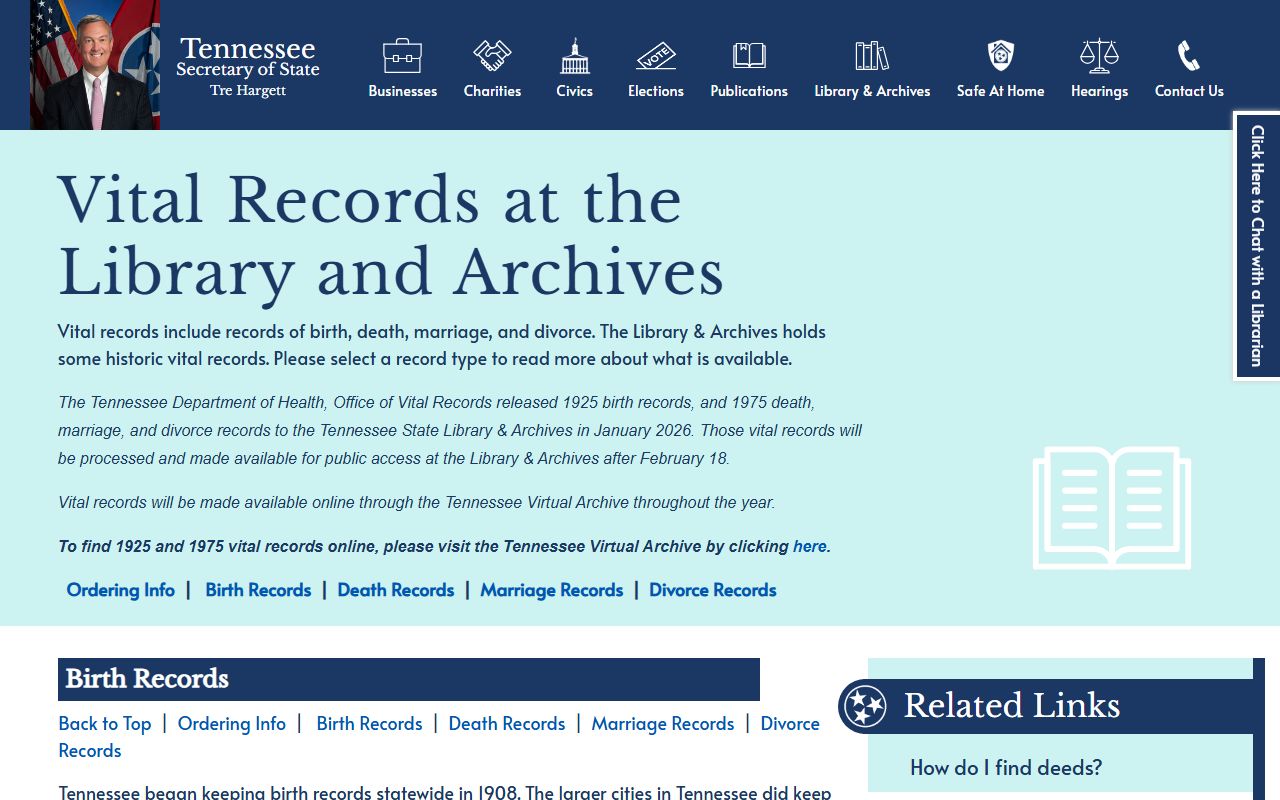
That archive guide is useful when Wilson County Divorce Records move beyond the active clerk file.
Search Wilson County Divorce Records
A useful Wilson County search starts with a name, a year, and the right office. The circuit court clerk in Lebanon can search the active county file. The county archives and the Tennessee State Library and Archives can help when the record is historical. Wilson County Divorce Records therefore move along two lines: a courthouse line and an archive line. If you know both, the search gets much faster.
Wilson County is especially handy for family history because the archive run is long and the county has microfilm records that reach back into the early nineteenth century. That makes older divorce searches more successful when you treat the archive as part of the first step rather than a last resort. Wilson County Divorce Records often show up in historical collections before they show up as a clean certified copy.
To keep the request tight, gather the basics first.
- Full name of one spouse
- Approximate filing year or decade
- Lebanon or Wilson County
- Case number, if known
- Whether you need a decree, certificate, or archive copy
That list helps the clerk or archive staff choose the right record run. Wilson County Divorce Records are much easier to find when the request is narrow and tied to one year range.
Wilson County Divorce Records Access
Wilson County Divorce Records are public, but the copy you receive may still be redacted. That is normal in divorce work. Courts protect sensitive financial details, child information, and other private data before a copy is released. So a public record can still arrive with some parts removed. That is not a problem. It is the expected way public access works for divorce files.
The reporting rule in Tennessee Code Annotated section 68-3-402 explains why the county and state systems are linked. The circuit clerk forwards the divorce record to the state office, which creates the certificate trail. Wilson County Divorce Records can therefore show up as a county decree, a state certificate, or an archive entry. Those are related, but they are not interchangeable.
If you need proof of the divorce for a form or a later filing, the certificate may be enough. If you need the judge's order or the settlement terms, the decree is the better paper. Wilson County Divorce Records requests are smoother when you decide that before you start the order.
Note: The certificate proves the event, but the decree is the stronger record for most legal follow-up work.
For the state certificate route, use Tennessee Vital Records ordering guidance.
Historical Wilson County Divorce Records
Historical Wilson County Divorce Records are a strong research source because the county archive run is long and the microfilm record set reaches from 1802 to 1965. That means older divorces can often be traced through archival material instead of through the active courthouse file. If you are doing family history work, that is a real advantage. It gives you a path back through the county's older court records, not just the modern ones.
Older Wilson County records may appear in a county archive packet, a court minute book, or another historical set before they appear as a clean decree. That is normal. Wilson County Divorce Records can therefore take a little more patience, but the material is usually there if you have a strong date range and the right surname spelling. The archive trail is often what turns a vague memory into a concrete record.
Use the Tennessee archives summary as a broad map for county and state divorce records.
It is a useful research tool when Wilson County Divorce Records need names and dates before the official request.
Order Wilson County Divorce Records
To order Wilson County Divorce Records, decide whether you need the county decree or the state certificate. The circuit court clerk in Lebanon handles the county file and the certified copy of the decree. The Tennessee Office of Vital Records handles the certificate. That split matters because the quicker request is not always the one you need for court or property work. If you need the order language, stay with the clerk. If you only need proof of the event, the state certificate can work.
The online state route goes through VitalChek. That is useful when you are out of county and only need the certificate side of the record. Wilson County Divorce Records are still better handled by the clerk when the goal is the full court packet. The two offices serve different tasks, and knowing that before you order saves time.
Use VitalChek for Tennessee if you need a state certificate order.
That route keeps the state certificate separate from the county court file.
Help With Wilson County Divorce Records
If the search stalls, use the circuit court clerk, the county clerk, and the archives together. Wilson County Divorce Records are easier to understand that way than through a broad search engine query. The county court page tells you where the active file sits. The archive guide tells you where older records usually move. The state certificate office tells you how to confirm the event if the county copy is not what you need.
Wilson County has enough historical depth that older divorce records can sometimes sit in microfilm before they sit in a modern index. That is not a blocker. It is just how the county preserves its record trail. Wilson County Divorce Records are still traceable if you stay patient and keep the request specific.
Use the Library of Congress Tennessee vital records guide when you want a second research map.
It is a useful backup when Wilson County Divorce Records are part of a broader family history project.